

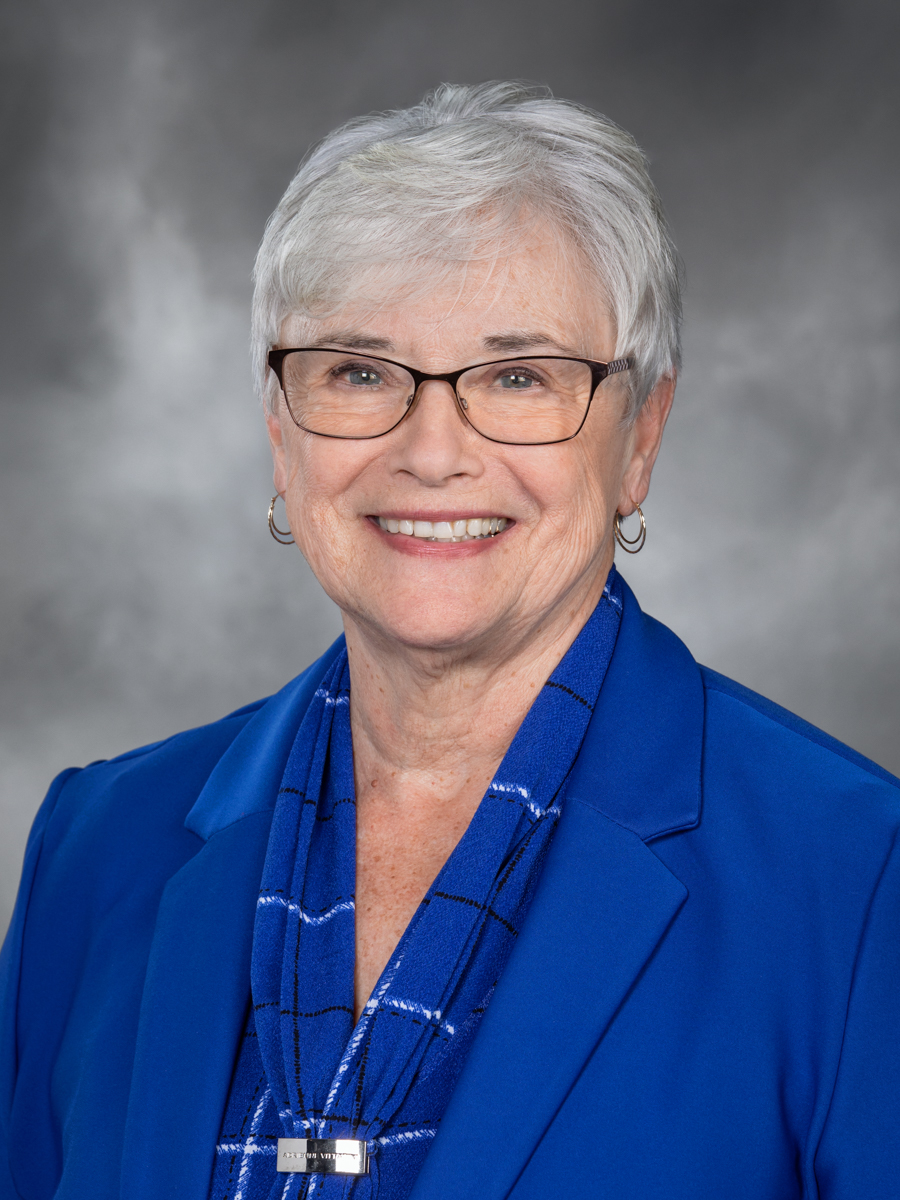
Photo of Carolyn Eslick
R Washington House · District 39

Rep. Carolyn Eslick

Compare
Total votes
5,568
all sessions
Attendance
95%
262 missed
Lower than 96% of chamber peers
With party
94%
of cast votes
Lower than 82% of chamber peers
Bipartisan score
3%
crosses aisle rarely
Higher than 80% of chamber peers
Sponsored
992
bills & resolutions
Near the chamber average
Committees
3
assignments
992 bills and resolutions

Sponsored bills

Total
992
Primary
64
Co-sponsor
928
This page
992
matching current filters
Co-sponsor HB 1799
In committee · Washington House · Co-sponsor
Concerning persons convicted of violent offenses with a firearm.

Maddy summaryHB 1799 prohibits individuals convicted of violent offenses involving a firearm from earning early release credits toward their prison sentences. Specifically, it amends Washington state law to deny all "good time credits" or "earned release time" for sentences resulting from violent crimes where a firearm was used as a deadly weapon. This directly affects people sentenced for violent felonies with firearm enhancements under existing law (RCW 9.94A.533), preventing them from reducing their sentences through behavior-based credits. The bill does not change sentencing lengths but restricts a key mechanism for early release for this specific group of offenders.

In committee Jan 12, 2026 1 co-sponsor
Co-sponsor HB 1758
Passed · Washington House · Co-sponsor
Calculating the inflation rate for aquatic land leases.

Maddy summaryHouse Bill 1758 revises the method for calculating the inflation rate used in state-owned aquatic land leases. The bill changes the economic index referenced from the "all commodity producer price index" to the "Seattle area consumer price index, all urban consumers (CPI-U)." This amendment directly affects the Department of Natural Resources and those who lease state-owned tidelands, shorelands, harbor areas, and beds of navigable waters. The purpose is to update the economic measure used for adjusting these lease rates.

Passed Jan 12, 2026 1 co-sponsor
Co-sponsor HB 1377
In committee · Washington House · Co-sponsor
Declaring the ferry system to be in a state of emergency to authorize expedient actions.

Maddy summaryHB 1377 declares a state of emergency for Washington State Ferries due to delays in procuring new electric ferries, creating a backup plan if spring 2025 contracts fail. It authorizes the governor to declare an emergency, allowing the department to bypass standard procurement rules to expedite buying at least two nonhybrid electric ferries for delivery within two years - using existing Olympic-class designs to avoid new engineering. The bill also directs postponing conversions of certain vessels to prioritize operational reliability and requires warranty work to be done within Washington state when possible. This directly affects Washington State Ferries' procurement process and the public relying on ferry services.

In committee Jan 12, 2026 1 co-sponsor
Co-sponsor HB 1243
In committee · Washington House · Co-sponsor
Addressing the burden of unintentional overpayments on older adults and adults with disabilities served by the department of social and health services.

Maddy summaryHB 1243 modifies Washington State's rules for collecting overpayments from older adults and adults with disabilities who receive benefits through the Department of Social and Health Services (DSHS). It extends the time DSHS can collect unintentional overpayments from 6 to 10 years (unless court action is taken) and creates a new rule allowing DSHS to waive all collection efforts for specific programs starting July 1, 2025. The bill directly affects clients in the aged, blind, or disabled assistance program (RCW 74.62.030) and those receiving services under chapters 74.39, 74.39A, and 71A.12. Key provisions include allowing DSHS to waive collections when equitable estoppel applies and requiring the department to adopt rules for these waivers.

In committee Jan 12, 2026 1 co-sponsor
Co-sponsor HB 2002
In committee · Washington House · Co-sponsor
Concerning criminal justice and the recovery of firearms used in the commission of a crime.

Maddy summaryHB 2002 establishes a reward program to encourage the public to report information about firearms used in felony crimes. It provides up to $500 for locating such firearms, or up to $5,000 if the report leads to a conviction, excluding law enforcement officers, individuals with warrants, or government employees acting in their official capacity. The cash rewards will be funded from existing county and municipal criminal justice assistance accounts, which distribute funds based on population, crime rates, and court case volumes. The bill directly affects law enforcement agencies (who receive the information) and the public (who may submit tips for rewards), while amending funding mechanisms for local criminal justice programs.

In committee Jan 12, 2026 1 co-sponsor
Co-sponsor HB 1158
In committee · Washington House · Co-sponsor
Improving community inclusion services for individuals with developmental disabilities.

Maddy summaryHB 1158 requires Washington's Department of Social and Health Services to contract directly with service providers for community inclusion services supporting individuals with developmental disabilities. It establishes new standards: services must occur in integrated community settings, allow group interactions (not just one-on-one care), limit billing for administrative tasks to 15 minutes per client weekly, and ensure service hours remain stable even if bundled with other services. The bill specifically defines "community inclusion services" to include skill development, community engagement, and relationship-building opportunities in typical community environments. These changes directly affect people with developmental disabilities receiving state-funded community services and the providers delivering them.

In committee Jan 12, 2026 1 co-sponsor
Co-sponsor HB 1711
In committee · Washington House · Co-sponsor
Strengthening the financial stability of persons in the care of the department of children, youth, and families.

Maddy summaryThis bill requires Washington's Department of Children, Youth, and Families (DCYF) to improve financial stability for youth in its care (under 18, in foster care or juvenile justice placements) by changing how Social Security benefits are managed. Starting January 2026, DCYF cannot use Social Security benefits (like SSI or disability payments) to reimburse itself for care costs. Instead, it must screen youth for eligibility, apply for benefits on their behalf, maintain those benefits, and place excess funds in special accounts (like ABLE accounts) to avoid affecting eligibility. DCYF must also provide financial literacy training to youth aged 14+ who may receive benefits, ensuring they understand managing their funds before transitioning out of care.

In committee Jan 12, 2026 1 co-sponsor
Co-sponsor HB 1285
Passed · Washington House · Co-sponsor
Making financial education instruction a graduation requirement in public schools.

Maddy summaryHB 1285 establishes financial education instruction as a graduation requirement for public high school students in Washington state. Beginning in the 2027-28 school year, all high schools must provide instruction in the state financial education learning standards. Starting with the graduating class of 2031, students will be required to meet these standards to graduate. The bill also tasks the Office of the Superintendent of Public Instruction with making instructional materials available and outlines monitoring responsibilities for the State Board of Education.

Passed Jan 12, 2026 1 co-sponsor
Co-sponsor HB 1008
In committee · Washington House · Co-sponsor
Concerning county local roads.

Maddy summaryHB 1008 creates a dedicated funding program to improve county local roads (defined as roads not federally classified as arterial or collector) by establishing a "county local road trust account" within the motor vehicle fund. The bill requires counties to prioritize projects addressing overburdened communities, environmental health disparities, access to community facilities, and road safety, while mandating counties provide matching funds. Eligible projects include road reconstruction, bridge replacements, fish passage removal, and pedestrian facilities, with joint planning required for projects near cities or state highways. Counties diverting road levies (except those under 8,000 population) lose eligibility for these funds, and the program takes effect July 1, 2025.

In committee Jan 12, 2026 1 co-sponsor
Co-sponsor HB 1011
In committee · Washington House · Co-sponsor
Creating a school safety capital grant program.

Maddy summaryHB 1011 creates a state grant program to fund physical school safety improvements like security vestibules, metal detectors, fencing, and lighting for public and tribal schools in Washington. Eligible schools must cover at least 100% of project costs with nonstate funds (reduced to 25% for schools with high poverty rates), and projects cannot exceed $1 million in total cost. Grantees must maintain control of the improved facilities for 10 years and use them solely for safety, with repayment required if they violate these terms. The program requires projects to follow safety-focused design principles and will operate through a competitive application process administered by the state superintendent's office.

In committee Jan 12, 2026 1 co-sponsor
Showing 111 to 120 of 992 bills
Previous 1 … 11 12 13 … 100 Next