

Maddy summaryHB 2102 eliminates certain unenforceable legal financial obligations (LFOs) for offenders in Washington State, including costs, fees, and accrued interest on restitution or other debts. It automatically voids these debts after the bill’s effective date, prohibits courts from accepting payments for them, and allows judges to waive uncollectible portions of LFOs upon offender request. The bill also stops interest accrual on criminal fines and fees as of June 7, 2018, and updates collection procedures for existing debts. This directly affects individuals with outstanding criminal or civil LFOs, particularly those deemed uncollectible. The law clarifies that courts may not enforce or collect these specific debts while preserving mechanisms for individual court-based relief.
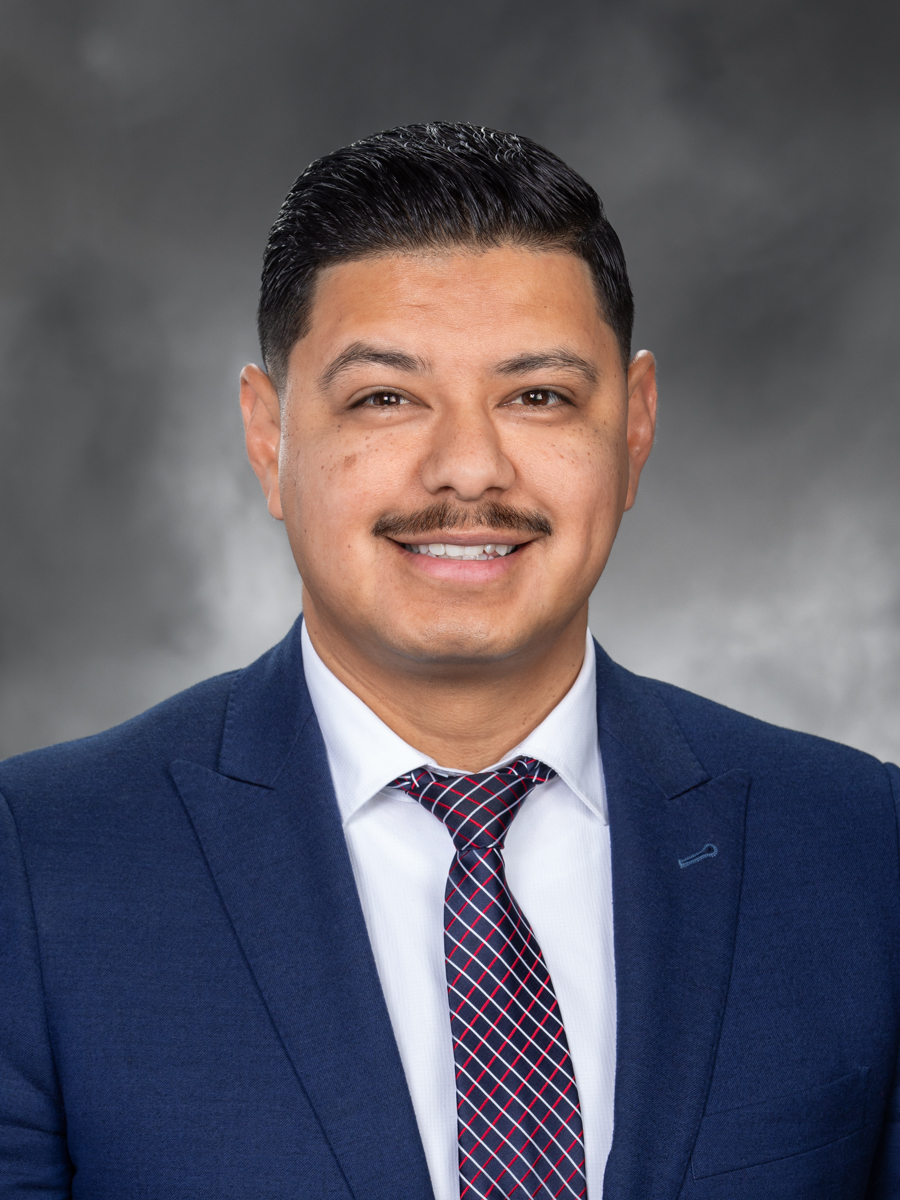
Rep. Julio Cortes
Sponsored bills
Maddy summaryHB 2148 creates Washington's "pay it forward" program to help graduate students cover tuition and fees at public universities. The program provides funding for up to four years of study (or 125% of a program's length), minus any existing state financial aid, for students at University of Washington, Washington State University, regional universities (Western, Central, Eastern), or The Evergreen State College. Participants repay the program after graduation by contributing a percentage of their income (3.5% for regional universities/state college, 5% for state universities) for up to 15 years, with payments tied to the credits taken during their studies. Funding comes from state appropriations, participant contributions, and private donations, held in a dedicated trust fund managed by the Student Achievement Council.
Maddy summaryThis is a ceremonial House resolution (not a policy bill) introduced on January 19, 2026, by multiple Washington State Representatives. It formally recognizes Dr. Martin Luther King Jr.'s life, legacy of nonviolent activism, and contributions to civil rights, including his role in the Civil Rights Act of 1964 and Voting Rights Act of 1965. The resolution expresses the House's commitment to upholding Dr. King's ideals of equality, justice, and opportunity for all. As a symbolic gesture, it does not create new laws, allocate funds, or affect any specific individuals or groups.
Maddy summaryHB 2547 requires county and municipal jails in Washington to have a written contract with the U.S. government before holding individuals transferred from federal custody. The contract must cover all costs of confinement and include a fee for the jail’s expenses; if federal funds aren’t received as agreed, the jail must stop holding those individuals. The bill also prohibits jails from contracting to hold people transported across state lines, except when a valid judicial warrant exists. This directly affects local jails that currently house federal detainees and ensures financial accountability for federal custody arrangements.
Maddy summaryWashington State's HJM 4010 is a formal request to the U.S. government to investigate the killing of Aysenur Ezgi Eygi, a University of Washington psychology graduate and Seattle resident. The memorial, addressed to President Trump, the Secretary of State, and the Department of Justice, asks for a "transparent, thorough, and independent investigation" into her death by an Israeli military sniper in the West Bank on September 6, 2024. It specifically cites her peaceful activism, including organizing protests for Palestinian rights and supporting displaced communities, and draws parallels to the unresolved death of another Washingtonian, Rachel Corrie. As a non-binding memorial resolution, it does not create new law but formally urges federal action. The request is directed at U.S. executive and legislative branches to pursue accountability for Eygi's death.
Maddy summaryHB 2090 directs Washington’s Department of Commerce to develop a strategic framework for integrating advanced nuclear energy into the state’s clean energy goals. The plan, due by December 2026, would assess how nuclear power could help meet Washington’s targets for 100% clean electricity by 2045, including evaluating siting, permitting, financing, and workforce needs - particularly at former coal sites or the Hanford area. It would examine opportunities for state collaboration with other regions and recommend policies like expediting permits or financial incentives to support nuclear development. The bill does not fund nuclear projects but requires the state to explore nuclear as a potential pathway to replace current fossil fuel generation and achieve decarbonization goals more efficiently.
Maddy summaryHB 1017 designates November 22nd as "Kimchi Day" in Washington State, recognizing the cultural significance of kimchi and aligning with similar observances in South Korea and other U.S. states. The bill amends state law to add "The twenty-second day of November, recognized as kimchi day" to a list of non-holiday cultural observances. It does not create a legal holiday or affect work schedules, as these recognized days are explicitly stated to not qualify as paid or unpaid legal holidays under state law. The measure aims to celebrate kimchi’s heritage, citing its UNESCO-recognized preparation process ("kimjang") and health benefits, but has no direct policy impact on residents or businesses.
Maddy summaryHB 1434 amends Washington State law to officially recognize Eid al-Fitr and Eid al-Adha as state legal holidays, adding them to the existing list of recognized days. These Islamic holidays, which shift annually based on the lunar calendar, will now be included in the state's holiday schedule alongside established dates like New Year's Day and Thanksgiving. The bill affects state employees, who will be entitled to paid time off for these holidays under existing provisions for state legal holidays, as outlined in RCW 1.16.050. This change makes Washington the first U.S. state to formally recognize both Eid holidays as official state observances.
Maddy summaryHouse Joint Memorial 4003 is a non-binding resolution from the Washington State Legislature urging the U.S. government to join international efforts in developing a Fossil Fuel Non-Proliferation Treaty. It calls for ending new fossil fuel exploration and expansion, phasing out existing production in line with climate science, and prioritizing worker and community support during the transition. The memorial aligns with Washington’s existing climate laws, including the Climate Commitment Act and the HEAL Act, which aim to reduce emissions and address environmental health disparities. It directly addresses the U.S. President, Congress, and the United Nations to advance global climate action.
Maddy summaryHB 1129 requires most group health plans in Washington to cover fertility preservation services starting January 2026 and infertility diagnosis/treatment starting January 2027. It mandates coverage for two egg retrieval procedures with unlimited embryo transfers (per medical guidelines), prohibits different cost-sharing for fertility services compared to other pregnancy care, and ensures coverage extends to spouses and nonspouse dependents equally. The bill directly affects health insurers and enrollees seeking fertility care, including LGBTQ+ individuals and racial/ethnic minorities who face coverage disparities. Key provisions include banning restrictions on fertility medications and eliminating separate deductibles or waiting periods for these services.