

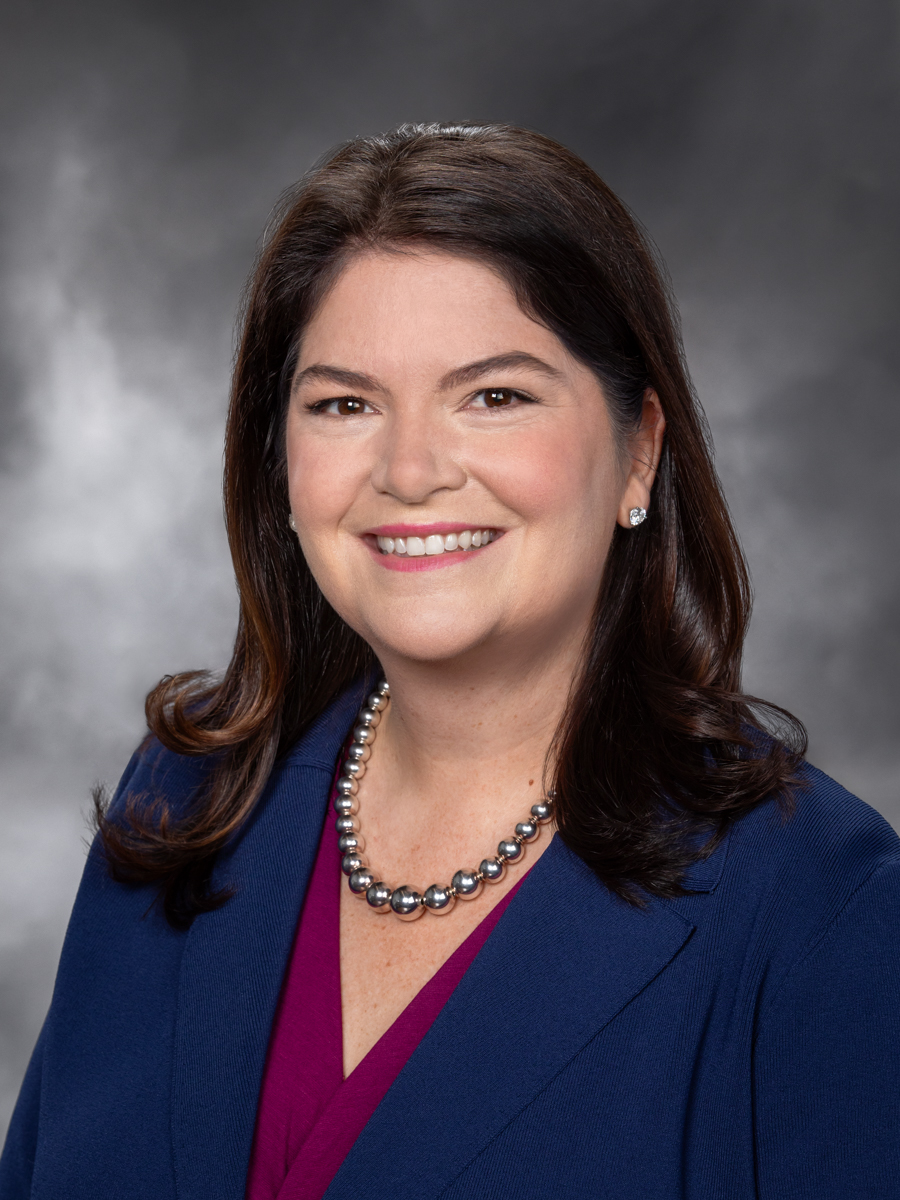
Photo of Liz Berry
D Washington House · District 36 On the 2026 ballot

Rep. Liz Berry

Compare
Total votes
3,509
all sessions
Attendance
100%
17 missed
Higher than 88% of chamber peers
With party
99%
of cast votes
Higher than 79% of chamber peers
Bipartisan score
0%
crosses aisle rarely
Lower than 81% of chamber peers
Sponsored
845
bills & resolutions
Higher than 85% of chamber peers
Committees
4
assignments
845 bills and resolutions

Sponsored bills

Total
845
Primary
42
Co-sponsor
803
This page
845
matching current filters
Co-sponsor HB 2480
In committee · Washington House · Co-sponsor
Concerning residential development in commercial and mixed-use zones.

Maddy summaryHB 2480 requires cities and counties with populations over 30,000 to allow residential development in commercial and mixed-use zones, prohibiting local governments from banning homes in these areas. It removes requirements that residential projects must include ground-floor commercial space or mixed-use as a condition for permits. Exceptions include industrial zones, areas within 3,200 feet of oil/gas refineries, historic preservation sites, and certain waterfront or critical areas. The law would override conflicting local zoning rules one year after enactment, applying to all affected jurisdictions.

In committee Feb 3, 2026 1 co-sponsor
Co-sponsor HB 2573
In committee · Washington House · Co-sponsor
Concerning community access to food, medicine, and health services.

Maddy summaryHB 2573 requires supermarkets, full-service grocery stores, and pharmacies to provide advance notice of closures or major operational changes to local governments and the public. Specifically, these businesses must give six months' notice for general areas and one year's notice in "overburdened communities" (defined under Chapter 70A.02 RCW), including posting notices in primary languages spoken by 5% of residents. Local governments must include these notices in land use permits and public outreach, and can use zoning tools to prioritize redeveloping vacant properties for these essential services. The bill aims to prevent "food and pharmacy deserts" by ensuring continued access to healthy food, medicine, and health services in communities planning for increased density, affordable housing, and transit-oriented development.

In committee Feb 3, 2026 1 co-sponsor
Co-sponsor HB 2394
In committee · Washington House · Co-sponsor
Enhancing public safety and enforcement of crimes that impact insurance.

Maddy summaryHB 2394 updates Washington's insurance fraud laws to better address modern schemes. It clarifies definitions of "insurer" to include health care service contractors and health maintenance organizations, and explicitly lists fraud types like submitting false medical bills, embezzling premiums, or misrepresenting insurance claims. The bill upgrades insurance fraud to a class B felony and requires restitution for insurers and victims. This directly affects insurers, consumers, and individuals committing fraud involving insurance claims or payments.

In committee Feb 3, 2026 1 co-sponsor
Co-sponsor HB 2267
In committee · Washington House · Co-sponsor
Concerning urban forest management ordinances.

Maddy summaryHB 2267 requires Washington's Department of Commerce to create voluntary model ordinances for local governments to manage urban tree canopy. It directs cities and counties to prioritize avoiding tree removal (especially for single-family homes), minimizing impacts when removal is needed, and compensating through replanting or tree banks for larger developments (two+ homes). The model includes incentives like density bonuses, reduced parking requirements, or lower lot size rules to encourage developers to retain trees without limiting housing. Local governments can choose to adopt these models, which also provide guidance on scientific tree selection, cost estimates for maintenance, and measuring benefits like stormwater reduction. The bill does not mandate adoption but aims to standardize tree protection while balancing development needs.

In committee Feb 3, 2026 1 co-sponsor
Co-sponsor HB 2159
In committee · Washington House · Co-sponsor
Establishing the preK promise account.

Maddy summaryHB 2159 creates a dedicated "preK promise account" managed by the state treasurer to fund Washington's state-funded early childhood education programs. The account receives and tracks donations, grants, and gifts separately from each source, and funds can only be used for eligible children in the existing early childhood education program (RCW 43.216.510). Unlike typical state funds, this account does not require annual appropriations for spending, and any leftover funds accumulate rather than returning to the general fund. The bill directly affects early childhood education programs and the children they serve, establishing a new funding mechanism for these services.

In committee Feb 3, 2026 1 co-sponsor
Co-sponsor HB 2161
In committee · Washington House · Co-sponsor
Concerning the general powers and duties of the attorney general’s office.

Maddy summaryHB 2161 expands the Washington Attorney General's authority to issue written civil investigative demands for documents, testimony, or answers to questions during investigations into potential violations of specific state and federal laws. It directly affects individuals and entities that may possess relevant records or information related to these investigations. The bill establishes clear procedures for these demands, requiring specific details about the investigation, reasonable descriptions of requested materials, and defined timelines, while prohibiting demands that would be unreasonable or require privileged information. It also includes strict confidentiality rules about disclosing the demand itself and limits how produced materials can be shared or used, ensuring the process aligns with standard civil court procedures.

In committee Feb 3, 2026 1 co-sponsor
Co-sponsor HB 1622
Passed · Washington House · Co-sponsor
Allowing bargaining over matters related to the use of artificial intelligence.

Maddy summaryHouse Bill 1622 allows public sector employees in Washington state to collectively bargain with their employers over the use of artificial intelligence (AI) in the workplace. The bill amends existing state law to remove the "use of technology" from a list of management rights that are typically not subject to negotiation for employees in higher education and other state agencies. It defines artificial intelligence as machine learning and related technologies that enable computer systems to perform tasks like computer vision or natural language processing. This change empowers unions and public employers to negotiate agreements on the implementation and utilization of AI technologies.

Passed Feb 3, 2026 1 co-sponsor
Co-sponsor HB 2212
In committee · Washington House · Co-sponsor
Reducing microplastic pollution from washing machines.

Maddy summaryHB 2212 requires new commercial and industrial washing machines sold in Washington to include microfiber filters that capture tiny plastic fibers (under 5mm) starting July 1, 2028, with existing machines needing filters by July 1, 2034. It mandates clear labeling on machines and regular filter maintenance to prevent microplastics - released in high numbers per laundry load - from entering waterways. The bill also allows for future residential machine requirements if other states adopt similar rules and costs stay below $70 per unit. Violations face civil penalties up to $10,000 per offense, enforced by the Department of Ecology. This targets a major pollution source linked to health and marine ecosystem risks.

In committee Feb 2, 2026 1 co-sponsor
Co-sponsor HB 2419
In committee · Washington House · Co-sponsor
Concerning participation in the address confidentiality program by administrative law judges and staff employed by the office of administrative hearings.

Maddy summaryHB 2419 expands Washington's address confidentiality program to include administrative law judges and staff employed by the Office of Administrative Hearings. It allows these employees, who face safety threats related to their work, to apply for a confidential address through the Secretary of State. The bill requires a sworn statement confirming safety concerns and directs the Department of Licensing to update vehicle registration records using the confidential address, ensuring their personal information remains protected.

In committee Jan 30, 2026 1 co-sponsor
Co-sponsor HB 2372
In committee · Washington House · Co-sponsor
Concerning workers' compensation benefits.

Maddy summaryHB 2372 updates Washington state's workers' compensation benefits for permanently disabled workers with injuries occurring on or after July 1, 2026. It establishes new monthly benefit percentages based on marital status and number of dependent children, ranging from 60% of wages for unmarried workers with no children up to 75% for those with six or more children. The bill also sets minimum benefit protections (including $10 per child up to five or six children) and caps benefits at 105-120% of the state's average wage. These changes apply only to claims filed after the effective date, while pre-2026 claims remain governed by existing rules.

In committee Jan 30, 2026 1 co-sponsor
Showing 91 to 100 of 845 bills
Previous 1 … 9 10 11 … 85 Next