

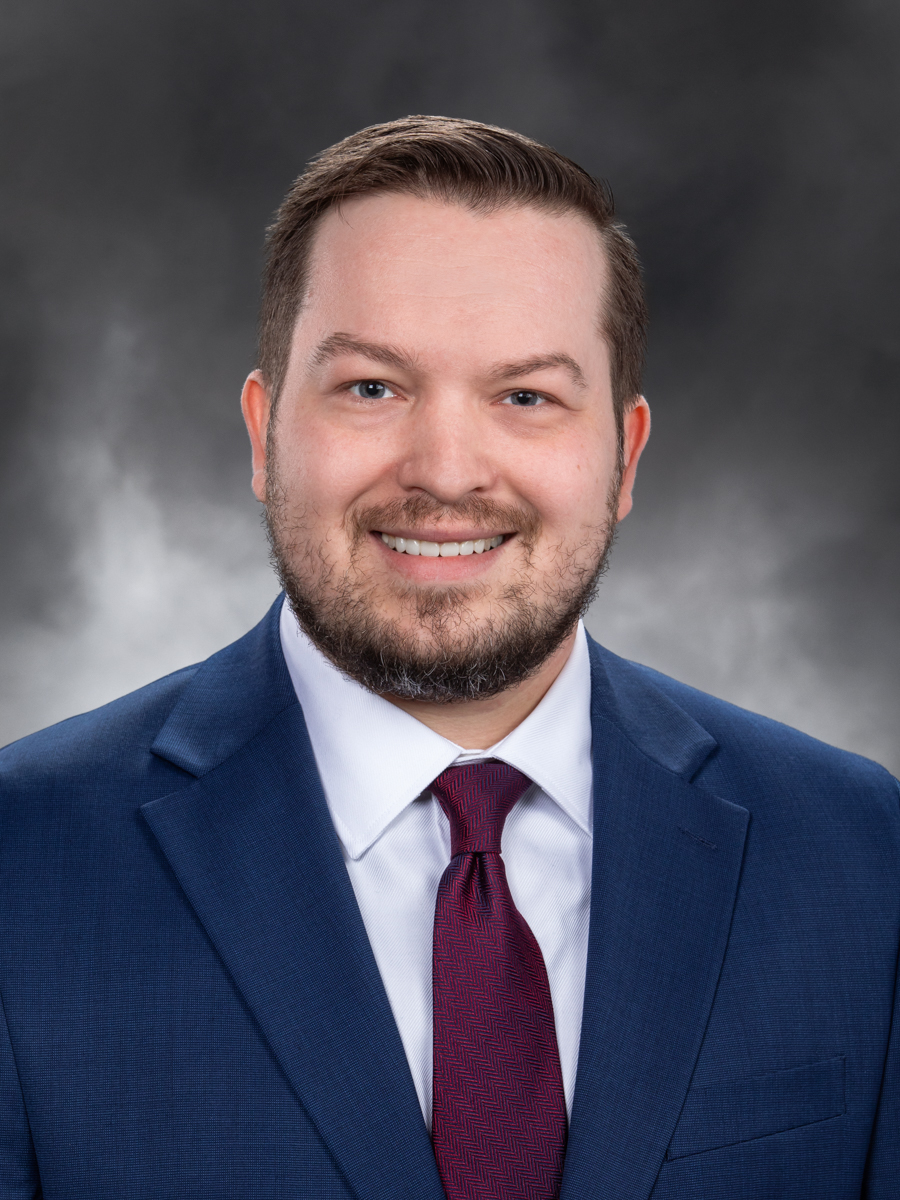
Photo of Travis Couture
R Washington House · District 35 On the 2026 ballot

Rep. Travis Couture

Compare
Total votes
2,532
all sessions
Attendance
100%
7 missed
Near the chamber average
With party
95%
of cast votes
Near the chamber average
Bipartisan score
2%
crosses aisle rarely
Near the chamber average
Sponsored
386
bills & resolutions
Near the chamber average
Committees
4
assignments
386 bills and resolutions

Sponsored bills

Total
386
Primary
65
Co-sponsor
321
This page
386
matching current filters
Co-sponsor HB 1369
In committee · Washington House · Co-sponsor
Creating special license plates that support working forests.

Maddy summaryHB 1369 creates a new "Working forests" special license plate for Washington vehicle owners. The plate requires a $40 initial registration fee and a $30 annual renewal fee. Revenue from these fees will directly support working forests in the state, as specified by the bill's title and description. The plate will display an image representing working forests and is available for purchase by any vehicle owner who chooses to contribute.

In committee Jan 12, 2026 1 co-sponsor
Co-sponsor HB 1266
In committee · Washington House · Co-sponsor
Establishing the Washington state commission on boys and men.

Maddy summaryHB 1266 establishes the Washington State Commission on Boys and Men within the governor's office to address issues affecting boys and men across six focus areas: mental/physical health, education, careers, fatherhood, the preschool-to-prison pipeline, and court system experiences. The commission, composed of 11 appointed non-legislative members (with diverse representation requirements) and 4 legislative advisory members, will monitor legislation, coordinate with other commissions (like the women's and LGBTQ commissions), gather data, and submit biennial reports to the legislature and governor. Its key duties include identifying needs, advising state agencies on policies affecting boys and men, holding public hearings, and advocating for removing barriers they face. This is a structural commission creation bill, not a policy change, with no direct fiscal impact detailed in the provided text.

In committee Jan 12, 2026 1 co-sponsor
Co-sponsor HB 1331
In committee · Washington House · Co-sponsor
Increasing public safety by elevating the penalty for unlawful delivery of a controlled substance resulting in death.

Maddy summaryHB 1331 changes the legal classification for cases where someone unlawfully delivers a controlled substance (like drugs) that causes the death of the person who used it. It reclassifies this as "manslaughter in the first degree" (a class A felony) under Washington law, instead of the previous penalty structure. This specifically affects individuals who deliver drugs that directly result in a user's death, such as in overdose cases. The bill repeals the existing "controlled substances homicide" penalty section (RCW 69.50.415) to implement this new classification. The change aims to strengthen penalties for drug dealers whose actions cause fatal outcomes.

In committee Jan 12, 2026 1 co-sponsor
Co-sponsor HB 2036
In committee · Washington House · Co-sponsor
Concerning persons convicted of violent offenses with a firearm.

Maddy summaryHB 2036 prohibits individuals convicted of violent offenses involving a firearm from earning early release credits under Washington's sentencing laws. It directly affects people serving sentences for violent crimes where a firearm was used or involved, as defined by existing law. The bill amends RCW 9.94A.729 to explicitly deny all "good time credits or earned release time" for sentences tied to such offenses. This change modifies current early release eligibility rules, ensuring offenders convicted of firearm-related violent crimes cannot reduce their sentences through earned credits. The policy focuses on restricting sentence reductions for specific high-risk offenses, not altering general sentencing guidelines.

In committee Jan 12, 2026 1 co-sponsor
Primary HJR 4206
In committee · Washington House · Lead sponsor
Amending the Constitution to require a two-thirds majority vote of the legislature to raise taxes.

Maddy summaryHJR 4206 proposes amending Washington's Constitution to require a two-thirds majority vote in both the House and Senate to raise taxes. It defines "raises taxes" broadly as any legislative action increasing state tax revenue deposited into any fund or account, regardless of where the funds go. The amendment would prevent tax increases from passing with a simple majority, requiring broader legislative consensus. It also maintains the existing process allowing tax increases to be referred to voters via referendum. This bill directly affects how the legislature passes tax-related measures.

In committee Jan 12, 2026 0 co-sponsors
Co-sponsor HB 1025
In committee · Washington House · Co-sponsor
Reopening the exemption from the long-term services and supports trust program for employees who have purchased long-term care insurance.

Maddy summaryHB 1025 allows Washington employees with long-term care insurance purchased before November 1, 2027, to apply for an exemption from the long-term services and supports trust program premium. This exemption is permanent, meaning these employees will no longer be eligible for coverage under the program. The bill extends the application window for exemptions to December 31, 2028, and requires employees to notify employers of their exemption. Employers must stop deducting premiums after notification and refund any premiums deducted after that point.

In committee Jan 12, 2026 1 co-sponsor
Primary HB 2054
In committee · Washington House · Lead sponsor
Limiting the number of full-time equivalent employees in higher education.

Maddy summaryHB 2054 limits staffing at Washington's community and technical colleges by requiring that no college employs more than one full-time equivalent employee for every six full-time equivalent enrolled students. This rule applies directly to all community and technical colleges across the state, calculated as an annual average. The bill mandates that colleges maintain this 1:6 employee-to-student ratio as part of their operational standards. It does not change tuition, academic programs, or other core functions, but directly affects how colleges manage their workforce based on enrollment numbers.

In committee Jan 12, 2026 0 co-sponsors
Co-sponsor HB 1452
In committee · Washington House · Co-sponsor
Addressing motor vehicle and retail theft offenses.

Maddy summaryHB 1452 increases penalties for motor vehicle and retail theft in Washington. It creates new felony charges for "organized retail theft" (starting at $750 in stolen goods across multiple stores or with multiple accomplices) and adds a $50,000 fine for thefts exceeding $20,000. Drivers who flee police while suspected of vehicle theft face harsher penalties, including a more severe felony charge. The bill also directs funding for specialized prosecutors in counties with high theft rates to address these crimes.

In committee Jan 12, 2026 1 co-sponsor
Co-sponsor HB 1451
In committee · Washington House · Co-sponsor
Concerning civil commitment of sexually violent predators.

Maddy summaryHB 1451 amends Washington state law governing the civil commitment of individuals deemed "sexually violent predators" who suffer from mental abnormalities or personality disorders making them likely to commit predatory sexual acts if not confined. The bill clarifies definitions (including "sexually violent offense," "predatory acts," and "less restrictive alternative") and establishes new requirements for conditional release, such as ensuring counties have adequate housing options for released individuals. It also restricts placement near "risk potential" locations like schools, parks, and youth facilities, while defining "secure community transition facilities" for supervised release. The changes aim to balance community safety with structured release options for those subject to civil commitment.

In committee Jan 12, 2026 1 co-sponsor
Co-sponsor HB 1286
In committee · Washington House · Co-sponsor
Concerning the crime of endangerment with a controlled substance.

Maddy summaryHB 1286 makes it a class B felony to knowingly allow a dependent child or adult to be exposed to, ingest, inhale, or touch any controlled substance (including those in Schedules I-IV under Washington or federal law), unless the substance was obtained via a valid medical prescription. This law directly affects caregivers, such as parents or guardians, who may unintentionally or intentionally expose dependents to these substances. The key provision criminalizes exposure without medical authorization, while explicitly allowing legally prescribed medications. Penalties apply to all controlled substances in Schedules I-IV, with no exception for non-prescription use.

In committee Jan 12, 2026 1 co-sponsor
Showing 131 to 140 of 386 bills
Previous 1 … 13 14 15 … 39 Next