

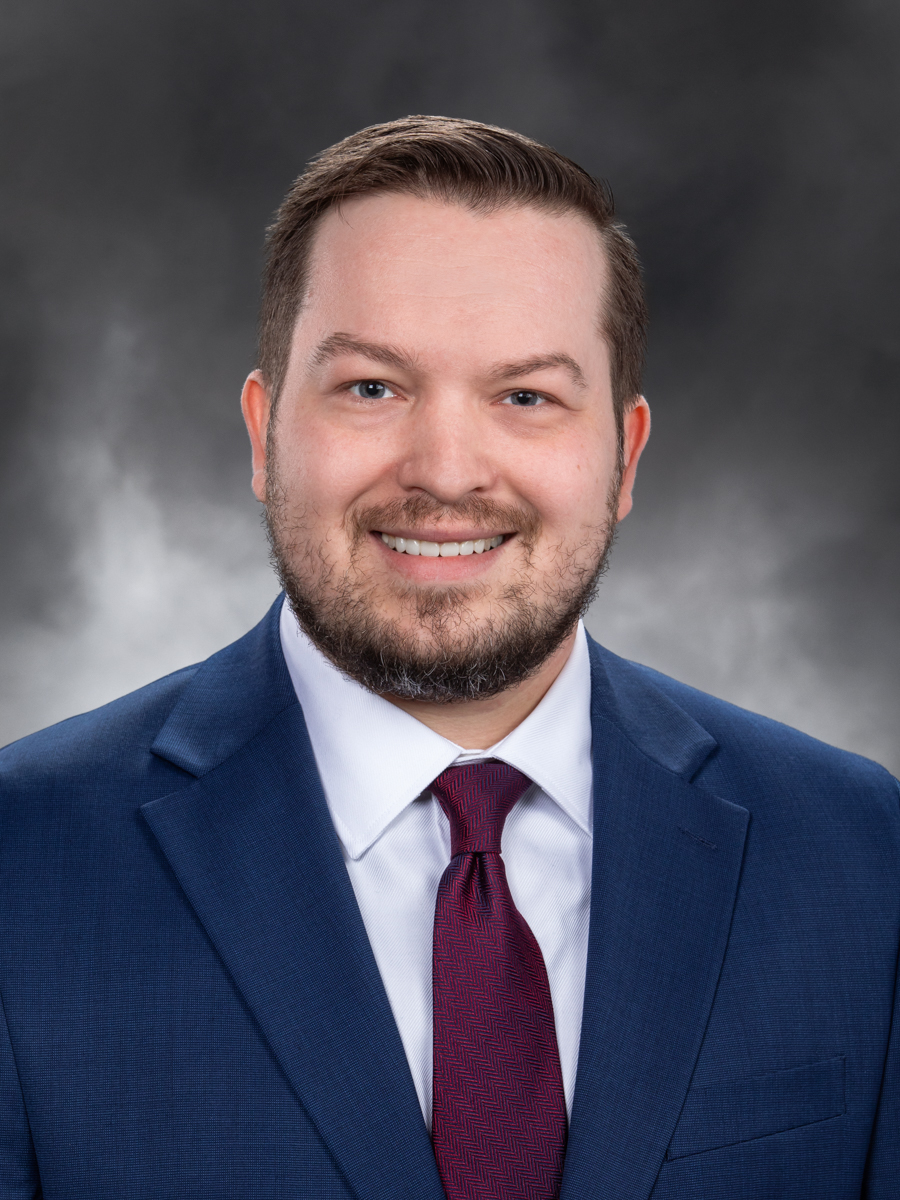
Photo of Travis Couture
R Washington House · District 35 On the 2026 ballot

Rep. Travis Couture

Compare
Total votes
2,532
all sessions
Attendance
100%
7 missed
Near the chamber average
With party
95%
of cast votes
Near the chamber average
Bipartisan score
2%
crosses aisle rarely
Near the chamber average
Sponsored
386
bills & resolutions
Near the chamber average
Committees
4
assignments
386 bills and resolutions

Sponsored bills

Total
386
Primary
65
Co-sponsor
321
This page
386
matching current filters
Co-sponsor HB 1084
In committee · Washington House · Co-sponsor
Establishing tax exemptions for unleaded aircraft fuel.

Maddy summaryThis bill removes excise taxes on unleaded aircraft fuel (defined as 100 octane fuel without lead) for both businesses and consumers who use it. It directly affects aircraft fuel dealers, distributors, and aviation operators (including air carriers and local service commuters) who purchase or use this specific fuel. Key provisions amend tax codes to exempt unleaded aircraft fuel from excise taxes under RCW 82.42.030 and create new exemptions in chapters 82.08 and 82.12. The tax exemptions expire on January 1, 2032, and apply only to commercially available unleaded fuel meeting the defined standard.

In committee Jan 12, 2026 1 co-sponsor
Co-sponsor HB 1200
In committee · Washington House · Co-sponsor
Authorizing payment for parental caregivers of minor children with developmental disabilities.

Maddy summaryThis bill would allow parents to be paid for providing specialized care to their minor children (under 18) with developmental disabilities. It requires the state to seek federal approval to pay parents for "extraordinary care" - defined as care beyond typical parenting duties needed to prevent institutionalization. If approved, parents would qualify for payment under specific rules, including meeting training requirements like other caregivers. The bill applies only to children in certain high-need assessment categories and does not affect existing services for adults or non-disabled individuals.

In committee Jan 12, 2026 1 co-sponsor
Co-sponsor HB 1285
Passed · Washington House · Co-sponsor
Making financial education instruction a graduation requirement in public schools.

Maddy summaryHB 1285 establishes financial education instruction as a graduation requirement for public high school students in Washington state. Beginning in the 2027-28 school year, all high schools must provide instruction in the state financial education learning standards. Starting with the graduating class of 2031, students will be required to meet these standards to graduate. The bill also tasks the Office of the Superintendent of Public Instruction with making instructional materials available and outlines monitoring responsibilities for the State Board of Education.

Passed Jan 12, 2026 1 co-sponsor
Co-sponsor HB 2012
In committee · Washington House · Co-sponsor
Funding the transition to kindergarten program.

Maddy summaryHB 2012 allocates $16.2 million for the 2024-25 school year and $4.7 million for 2025-26 to fund Washington's "transition to kindergarten" program, which helps children needing extra preparation before kindergarten. It directly affects public school districts, charter schools, and state-tribal education compact schools operating the program. Key provisions include requiring schools to prioritize low-income families for enrollment, prohibiting tuition fees or disability-based exclusions, mandating developmental assessments, and establishing a funding formula based on eligible student counts. The bill also sets standards for program eligibility (children age 4 by August 31 who need additional kindergarten preparation) and requires schools to adopt policies meeting state guidelines.

In committee Jan 12, 2026 1 co-sponsor
Primary HB 2053
In committee · Washington House · Lead sponsor
Concerning limiting state employment based on population.

Maddy summaryHB 2053 would limit Washington State's employment by requiring that the state not hire more than one full-time equivalent employee for every 70 residents. This applies to all state agencies and departments, using the Office of Financial Management's official population estimates to calculate the cap. The bill amends state law to add this requirement, averaging employee counts over the fiscal year and basing population on the office's certified data. It directly affects state hiring decisions but does not change current staffing levels. The policy sets a concrete numerical limit on state workforce size relative to population.

In committee Jan 12, 2026 0 co-sponsors
Co-sponsor HB 1777
In committee · Washington House · Co-sponsor
Concerning the requirements and process for approving and registering apprenticeship programs.

Maddy summaryHB 1777 streamlines the state approval process for apprenticeship programs that already have federal approval, directly affecting program sponsors (including tribal and nontribal organizations) and employers seeking to expand training opportunities. It requires the apprenticeship council to expedite reviews of federally-approved programs by limiting state-specific scrutiny to unique requirements, while reforming competitor objections: objections must be filed within 30 days of provisional approval, and frivolous objections can trigger penalties like attorney fee payments or $10,000 fines. The bill also mandates annual reports comparing Washington’s program approval rates to federal standards and other states, including details on pending applications and denial reasons. These changes aim to reduce current delays - where 4 of 17 2024 applications remained pending after federal approval - without altering apprenticeship content or creating new training slots.

In committee Jan 12, 2026 1 co-sponsor
Co-sponsor HB 1276
In committee · Washington House · Co-sponsor
Concerning organized retail theft.

Maddy summaryHB 1276 (titled "Concerning organized retail theft") actually modifies sentencing guidelines for violent crimes involving firearms or deadly weapons, not retail theft itself. The bill adds mandatory sentence enhancements: 5 years for Class A felonies, 3 years for Class B, and 18 months for Class C when a firearm was used during the crime. These enhancements must be served consecutively to other sentences and cannot be reduced if they exceed statutory maximums. The bill applies to offenders convicted of eligible felonies committed after July 23, 1995, excluding specific weapons offenses like machine guns. Note: The bill’s title is misleading, as it does not address retail theft but focuses on sentencing for firearm/deadly weapon crimes.

In committee Jan 12, 2026 1 co-sponsor
Co-sponsor HB 1538
In committee · Washington House · Co-sponsor
Providing capital financial assistance to small school districts with demonstrated funding challenges.

Maddy summaryHB 1538 creates a new grant program to help small, financially struggling school districts (with 1,000 students or fewer) modernize or rebuild aging school buildings. It requires projects to address critical safety issues like seismic risks, outdated infrastructure, and accessibility barriers in buildings over 30 years old and rated "poor" by the state. Districts must first secure a planning grant to assess needs before applying for construction grants, with funding prioritized based on financial need and building conditions. Grants cover project planning, design, and construction costs (excluding district administration), but cannot exceed 110% of the statewide average cost per square foot.

In committee Jan 12, 2026 1 co-sponsor
Co-sponsor HB 1117
In committee · Washington House · Co-sponsor
Removing the delegation of authority related to California motor vehicle emissions standards to generate new transportation revenue for the state by reducing administration burdens on the government and the people.

Maddy summaryHB 1117 repeals Washington State's adoption of California's motor vehicle emissions standards, which had caused registration barriers for vehicles meeting federal standards. The bill directly affects vehicle owners who previously needed 407,541 exemptions to register their vehicles and government agencies managing registrations. Key provisions require the Department of Licensing to register previously prohibited vehicles (if they meet state requirements) and direct the Department of Ecology to repeal all rules implementing California standards. This eliminates administrative burdens on both the public and government, allowing vehicles to be registered without exemptions under federal standards. The bill takes immediate effect as an emergency measure.

In committee Jan 12, 2026 1 co-sponsor
Co-sponsor HB 1366
In committee · Washington House · Co-sponsor
Authorizing military surplus vehicles to operate on public highways.

Maddy summaryHB 1366 allows owners of military surplus vehicles (like decommissioned military trucks) to operate them on Washington public highways for specific purposes, including parades, veterans' events, car club activities, and exhibitions. The bill requires these vehicles to pass a safety inspection verifying original or equivalent safety equipment (headlamps, brakes, seat belts, etc.), carry liability insurance meeting minimum standards, and not be used for daily commuting. Owners must obtain a special collector license plate and comply with restrictions limiting use to occasional event participation. This modifies existing vehicle laws to create a defined exception for military surplus vehicles while maintaining safety and insurance requirements.

In committee Jan 12, 2026 1 co-sponsor
Showing 121 to 130 of 386 bills
Previous 1 … 12 13 14 … 39 Next