

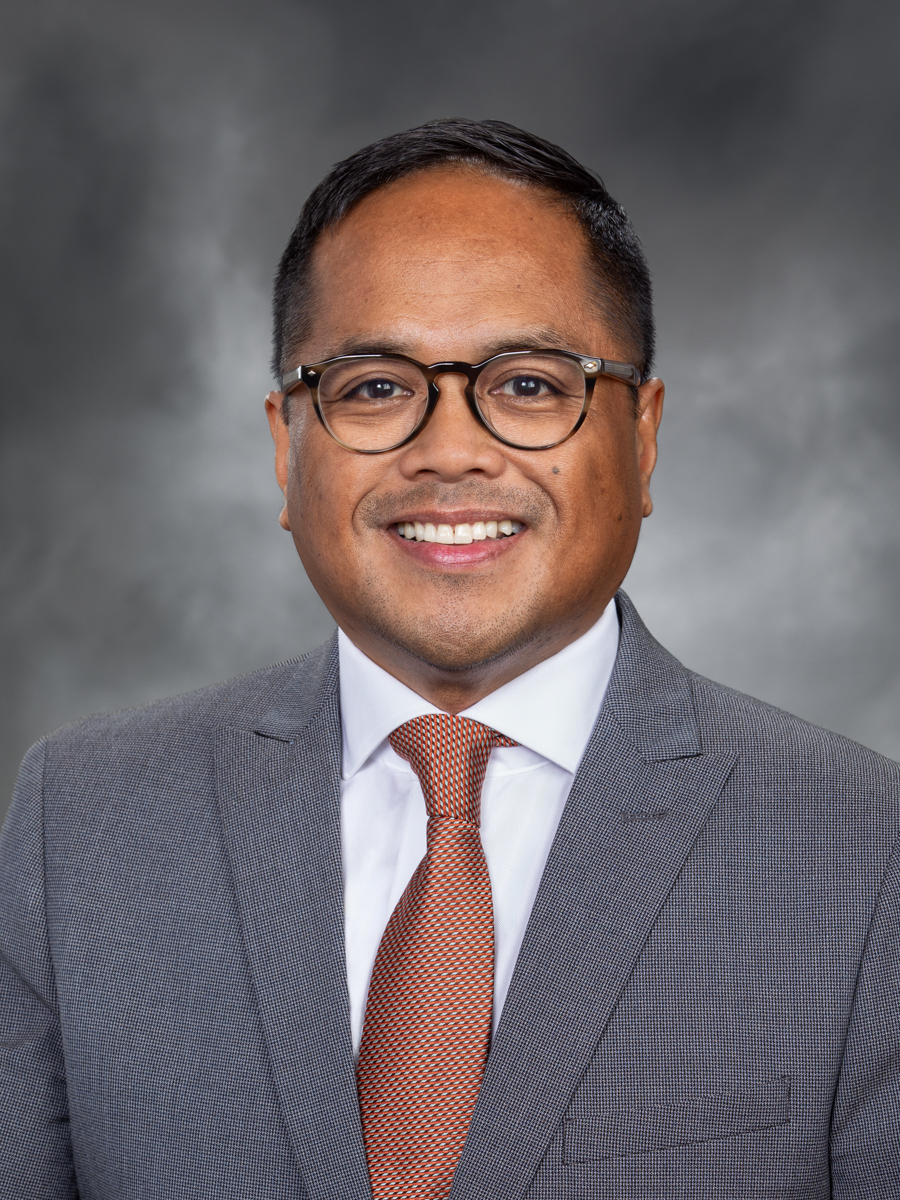
Photo of Edwin Obras
D Washington House · District 33 On the 2026 ballot

Rep. Edwin Obras

Compare
Total votes
1,201
all sessions
Attendance
100%
4 missed
Near the chamber average
With party
99%
of cast votes
Higher than 95% of chamber peers
Bipartisan score
0%
crosses aisle rarely
Lower than 97% of chamber peers
Sponsored
257
bills & resolutions
Higher than 79% of chamber peers
Committees
3
assignments
257 bills and resolutions

Sponsored bills

Total
257
Primary
16
Co-sponsor
241
This page
257
matching current filters
Primary HB 1943
In committee · Washington House · Lead sponsor
Encouraging public school instruction in awareness of blood donation.

Maddy summaryHB 1943 requires Washington public high schools (grades 9-12) to include blood donation awareness instruction in at least one required health class starting in the 2025-26 school year. The bill directs schools to use programs from approved organizations like the American Red Cross or Bloodworks Northwest, which must be posted on the state education website. It also allows schools serving grades K-8 to offer age-appropriate versions of this instruction. The bill aims to educate students about blood donation’s life-saving impact and eligibility, complementing existing health education without mandating certified staff delivery.

In committee Jan 12, 2026 0 co-sponsors
Co-sponsor HB 1070
In committee · Washington House · Co-sponsor
Concerning industrial insurance coverage for posttraumatic stress disorders affecting correctional facility workers.

Maddy summaryHB 1070 creates a legal presumption that posttraumatic stress disorder (PTSD) is an occupational disease for correctional facility workers in Washington state, directly affecting staff employed at prisons, jails, or community corrections facilities. The bill establishes that after 90 consecutive days of full-time, compensated employment, PTSD claims for these workers are presumed work-related unless the employer provides evidence to the contrary. It also requires employers to cover reasonable appeal costs (including attorney fees) if workers win their claims in court or before the Industrial Insurance Appeals Board. This applies to claims filed within three months per year of employment, up to a maximum of 60 months after leaving the job. The law takes effect January 1, 2026.

In committee Jan 12, 2026 1 co-sponsor
Co-sponsor HB 1357
In committee · Washington House · Co-sponsor
Providing special education funding and support for inclusionary practices.

Maddy summaryHB 1357 (Washington State) updates special education funding to incentivize inclusive classrooms. It revises the funding formula so school districts receive higher per-student allocations (1.18 multiplier) for students with disabilities spending 80%+ of their day in general education settings, versus a lower rate (1.09) for less inclusive placements. The bill also creates a grant program for up to 20 "pilot schools" to become centers of excellence in inclusionary practices, requiring demonstrated leadership commitment, staff training plans, and data on current inclusion efforts. These schools would receive funding to reach a 1.5 inclusion multiplier over four years. The bill directly affects school districts and students with disabilities in Washington state, focusing on concrete funding changes and support mechanisms to promote inclusive education.

In committee Jan 12, 2026 1 co-sponsor
Co-sponsor HB 1192
In committee · Washington House · Co-sponsor
Concerning disciplinary hearings held by the department of corrections.

Maddy summaryHB 1192 reforms disciplinary procedures for individuals under community custody or in confinement within Washington State's Department of Corrections. It creates a structured system classifying violations as "low level" (with limits on confinement to three days) or "high level" (allowing up to 30 days in confinement), with escalation after five low-level violations. The bill mandates written notice, timely hearings (within 5-15 business days), and specific appeal rights to a three-member panel, requiring sanctions to be reasonably related to the offense, violation, or community safety. Special rules apply for individuals violating conditions related to certain violent or sexual offenses, requiring prehearing confinement until resolution or new charges. All disciplinary decisions must be based on a preponderance of evidence, not unconfirmed allegations.

In committee Jan 12, 2026 1 co-sponsor
Co-sponsor HB 1146
In committee · Washington House · Co-sponsor
Improving access and removing barriers to voting in jails and state hospitals.

Maddy summaryHB 1146 requires Washington County auditors, jails, and state hospitals to create joint voting plans by 2026 to improve voting access for people incarcerated in jails or hospitalized at state facilities. The bill mandates specific support, including voter registration assistance, access to ballots eight days before elections, nonpartisan candidate information, and accommodations for people with disabilities. Jails and hospitals must designate voting coordinators, provide materials for registration and ballot completion, and document voting-related requests. Violations can be enforced by the Attorney General, with courts awarding $25,000 penalties for intentional breaches starting in 2030.

In committee Jan 12, 2026 1 co-sponsor
Primary HB 1424
In committee · Washington House · Lead sponsor
Concerning transparency, public safety, and independent oversight of the city, county, and regional jail system in Washington state.

Maddy summaryHB 1424 creates an independent Jail Oversight Board within the governor's office to improve transparency and safety in Washington's city, county, and regional jails. The board, appointed by the governor, will include seven members representing diverse perspectives such as jail administrators, health care providers, and individuals with lived experience of incarceration. Its role is to ensure safe and humane conditions for jail staff and people held in custody while promoting a more rehabilitative approach to jail operations. This new oversight structure replaces the previous system eliminated in 1987 and aligns with practices in 29 other states.

In committee Jan 12, 2026 0 co-sponsors
Co-sponsor HB 1113
Passed · Washington House · Co-sponsor
Concerning accountability and access to services for individuals charged with a misdemeanor.

Maddy summaryHB 1113, known as the public SAFE-T Act, creates a pathway for individuals charged with certain simple or gross misdemeanors in Washington state to have their charges dismissed. Under this bill, a court may agree to dismiss a misdemeanor charge if the defendant waives their right to a speedy trial and substantially complies with court-ordered conditions and programs for up to 12 months. Full restitution is a required condition for dismissal, although inability to pay due to indigence is not a barrier if progress is made. However, the bill explicitly excludes a wide range of specific offenses, such as domestic violence, DUI-related charges, and certain assault or firearm offenses, from this dismissal process.

Passed Jan 12, 2026 1 co-sponsor
Co-sponsor HB 1158
In committee · Washington House · Co-sponsor
Improving community inclusion services for individuals with developmental disabilities.

Maddy summaryHB 1158 requires Washington's Department of Social and Health Services to contract directly with service providers for community inclusion services supporting individuals with developmental disabilities. It establishes new standards: services must occur in integrated community settings, allow group interactions (not just one-on-one care), limit billing for administrative tasks to 15 minutes per client weekly, and ensure service hours remain stable even if bundled with other services. The bill specifically defines "community inclusion services" to include skill development, community engagement, and relationship-building opportunities in typical community environments. These changes directly affect people with developmental disabilities receiving state-funded community services and the providers delivering them.

In committee Jan 12, 2026 1 co-sponsor
Co-sponsor HB 1739
In committee · Washington House · Co-sponsor
Regulating the use of self-service checkout stations.

Maddy summaryHB 1739 regulates self-service checkout stations in Washington state grocery stores over 15,000 square feet. It requires stores to offer at least one manual checkout station for every customer when self-service is available, limit self-service transactions to 15 items (with visible signage), and ensure one employee monitors no more than two self-service stations at a time while relieved from other duties. Stores must also include self-service checkout in workplace hazard analysis for safety programs. The law exempts discount warehouses selling primarily bulk items and imposes daily civil penalties of $100 (capped at $10,000) for violations.

In committee Jan 12, 2026 1 co-sponsor
Co-sponsor HB 1076
In committee · Washington House · Co-sponsor
Concerning the health technology assessment program.

Maddy summaryHB 1076 establishes a structured process for Washington State’s health technology assessment program, directly affecting state health programs (like Medicaid) that decide which medical technologies qualify for coverage. The bill requires the state to systematically review health technologies prioritized based on Medicare coverage, expert guidelines, safety concerns, high costs, or significant usage variations, with up to eight reviews annually. Key provisions mandate evidence-based assessments of safety, efficacy, and cost-effectiveness - considering patient input and unique impacts on populations (e.g., age, disability) - and require decisions within 180 days of submission. The program must align with federal Medicare decisions unless new evidence supports a different conclusion, ensuring transparency through public comment and written explanations for denied requests.

In committee Jan 12, 2026 1 co-sponsor
Showing 161 to 170 of 257 bills
Previous 1 16 17 18 26 Next