

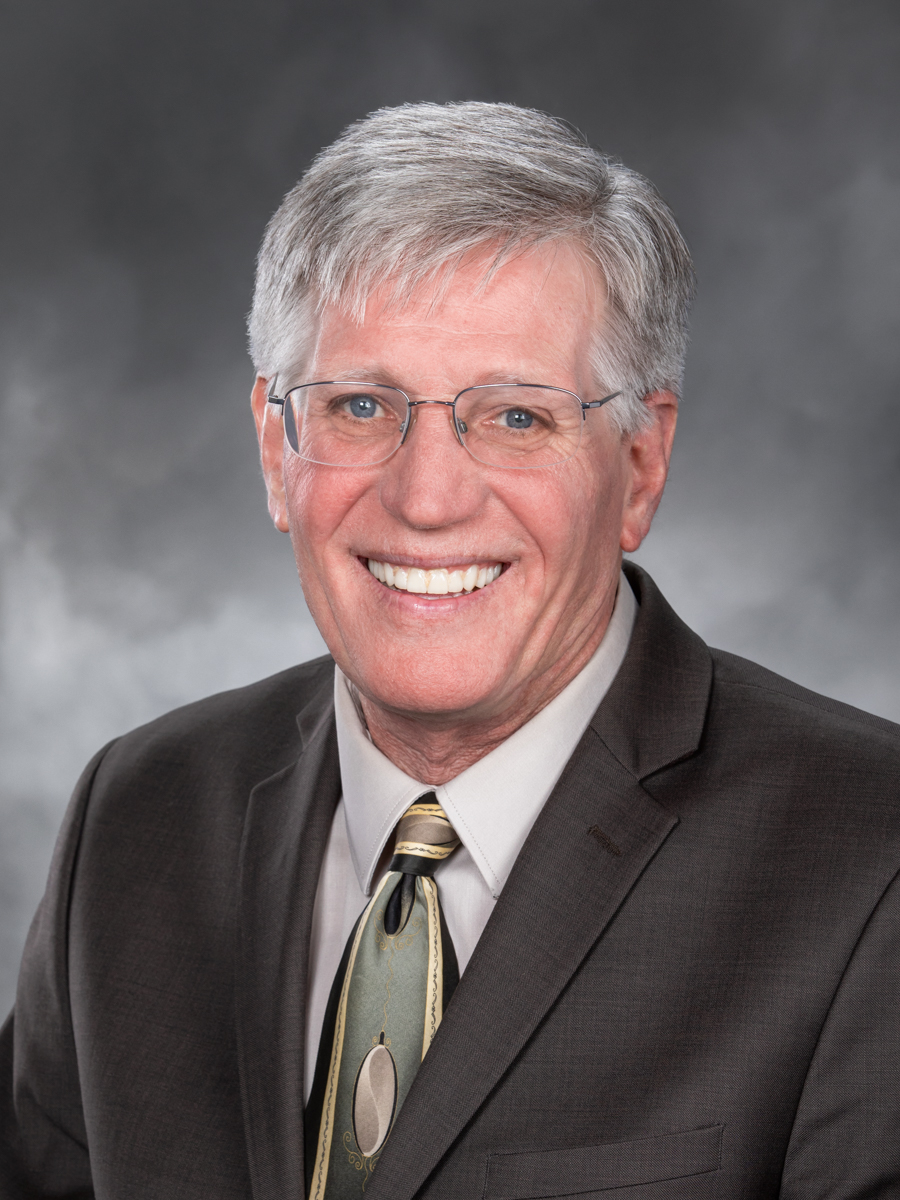
Photo of Timm Ormsby
D Washington House · District 3

Rep. Timm Ormsby

Compare
Total votes
6,316
all sessions
Attendance
99%
41 missed
Near the chamber average
With party
99%
of cast votes
Near the chamber average
Bipartisan score
0%
crosses aisle rarely
Near the chamber average
Sponsored
1,706
bills & resolutions
Higher than 94% of chamber peers
Committees
4
assignments
1,706 bills and resolutions

Sponsored bills

Total
1,706
Primary
84
Co-sponsor
1,622
This page
1,706
matching current filters
Co-sponsor HB 1233
Passed · Washington House · Co-sponsor
Concerning work programs for incarcerated persons.

Maddy summaryHouse Bill 1233, known as the "ending forced labor act," aims to reform work programs for incarcerated persons within Washington State's correctional facilities. The bill updates legal terminology, replacing terms like "inmate" and "offender" with "incarcerated person." While the specific changes to work programs are not detailed in the provided text, the bill's title indicates a focus on ensuring these programs do not constitute forced labor. It also distinguishes between "privileges" earned through good conduct and performance, and services the department is legally required to provide.

Passed Jan 12, 2026 1 co-sponsor
Co-sponsor HB 1317
In committee · Washington House · Co-sponsor
Concerning persons serving long sentences for offenses committed prior to reaching 21 years of age.

Maddy summaryHB 1317 modifies sentencing guidelines for individuals who committed crimes before turning 21 but were tried as adults. The bill amends RCW 9.94A.510 and 9.94A.540 to create different sentencing standards for this group, particularly changing minimum terms for aggravated first-degree murder committed by those under 21. It also adjusts eligibility for early release programs and community custody by removing certain restrictions that previously applied to this group. This legislation would directly affect people currently serving long sentences for offenses committed before age 21.

In committee Jan 12, 2026 1 co-sponsor
Primary HB 1646
In committee · Washington House · Lead sponsor
Adding the department of natural resources' civil enforcement decisions under RCW 76.04.205 to appeals that may be heard by the pollution control hearings board.

Maddy summaryHB 1646 adds the Department of Natural Resources' (DNR) civil enforcement decisions under RCW 76.04.205 to the list of cases that can be appealed to the Pollution Control Hearings Board. This change directly affects individuals or businesses facing DNR enforcement actions related to natural resource management. The bill explicitly expands the board's jurisdiction to include these specific DNR decisions, which were previously not covered under the board's authority. This adjustment streamlines appeals for these cases by directing them to a single established forum instead of other potential review channels.

In committee Jan 12, 2026 0 co-sponsors
Primary HB 1197
In committee · Washington House · Lead sponsor
Making 2023-2025 fiscal biennium second supplemental operating appropriations.

Maddy summaryHB 1197 is a supplemental appropriations bill funding state court operations and specific programs for the 2023-2025 fiscal biennium. It allocates funds primarily to state courts (e.g., $28.6 million for the Court of Appeals in FY 2025) and counties for juvenile justice services ($7 million annually for truancy and youth case management), court security in rural areas ($1 million), and an equity dashboard program ($1.35 million for data collection on justice disparities). The bill directs specific funding streams for court-appointed attorneys, lactation spaces in courthouses, and opioid settlement fund uses. These appropriations directly affect state courts, county juvenile programs, and local court facilities across Washington.

In committee Jan 12, 2026 0 co-sponsors
Co-sponsor HB 1306
In committee · Washington House · Co-sponsor
Establishing preceptorship and hardship pathways to medical practice for international medical graduates.

Maddy summaryHB 1306 creates two pathways for international medical graduates (IMGs) to obtain full medical licenses in Washington without completing standard U.S. postgraduate training. The primary pathway requires 48 months of supervised clinical practice under a licensed physician, followed by assessments and documentation to demonstrate competence. A hardship pathway also allows waivers for specific situations like refugee status or persecution, though it excludes failures in standard exams. The bill directly affects IMGs seeking to practice in Washington, modifying existing licensing rules to accommodate their credentials. It does not change requirements for U.S.-trained physicians but provides alternative routes for qualified IMGs.

In committee Jan 12, 2026 1 co-sponsor
Co-sponsor HB 1808
In committee · Washington House · Co-sponsor
Creating an affordable homeownership revolving loan fund program.

Maddy summaryHB 1808 creates a state-funded revolving loan program to support permanently affordable homeownership for low-income households. The program provides loans (up to 50% of project costs) to nonprofit developers building housing that remains affordable for at least 99 years through long-term restrictions on resale and ownership. Loans carry interest rates between 1% and 2.5%, with repayments recycled into the fund to finance new projects. This directly affects low-income homebuyers (defined as households earning ≤80% of local median income) and nonprofit developers who build housing meeting specific affordability standards.

In committee Jan 12, 2026 1 co-sponsor
Co-sponsor HB 1503
Passed · Washington House · Co-sponsor
Furthering digital equity and opportunity in Washington state.

Maddy summaryHB 1503 aims to further digital equity and opportunity for all residents in Washington state, particularly focusing on underserved populations. The bill intends to broaden access to the internet, appropriate devices, and digital skills by expanding state assistance and support programs. It clarifies the collaboration between the Department of Commerce, responsible for broadband infrastructure, and the Office of Equity, which focuses on providing digital devices and services to individuals. Additionally, the bill updates definitions for terms like "broadband," "digital equity," and "low-income" households to enhance these efforts.

Passed Jan 12, 2026 1 co-sponsor
Co-sponsor HB 1561
In committee · Washington House · Co-sponsor
Providing labor market protections for domestic workers.

Maddy summaryHB 1561 extends key labor protections to domestic workers in Washington state, including nannies, house cleaners, home care workers, and household managers. The bill requires employers to pay the state minimum wage, provide overtime pay for hours over 40 per week, mandate 30-minute meal breaks after 2-5 hours of work, and guarantee 10-minute rest breaks every four hours. It also mandates written employment agreements in understandable language covering pay, schedule, and benefits, while prohibiting waivers of legal rights or forced arbitration clauses. The law explicitly excludes casual babysitters, family members, and workers in certain home-sitting roles from coverage.

In committee Jan 12, 2026 1 co-sponsor
Primary HB 2011
In committee · Washington House · Lead sponsor
Developing a schedule for court appointment of attorneys for children and youth in dependency and termination proceedings.

Maddy summaryThis bill requires courts to appoint attorneys for children in dependency and termination cases at specific times: children under 8 must have an attorney appointed when a termination petition is filed, and children aged 8-17 must have one appointed before the shelter care hearing for new dependency cases. It establishes an 11-year phased implementation schedule (ending in 2032) to expand attorney appointments county by county, prioritizing counties without current practices or with racial disparities in child welfare. The state will fund these legal services through a statewide program that oversees attorney recruitment, training, and adherence to professional standards. The program must also maintain continuity of counsel for children already represented when the statewide system begins in a county.

In committee Jan 12, 2026 0 co-sponsors
Co-sponsor HB 1449
In committee · Washington House · Co-sponsor
Legalizing the home cultivation of cannabis by persons who are 21 years of age and older.

Maddy summaryHB 1449 legalizes home cultivation of cannabis for Washington residents aged 21 and older. The bill allows individuals to grow up to six cannabis plants per household (with a maximum of 15 plants total per residence) and possess cannabis products within state-set limits, including up to 1/2 ounce of useable cannabis. It prohibits visible cultivation from public view or neighboring properties and restricts non-commercial sharing to no more than 1/2 ounce per 24 hours among adults 21+. The law does not apply to minors, commercial activity, or public consumption.

In committee Jan 12, 2026 1 co-sponsor
Showing 321 to 330 of 1,706 bills
Previous 1 … 32 33 34 … 171 Next