

Maddy summaryHB 1680 creates a new "oral preventive assistant" license in Washington, allowing trained professionals to perform specific preventive dental services under a dentist's supervision. It directly affects dental practices and patients seeking routine care by expanding who can provide services like cleanings (prophylaxis) and basic gum checks (periodontal probing) for patients with healthy mouths. The bill establishes training requirements, defines the scope of allowable tasks (such as dental assisting duties and non-invasive procedures), and mandates that dentists verify assistants' competency before assigning tasks. This aims to increase access to preventive dental care by adding a new tier of dental support staff, while maintaining dentist oversight for complex procedures.
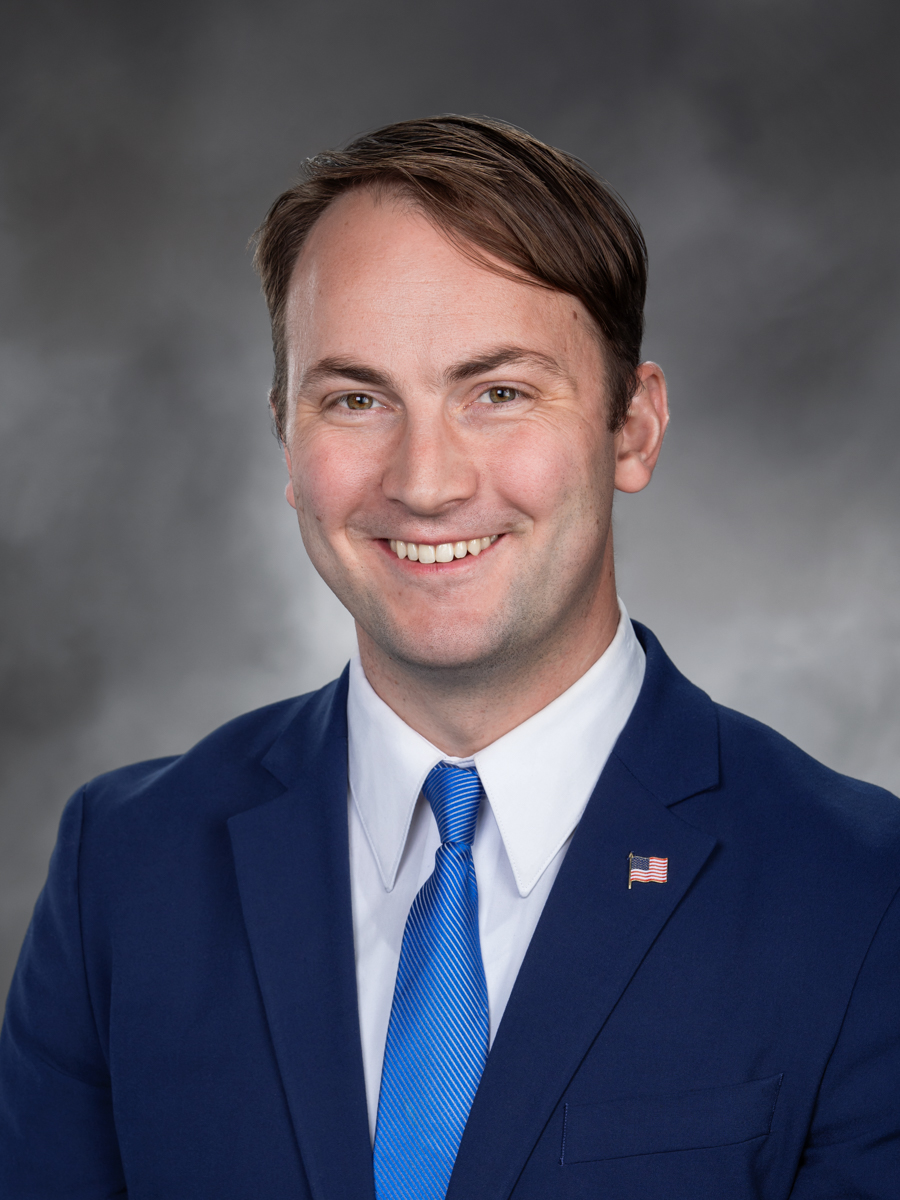
Rep. Adison Richards
Sponsored bills
Maddy summaryHB 1335 adds "military spouse status" to Washington's anti-discrimination law, making it illegal for employers to discriminate against military spouses in hiring, firing, or employment conditions. The bill explicitly includes military spouses as a protected class under existing laws that prohibit discrimination based on race, gender, disability, and other factors. It amends Washington’s civil rights statute (RCW 49.60) to guarantee military spouses the right to "obtain and hold employment without discrimination" and provides legal recourse for violations. This change directly affects military spouses in Washington and all employers covered by the state’s anti-discrimination law.
Maddy summaryHB 1092 modifies Washington state law to clarify when children may be removed from homes due to safety concerns. It expands grounds for removal to include un-prescribed use of strong opioids or other Schedule I/II drugs while caring for a child, and requires courts to prioritize health/safety during removal decisions. The bill mandates a shelter care hearing within 72 hours (excluding weekends/holidays) to determine if a child can safely return home, and requires courts to ensure parents receive notice of their rights and access to legal counsel. It also requires efforts to place children with relatives before long-term shelter care and specifies that parental waiver of hearings must be fully informed.
Maddy summaryHB 1753 modifies Washington state's child welfare law to clarify when courts can remove children from homes where parents or guardians possess high-potency synthetic opioids like fentanyl. It establishes that a parent's use or possession of these dangerous opioids near children creates an imminent physical harm risk, directly affecting court decisions in dependency cases. The bill amends RCW 13.34.065 to require courts to consider this specific danger when determining if a child should be removed or placed out of home. This change aims to prevent fentanyl-related harm to children, including accidental ingestion or overdose, by providing clearer legal standards for child welfare proceedings.
Maddy summaryHB 1082 allows licensed child care providers in Washington to use documented work experience instead of formal early childhood education certificates to meet licensing requirements until August 1, 2028. To qualify, providers must show continuous employment since August 1, 2021 (or seven cumulative years), active work requiring such certificates, and completion of required health/safety training. The bill also requires the Department of Children, Youth, and Families to form a stakeholder group - including providers, training organizations, and community advocates - to review and improve staff qualification systems, with a report due by December 2026. This law expires July 1, 2028, and does not apply to providers serving the Early Childhood Education and Assistance Program (ECEAP).
Maddy summaryHB 1283 amends Washington State vehicle title laws to clarify that certificates of title may be issued either electronically or as paper documents. The bill establishes a $50 service fee for applicants requesting a paper title, in addition to standard title fees, with specific distribution rules: $25 goes to the state motor vehicle fund, and the remainder is retained by the issuing county or subagent. It updates application requirements, including odometer disclosure and owner information, and specifies that paper titles cannot be issued immediately for vehicles previously designated as salvage. This bill directly affects vehicle owners seeking physical title documents, changing the fee structure and administrative process for paper title requests.
Maddy summaryHB 1265 reclassifies buying sex as "commercial sexual exploitation" (a class C felony, up from a misdemeanor) and imposes tiered financial penalties on offenders based on prior convictions. The bill directly affects individuals who purchase sexual services, requiring fees ranging from $3,000 for first offenses to $10,000 for repeat violations. Revenue from these fees must fund local prevention efforts, including offender education programs like "john schools" and survivor support services. The bill specifically addresses exploitation of vulnerable groups, including children, LGBTQ+ individuals, people of color, and those in poverty or foster care, as outlined in its legislative intent. It is currently pending in the House Committee on Community Safety.
Maddy summaryHB 1895 creates a tax credit for Washington small businesses (50 or fewer employees) that pay for employees' educational expenses at accredited institutions. The credit covers 100% of costs for tuition, books, and on-campus lodging related to associate degrees, apprenticeships, or technical programs, up to $20,000 per business annually. Businesses must apply through the state department, and unused credits can be carried forward for one year. The credit expires January 1, 2037 for the benefit amount and January 1, 2038 for the entire provision.
Maddy summaryHB 1915 strengthens tenant protections by restricting no-cause evictions and setting specific notice requirements for landlords. It mandates 60 days' written notice for ending 6-12 month leases without cause, and requires 30 days' notice for nonpayment evictions in "covered" housing (federally assisted properties or those with federally backed mortgages). Tenants in these properties can defend against evictions if landlords failed to maintain habitable conditions, with courts able to award damages and attorney fees. The bill directly affects renters in Washington State, particularly those in subsidized housing, by limiting landlord flexibility and reinforcing habitability standards.
Maddy summaryHB 1058 creates tax credits for eligible railroads to fund infrastructure improvements. It directly affects small regional railroads (class II/III), public entities like ports/cities, and industrial property owners with rail spurs in Washington. The bill provides a 50% tax credit on qualified expenses for maintenance, new rail development, or modernization projects (e.g., track upgrades, bridges, safety equipment), with annual limits of $500,000 per taxpayer and a total $8 million statewide cap. Credits can be carried forward for up to five years or transferred to other eligible taxpayers.