

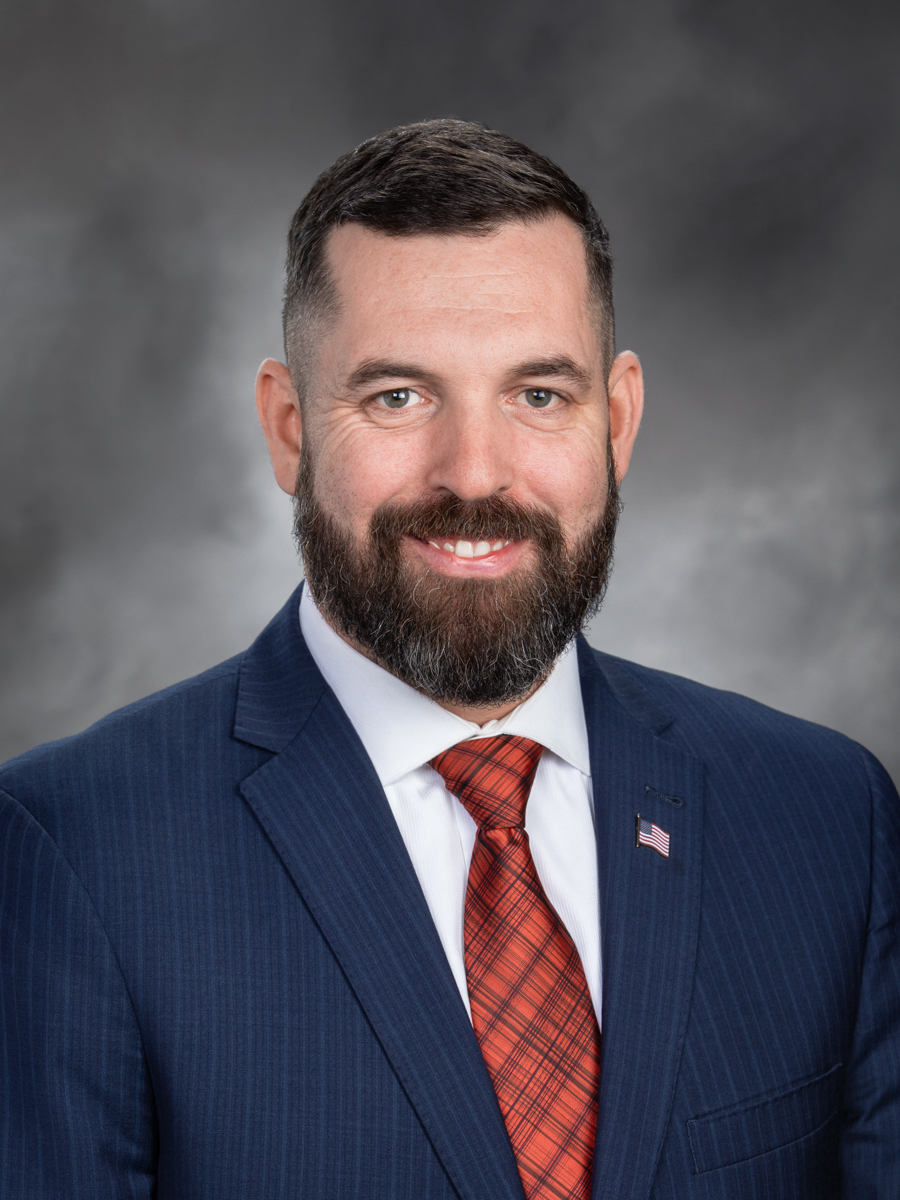
Photo of Matt Marshall
R Washington House · District 2 On the 2026 ballot

Rep. Matt Marshall

Compare
Total votes
1,201
all sessions
Attendance
100%
5 missed
Near the chamber average
With party
94%
of cast votes
Lower than 76% of chamber peers
Bipartisan score
3%
crosses aisle rarely
Near the chamber average
Sponsored
124
bills & resolutions
Near the chamber average
Committees
3
assignments
124 bills and resolutions

Sponsored bills

Total
124
Primary
18
Co-sponsor
106
This page
124
matching current filters
Co-sponsor HB 2119
In committee · Washington House · Co-sponsor
Moving Washington state to permanent standard time.

Maddy summaryHB 2119 would move Washington state to permanent standard time, eliminating the biannual clock changes between standard time and daylight saving time (DST). The bill directly affects all Washington residents, businesses, schools, and government agencies by removing the need to adjust schedules twice yearly. Key provisions include amending state law to reject DST observance permanently, repealing existing DST-related statutes, and citing health research showing time changes disrupt sleep cycles and increase safety risks. The legislation aims to reduce health impacts, prevent workplace injuries, and cut administrative costs for organizations managing schedule changes.

In committee Jan 12, 2026 1 co-sponsor
Co-sponsor HB 2150
In committee · Washington House · Co-sponsor
Making the implementation of climate policy contingent on the department of ecology reporting greenhouse gas emissions in a manner that allows for measuring the effectiveness of those policies.

Maddy summaryHB 2150 requires Washington's Department of Ecology to publish a complete greenhouse gas emissions inventory by January 1, 2027, and update it quarterly thereafter. If the department misses these deadlines, certain climate policies that impose costs on consumers or businesses (like utility or fuel regulations) will no longer be enforced. The bill directly affects households and businesses bearing higher energy costs from existing climate programs. It aims to ensure state climate policies are data-driven and accountable by linking their enforcement to timely emissions reporting. This change focuses on transparency, requiring measurable proof that policy costs actually reduce emissions.

In committee Jan 12, 2026 1 co-sponsor
Co-sponsor HB 2138
In committee · Washington House · Co-sponsor
Improving student performance and success.

Maddy summaryHB 2138 requires Washington public schools to implement evidence-based reading programs by the 2028-29 school year, focusing on foundational literacy skills for students in grades K-4. It mandates schools to hire reading coaches, adopt structured literacy approaches aligned with research (emphasizing phonics, fluency, and comprehension), and provide targeted support for students with dyslexia. The bill also creates READ grants of up to $75,000 annually per elementary school to fund literacy initiatives, requires the state to publish 10 years of school performance data online, and directs a review comparing Washington’s math standards to Singapore’s method (with a 2026 report deadline). These changes directly affect elementary schools, teachers, and students, particularly those struggling with early literacy and math proficiency.

In committee Jan 12, 2026 1 co-sponsor
Co-sponsor HB 2208
In committee · Washington House · Co-sponsor
Exempting health care continuing education classes from retail sales and use tax.

Maddy summaryHB 2208 exempts health care continuing education courses from Washington State's retail sales and use tax. This bill directly affects licensed health professionals (such as nurses, doctors, and therapists) who must complete these courses to maintain their licenses. The key mechanism removes the tax on these required courses, reducing costs for professionals who otherwise face increased expenses under the state's new service tax. The exemption aims to address workforce shortages by making professional development more affordable and accessible, particularly in rural and underserved communities.

In committee Jan 12, 2026 1 co-sponsor
Co-sponsor HB 2093
In committee · Washington House · Co-sponsor
Reinstating the tax exemptions for the sale of precious metals and bullion.

Maddy summaryHB 2093 would remove precious metals and bullion from taxable sales under Washington's business and occupation tax code. It specifically excludes "precious metal bullion" (refined gold, silver, platinum, etc.) and "monetized bullion" (coins used as currency) from definitions of taxable "retail" or "wholesale" sales. Businesses selling these items would no longer pay tax on the full sale amount, though tax would still apply to commissions earned. The bill takes effect July 1, 2026, and directly affects dealers and sellers of precious metals.

In committee Jan 12, 2026 1 co-sponsor
Co-sponsor HB 2121
In committee · Washington House · Co-sponsor
Exempting nonprofits and schools from certain sales and use taxes on services.

Maddy summaryHB 2121 exempts nonprofits and schools from paying state sales and use taxes on specific services they purchase, such as repairs, cleaning, installation, and maintenance. The bill amends Washington's tax code (RCW 82.04.050) to clarify that these entities are not subject to tax on qualifying services used for their operations. This directly affects organizations like schools, charities, and community groups that previously paid tax on services like building repairs or landscaping. The policy change creates a clear exemption by updating tax definitions to exclude these services for eligible nonprofits and schools.

In committee Jan 12, 2026 1 co-sponsor
Primary HB 2126
In committee · Washington House · Lead sponsor
Providing an exemption for taxes on fuel used in school buses.

Maddy summaryHB 2126 would exempt school districts in Washington state from paying taxes on fuel used in school buses. The bill amends state tax codes to specifically add school buses (operated per education laws) to the list of exempt fuel uses, directly affecting public school districts. This change would reduce operating costs for schools by eliminating a tax on fuel for all school bus operations within the state.

In committee Jan 12, 2026 0 co-sponsors
Co-sponsor HB 2167
In committee · Washington House · Co-sponsor
Keeping the legislature's promises by reducing the sales tax in the event of an income tax or a tax on individual earnings.

Maddy summaryHB 2167 would automatically reduce Washington’s state sales tax rate if the legislature ever passes an income tax or tax on individual earnings. Specifically, the bill requires the Department of Revenue to lower the sales tax rate by an amount matching the projected revenue increase from such a new tax. This measure directly affects all Washington residents and businesses that pay sales tax, aiming to offset potential new tax burdens. The bill is conditional - it only triggers if a future income tax is enacted - and does not change current tax rates.

In committee Jan 12, 2026 1 co-sponsor
Co-sponsor HB 2101
In committee · Washington House · Co-sponsor
Exempting live presentations from retail sales and use tax.

Maddy summaryHB 2101 exempts services involving live animals, birds, and insects from Washington's retail sales tax. This directly affects businesses like petting zoos, animal shows, and educational programs that provide live animal demonstrations. The bill amends the state tax code to explicitly exclude these services from the definition of "retail sale" under RCW 82.04.050. As a result, businesses offering such services will no longer be required to charge customers sales tax on these specific activities.

In committee Jan 12, 2026 1 co-sponsor
Primary HB 2166
In committee · Washington House · Lead sponsor
Recognizing major religious holidays.

Maddy summaryHB 2166 amends Washington State law to grant state employees two unpaid religious holidays per year for observance of faith-based practices. It specifically adds a provision allowing employees to select two days annually for religious observance (e.g., Hanukkah, Eid al-Fitr, Passover) after consulting with employers, unless the absence would cause undue hardship. The bill does not create new paid holidays but expands existing unpaid holiday options for state workers, including those in schools and public institutions. It reaffirms existing state legal holidays while listing additional recognized days (like Hanukkah and Eid) that are not legally designated as paid holidays.

In committee Jan 12, 2026 0 co-sponsors
Showing 51 to 60 of 124 bills
Previous 1 5 6 7 13 Next