

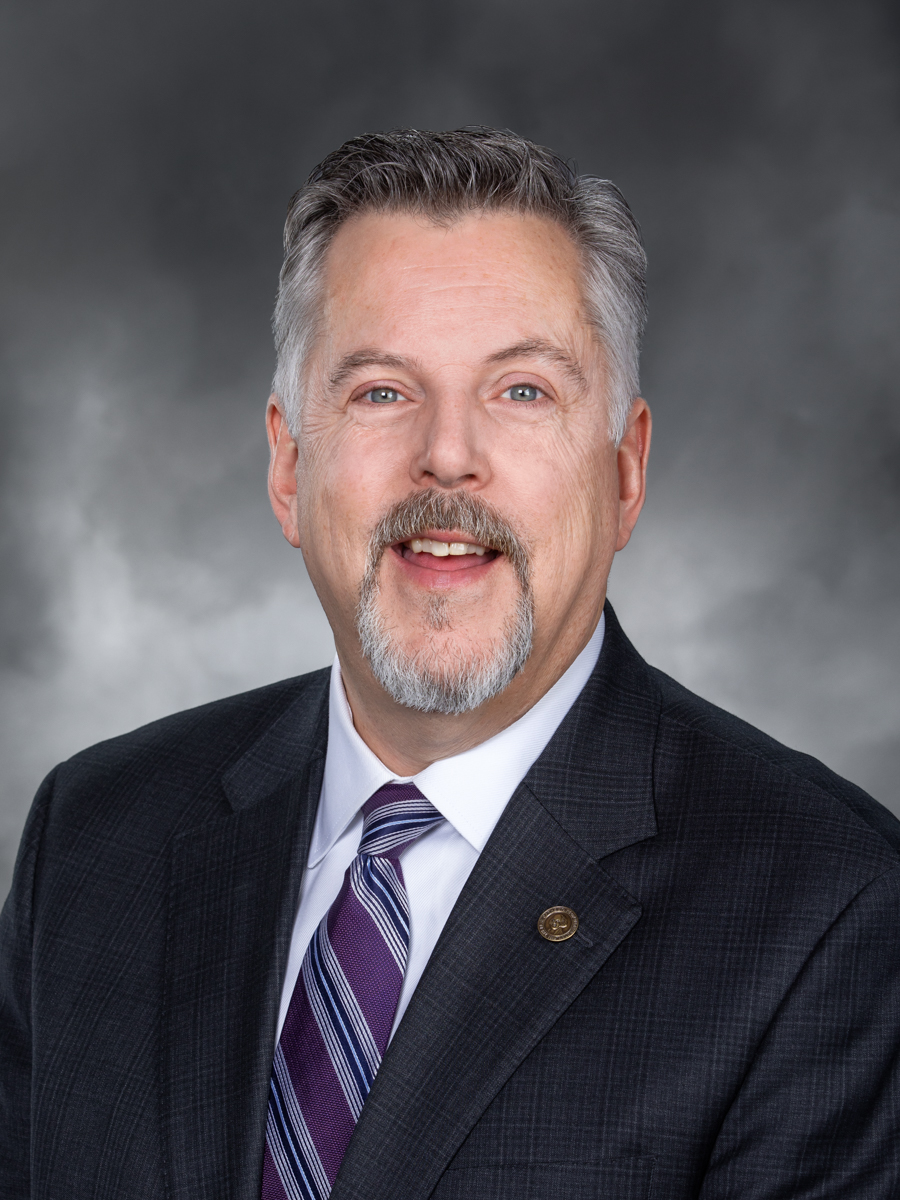
Photo of Andrew Barkis
R Washington House · District 2 On the 2026 ballot

Rep. Andrew Barkis

Compare
Total votes
6,316
all sessions
Attendance
99%
44 missed
Higher than 81% of chamber peers
With party
94%
of cast votes
Near the chamber average
Bipartisan score
3%
crosses aisle rarely
Near the chamber average
Sponsored
733
bills & resolutions
Near the chamber average
Committees
4
assignments
733 bills and resolutions

Sponsored bills

Total
733
Primary
65
Co-sponsor
668
This page
733
matching current filters
Co-sponsor HB 2377
In committee · Washington House · Co-sponsor
Making technical clarifications by defining "applicant" to support fair and consistent pay transparency enforcement.

Maddy summaryHB 2377 clarifies the definition of "applicant" to mean a person applying with genuine intent to be considered for employment, directly affecting employers with 15+ staff and job seekers. It adds a 5-day correction window for employers after receiving written notice of a pay transparency violation (for postings through July 2027), preventing penalties if errors are fixed promptly. The bill limits remedies to those with genuine employment interest, reducing opportunities for opportunistic lawsuits while maintaining enforcement for willful or repeated violations. It modifies penalties to $100-$5,000 per violation and makes administrative remedies the exclusive path for enforcement.

In committee Jan 12, 2026 1 co-sponsor
Co-sponsor HB 2153
In committee · Washington House · Co-sponsor
Prohibiting homebuyers from receiving multiple state-funded down payment assistance loans or grants.

Maddy summaryHB 2153 prohibits homebuyers from receiving more than one state-funded down payment assistance loan or grant from Washington's housing programs. It directly affects first-time homebuyers who might apply for multiple assistance programs, ensuring they can only accept one offer. The bill amends state law to state that applicants applying for multiple programs (or multiple offers from one program) are eligible for only a single loan or grant. This change aims to fairly distribute limited public funds to more qualified homebuyers instead of concentrating benefits on a single buyer.

In committee Jan 12, 2026 1 co-sponsor
Co-sponsor HB 2115
In committee · Washington House · Co-sponsor
Restoring the 1985 tax exemptions for the sale of precious metals and bullion.

Maddy summaryHB 2115 restores a 1985 tax exemption that removes sales tax from transactions involving precious metal bullion (like gold, silver, platinum, and palladium) and monetized bullion (coins or money made from precious metals). It directly affects businesses selling these items by exempting the bullion itself from state sales tax, though tax applies only to commissions earned on transactions. The bill defines "precious metal bullion" as refined metals (not items like jewelry) and excludes such sales from tax calculations under Washington’s tax code. It applies retroactively from January 1, 2026, to correct a 2025 repeal of the original exemption.

In committee Jan 12, 2026 1 co-sponsor
Co-sponsor HB 2121
In committee · Washington House · Co-sponsor
Exempting nonprofits and schools from certain sales and use taxes on services.

Maddy summaryHB 2121 exempts nonprofits and schools from paying state sales and use taxes on specific services they purchase, such as repairs, cleaning, installation, and maintenance. The bill amends Washington's tax code (RCW 82.04.050) to clarify that these entities are not subject to tax on qualifying services used for their operations. This directly affects organizations like schools, charities, and community groups that previously paid tax on services like building repairs or landscaping. The policy change creates a clear exemption by updating tax definitions to exclude these services for eligible nonprofits and schools.

In committee Jan 12, 2026 1 co-sponsor
Co-sponsor HB 2126
In committee · Washington House · Co-sponsor
Providing an exemption for taxes on fuel used in school buses.

Maddy summaryHB 2126 would exempt school districts in Washington state from paying taxes on fuel used in school buses. The bill amends state tax codes to specifically add school buses (operated per education laws) to the list of exempt fuel uses, directly affecting public school districts. This change would reduce operating costs for schools by eliminating a tax on fuel for all school bus operations within the state.

In committee Jan 12, 2026 1 co-sponsor
Co-sponsor HB 2167
In committee · Washington House · Co-sponsor
Keeping the legislature's promises by reducing the sales tax in the event of an income tax or a tax on individual earnings.

Maddy summaryHB 2167 would automatically reduce Washington’s state sales tax rate if the legislature ever passes an income tax or tax on individual earnings. Specifically, the bill requires the Department of Revenue to lower the sales tax rate by an amount matching the projected revenue increase from such a new tax. This measure directly affects all Washington residents and businesses that pay sales tax, aiming to offset potential new tax burdens. The bill is conditional - it only triggers if a future income tax is enacted - and does not change current tax rates.

In committee Jan 12, 2026 1 co-sponsor
Co-sponsor HB 2166
In committee · Washington House · Co-sponsor
Recognizing major religious holidays.

Maddy summaryHB 2166 amends Washington State law to grant state employees two unpaid religious holidays per year for observance of faith-based practices. It specifically adds a provision allowing employees to select two days annually for religious observance (e.g., Hanukkah, Eid al-Fitr, Passover) after consulting with employers, unless the absence would cause undue hardship. The bill does not create new paid holidays but expands existing unpaid holiday options for state workers, including those in schools and public institutions. It reaffirms existing state legal holidays while listing additional recognized days (like Hanukkah and Eid) that are not legally designated as paid holidays.

In committee Jan 12, 2026 1 co-sponsor
Primary HB 2149
In committee · Washington House · Lead sponsor
Addressing the emergency replacement of failed infrastructure on state route number 165.

Maddy summaryHB 2149 declares an emergency due to the April 2025 closure of the Fairfax Bridge on State Route 165. It directs the transportation department to restore access "as soon as possible" and grants the secretary emergency authority to waive specific rules - including liability agreements, inspection fees, utility regulations, and tax deadlines - to speed up rebuilding. This waiver power applies only to actions necessary for the bridge replacement and cannot override federal requirements or First Amendment rights. The bill directly affects travelers, local governments, and state agencies managing Route 165 infrastructure, with no mention of broader funding or unrelated provisions like the climate account amendment.

In committee Jan 12, 2026 0 co-sponsors
Primary HB 2181
In committee · Washington House · Lead sponsor
Paying for response activities for the December 2025 significant atmospheric river and winter event.

Maddy summaryHB 2181 allocates $690 million in excess climate commitment auction revenue to repair transportation infrastructure damaged by the December 2025 atmospheric river and winter storm event. It specifically funds cleanup, repairs, and restoration of Interstate 90, State Routes 2, 167, and 410, and other critical transportation systems affected by the emergency. The funding comes directly from the Climate Investment Account, as authorized by the Climate Commitment Act, and is tied to emergency proclamation 25-07. This bill uses existing climate revenue for immediate infrastructure recovery, without creating new taxes or altering broader climate program requirements.

In committee Jan 12, 2026 0 co-sponsors
Co-sponsor HB 1920
In committee · Washington House · Co-sponsor
Concerning juvenile access to attorneys when contacted by law enforcement.

Maddy summaryHB 1920 requires law enforcement in Washington to provide juveniles (under 18) with immediate access to an attorney before questioning or during specific interactions, including custodial interrogations, detentions based on probable cause, or requests for consent to searches. This applies to all law enforcement officers, including school resource officers, and ensures juveniles cannot waive their right to counsel without legal consultation. The bill prohibits using statements obtained without attorney access in court, except in limited exemptions like imminent life threats or trafficking victim situations. It also mandates that any assertion of rights through an attorney must be treated as coming directly from the juvenile. The law aims to protect minors' constitutional rights during police contact by making attorney access mandatory before rights can be waived.

In committee Jan 12, 2026 1 co-sponsor
Showing 61 to 70 of 733 bills
Previous 1 6 7 8 74 Next