

Maddy summaryHB 2208 exempts health care continuing education courses from Washington State's retail sales and use tax. This bill directly affects licensed health professionals (such as nurses, doctors, and therapists) who must complete these courses to maintain their licenses. The key mechanism removes the tax on these required courses, reducing costs for professionals who otherwise face increased expenses under the state's new service tax. The exemption aims to address workforce shortages by making professional development more affordable and accessible, particularly in rural and underserved communities.
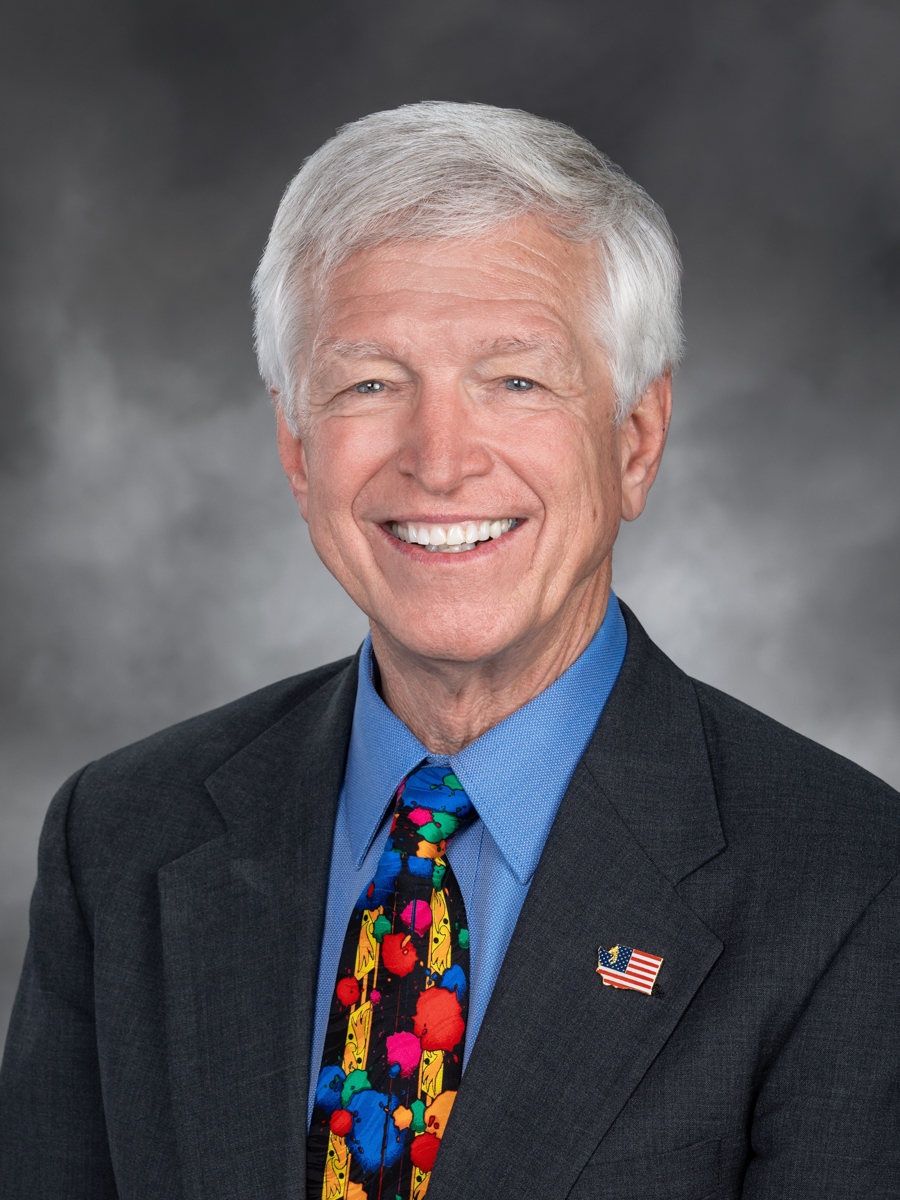
Rep. John Ley
Sponsored bills
Maddy summaryHB 2121 exempts nonprofits and schools from paying state sales and use taxes on specific services they purchase, such as repairs, cleaning, installation, and maintenance. The bill amends Washington's tax code (RCW 82.04.050) to clarify that these entities are not subject to tax on qualifying services used for their operations. This directly affects organizations like schools, charities, and community groups that previously paid tax on services like building repairs or landscaping. The policy change creates a clear exemption by updating tax definitions to exclude these services for eligible nonprofits and schools.
Maddy summaryHB 2167 would automatically reduce Washington’s state sales tax rate if the legislature ever passes an income tax or tax on individual earnings. Specifically, the bill requires the Department of Revenue to lower the sales tax rate by an amount matching the projected revenue increase from such a new tax. This measure directly affects all Washington residents and businesses that pay sales tax, aiming to offset potential new tax burdens. The bill is conditional - it only triggers if a future income tax is enacted - and does not change current tax rates.
Maddy summaryHB 2101 exempts services involving live animals, birds, and insects from Washington's retail sales tax. This directly affects businesses like petting zoos, animal shows, and educational programs that provide live animal demonstrations. The bill amends the state tax code to explicitly exclude these services from the definition of "retail sale" under RCW 82.04.050. As a result, businesses offering such services will no longer be required to charge customers sales tax on these specific activities.
Maddy summaryHB 2166 amends Washington State law to grant state employees two unpaid religious holidays per year for observance of faith-based practices. It specifically adds a provision allowing employees to select two days annually for religious observance (e.g., Hanukkah, Eid al-Fitr, Passover) after consulting with employers, unless the absence would cause undue hardship. The bill does not create new paid holidays but expands existing unpaid holiday options for state workers, including those in schools and public institutions. It reaffirms existing state legal holidays while listing additional recognized days (like Hanukkah and Eid) that are not legally designated as paid holidays.
Maddy summaryHB 2130 repeals specific tax provisions from Senate Bill 5814 (2025 session) that imposed new taxes. It removes sections of Chapter 422, Laws of 2025 (including codified sections 101, 201, 301 and uncodified sections 1, 401-404) that affected taxpayers. The repeal takes effect April 1, 2026, and is declared an emergency to preserve public finances. This bill directly reverses the tax changes enacted by ESSB 5814.
Maddy summaryHB 2181 allocates $690 million in excess climate commitment auction revenue to repair transportation infrastructure damaged by the December 2025 atmospheric river and winter storm event. It specifically funds cleanup, repairs, and restoration of Interstate 90, State Routes 2, 167, and 410, and other critical transportation systems affected by the emergency. The funding comes directly from the Climate Investment Account, as authorized by the Climate Commitment Act, and is tied to emergency proclamation 25-07. This bill uses existing climate revenue for immediate infrastructure recovery, without creating new taxes or altering broader climate program requirements.
Maddy summaryHB 1920 requires law enforcement in Washington to provide juveniles (under 18) with immediate access to an attorney before questioning or during specific interactions, including custodial interrogations, detentions based on probable cause, or requests for consent to searches. This applies to all law enforcement officers, including school resource officers, and ensures juveniles cannot waive their right to counsel without legal consultation. The bill prohibits using statements obtained without attorney access in court, except in limited exemptions like imminent life threats or trafficking victim situations. It also mandates that any assertion of rights through an attorney must be treated as coming directly from the juvenile. The law aims to protect minors' constitutional rights during police contact by making attorney access mandatory before rights can be waived.
Maddy summaryHB 1679 allows Washington electric utilities to count investments in advanced nuclear reactor projects toward meeting their 2045 clean energy compliance requirements, specifically as one of up to 20% of their obligation under the Clean Energy Transformation Act. The bill amends existing law to explicitly include advanced nuclear projects as a valid "alternative compliance option," requiring such investments to be real, permanent, and quantifiable in emissions reductions. It directly affects utilities required to achieve 100% nonemitting electricity by 2045, providing a new pathway alongside renewables and efficiency measures. The policy change clarifies that nuclear investments must meet department criteria for verification, without conflicting with existing clean energy standards.
Maddy summaryHB 1961 directs revenue from fees, charges, or taxes based on miles driven on Washington highways to be deposited into a dedicated state highway fund. This applies to vehicle owners paying mileage-based fees and ensures the funds are used exclusively for highway purposes permitted under Washington's Constitution (Article II, section 40). The bill creates a special fund in the state treasury, requiring all such mileage-based revenue to be spent only on highway maintenance, construction, or related projects. It amends two sections of state law (RCW 46.08 and 46.17) to establish this funding mechanism. The bill is currently in the Transportation Committee after its first reading.