

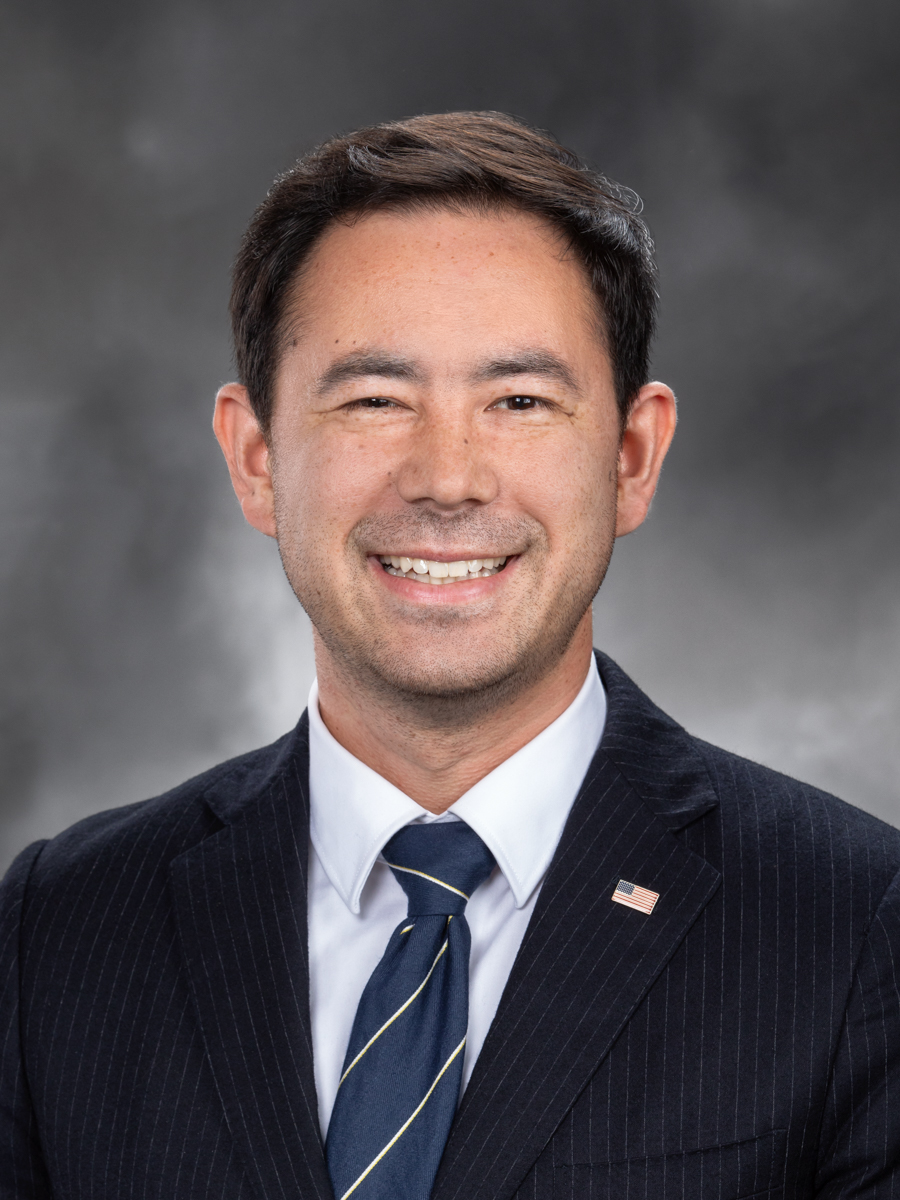
Photo of Clyde Shavers
D Washington House · District 10 On the 2026 ballot

Rep. Clyde Shavers

Compare
Total votes
2,532
all sessions
Attendance
100%
1 missed
Higher than 81% of chamber peers
With party
88%
of cast votes
Lower than 96% of chamber peers
Bipartisan score
6%
crosses aisle rarely
Higher than 94% of chamber peers
Sponsored
283
bills & resolutions
Near the chamber average
Committees
3
assignments
283 bills and resolutions

Sponsored bills

Total
283
Primary
55
Co-sponsor
228
This page
283
matching current filters
Co-sponsor HB 2584
In committee · Washington House · Co-sponsor
Providing a sales and use tax exemption for qualifying farm machinery and equipment.

Maddy summaryHB 2584 exempts Washington farmers with annual gross sales or harvested value under $2 million from sales and use taxes on qualifying farm equipment costing $10,000 or more used directly for crop production. It covers machinery like tractors, harvesters, and irrigation tools but excludes road vehicles and motorcycles. Farmers must provide exemption certificates to sellers and maintain records, with the exemption expiring October 1, 2036. This policy reduces tax burdens for small and medium-sized farms to support agricultural competitiveness.

In committee Feb 6, 2026 1 co-sponsor
Co-sponsor HB 1735
In committee · Washington House · Co-sponsor
Prohibiting the force-feeding of birds.

Maddy summaryThis bill prohibits force-feeding birds (such as chickens, turkeys, or ducks) to enlarge their livers for foie gras production, and bans the sale, possession, or distribution of foie gras made through this method. It applies directly to restaurants, retailers, and producers handling foie gras, with exceptions only for veterinary care. Violations carry civil fines up to $1,000 per day, and the law takes effect January 1, 2028. The legislation targets specific production practices without restricting other bird-related activities.

In committee Feb 4, 2026 1 co-sponsor
Co-sponsor HB 2135
In committee · Washington House · Co-sponsor
Modifying and extending the adaptive housing retail sales and use tax preference for disabled veterans.

Maddy summaryHB 2135 extends and modifies a tax exemption for disabled veterans who use federal grants to adapt their homes. It raises the maximum tax refund per project from $2,500 to $5,000 and increases the annual state funding cap from $125,000 to $250,000, with future adjustments tied to Seattle-area inflation starting in 2028. The bill applies exclusively to veterans who received U.S. Department of Veterans Affairs grants for specially adapted housing or special housing adaptations. It expires on January 1, 2039, and requires the state to track usage to ensure funds stay within annual limits.

In committee Feb 3, 2026 1 co-sponsor
Co-sponsor HB 1622
Passed · Washington House · Co-sponsor
Allowing bargaining over matters related to the use of artificial intelligence.

Maddy summaryHouse Bill 1622 allows public sector employees in Washington state to collectively bargain with their employers over the use of artificial intelligence (AI) in the workplace. The bill amends existing state law to remove the "use of technology" from a list of management rights that are typically not subject to negotiation for employees in higher education and other state agencies. It defines artificial intelligence as machine learning and related technologies that enable computer systems to perform tasks like computer vision or natural language processing. This change empowers unions and public employers to negotiate agreements on the implementation and utilization of AI technologies.

Passed Feb 3, 2026 1 co-sponsor
Primary HB 2503
In committee · Washington House · Lead sponsor
Regulating artificial intelligence training data.

Maddy summaryHB 2503 requires developers of commercial generative artificial intelligence systems (like chatbots or image generators) to publicly disclose detailed information about the data used to train their systems by January 1, 2027. This includes sources, dataset types, whether personal or copyrighted data was used, steps taken to remove child sexual abuse material, and if synthetic data was generated. The law applies to developers making systems publicly available in Washington, excluding systems solely for security, aircraft operation, or national defense. Developers must provide this information without compromising trade secrets, and violations are treated as unfair business practices under Washington’s Consumer Protection Act.

In committee Jan 30, 2026 0 co-sponsors
Co-sponsor HB 2446
In committee · Washington House · Co-sponsor
Developing the quantum technology industry into the state's economic development and workforce.

Maddy summaryHB 2446 requires Washington's Department of Commerce to develop a state quantum technology strategy by June 2027, directly affecting state agencies, research institutions (like public universities and the Pacific Northwest National Laboratory), and businesses in the quantum industry. The strategy must analyze the current quantum sector, identify public-private partnerships, explore workforce development, and outline how to attract federal funding and private investment. It mandates the department to seek non-state funding and contract with Washington-based quantum organizations to support this effort. The bill expires August 1, 2027, and aims to position Washington competitively amid growing national investments in quantum technology.

In committee Jan 30, 2026 1 co-sponsor
Co-sponsor HB 2324
In committee · Washington House · Co-sponsor
Concerning tuition waivers for children of eligible veterans.

Maddy summaryHB 2324 creates a mandatory tuition and fee waiver for children of veterans who died or became totally disabled in active federal military service, as well as for their surviving spouses or domestic partners. To qualify, recipients must be Washington domiciliaries aged 17-26 (for children) or Washington residents (for survivors), with survivors having up to 10 years to use benefits. The waiver covers all tuition and fees (including a $500 annual stipend for textbooks), but is limited to 250 quarter credits per recipient and requires satisfactory academic progress. This policy directly affects dependents of veterans meeting specific service criteria, such as combat deployment or service-connected disability, as defined by federal standards.

In committee Jan 30, 2026 1 co-sponsor
Co-sponsor HB 2356
In committee · Washington House · Co-sponsor
Concerning public records concerning homicide cases.

Maddy summaryHB 2356 would allow homicide victims' next of kin (spouse, parents, siblings, or children, excluding perpetrators) to request a court block public access to related case records. The bill amends Washington's public records law (RCW 42.56.540) to give families a formal legal process - via court motion with affidavit - to seek confidentiality for homicide case documents. This directly affects families of homicide victims who wish to limit public disclosure of sensitive case details. The bill is currently prefiling (2026) and has not yet become law.

In committee Jan 28, 2026 1 co-sponsor
Co-sponsor HR 4675
Passed · Washington House · Co-sponsor
Honoring the Washington National Guard.

Maddy summaryHouse Resolution 4675, adopted on January 28, 2026, is a ceremonial resolution expressing the Washington State House of Representatives' gratitude to the Washington National Guard for their service. It specifically acknowledges the Guard's roles in emergency response (including flood operations and search-and-rescue missions), disaster recovery efforts (like adapting from the Oso landslide), and national defense support (such as aerial refueling capabilities). The resolution directs copies to the Adjutant General, Governor, and other officials but does not create new laws or alter policies. It directly honors National Guard members, their families, and employers without imposing any financial or operational requirements.

Passed Jan 28, 2026 1 co-sponsor
Co-sponsor HB 2227
In committee · Washington House · Co-sponsor
Providing a real estate excise tax exemption for the sale of qualified affordable housing.

Maddy summaryHB 2227 would exempt sales of "qualified affordable housing" from Washington's real estate excise tax. This bill amends the state's tax code (RCW 82.45.010) to create this specific exemption for qualifying affordable housing properties. The exemption directly affects sellers of eligible affordable housing units, reducing their tax burden when selling such properties. The bill is currently pending in the House Finance Committee after being prefaced in December 2025.

In committee Jan 27, 2026 1 co-sponsor
Showing 31 to 40 of 283 bills
Previous 1 3 4 5 29 Next