

Maddy summaryHB 2296 allows Washington homeowners to install one small, customer-owned energy device (like solar panels or battery systems) on their home electricity meter, subject to safety and compatibility rules. Utilities must approve these devices within 90 days (for large utilities) or 180 days (for small utilities), cannot ban them locally, and must post approval decisions online. Devices must meet national safety standards, work with smart meters, not interfere with utility access or meter functions, and be certified by a testing lab. Homeowners pay for any utility service work related to the device installation, and utilities cannot be held liable for damage caused by approved devices. This directly affects residential electricity customers and utilities across Washington.
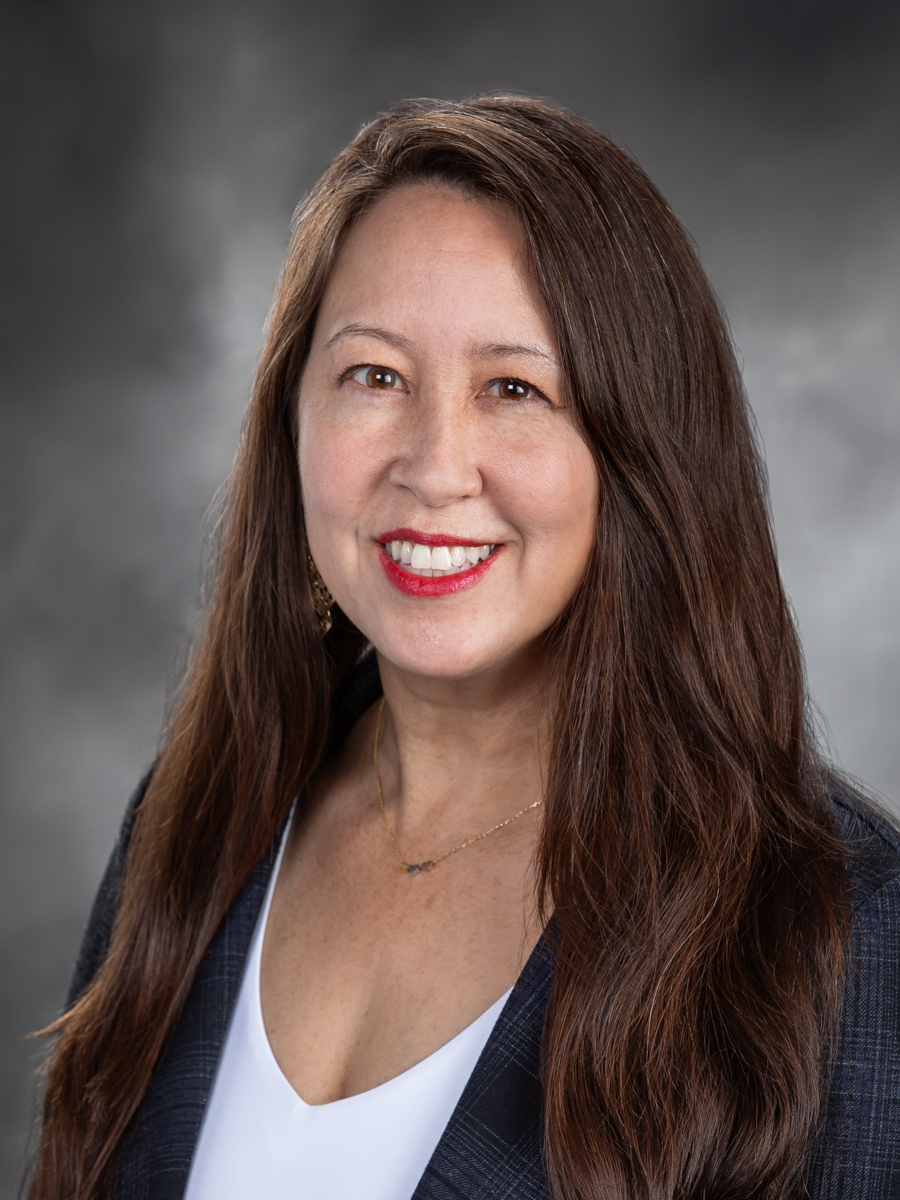
Rep. Davina Duerr
Sponsored bills
Maddy summaryHB 2451 modifies Washington State's tax increment financing (TIF) rules to help local governments fund public improvements. It allows cities, counties, and other local jurisdictions to use increased property tax revenue from designated "increment areas" (geographic zones where property values rise after designation) to pay for eligible projects like roads, water systems, affordable housing, and park facilities. The bill sets limits: an increment area cannot exceed $200 million in assessed value (adjusted annually by the consumer price index) or 20% of a jurisdiction's total assessed value, whichever is smaller. It clarifies which costs qualify, including infrastructure, affordable housing development, and administrative expenses directly tied to TIF implementation. This bill directly affects local governments seeking to finance public projects through targeted tax revenue growth within specific zones.
Maddy summaryHB 2192 updates Washington's Traffic Safety Commission to more systematically identify risk factors causing roadway fatalities. It establishes a new "fatality review committee" of traffic safety experts to analyze collisions resulting in death or serious injury, including those involving bicyclists, pedestrians, and motorists. The bill amends the Commission's purpose to focus explicitly on identifying these risk factors and coordinating statewide safety programs. This change directly affects the Commission's operations and how collision data is reviewed to inform future safety initiatives.
Maddy summaryHB 2165 makes it a gross misdemeanor to intentionally create, possess, or display fake law enforcement items (like badges, vehicle decals, or insignia) that falsely identify someone as a sworn peace officer or reserve officer, or to misrepresent ordinary items as police property. It directly affects individuals or businesses selling or using fake police gear, such as costume shops or people posing as officers. Key exceptions include items clearly marked as honorary roles, historical displays, or protected artistic/satirical works (like parodies or educational materials). The law does not prohibit legitimate uses like historical reenactments or news coverage, and it specifies that the fake item must be displayed in a way that would reasonably mislead others.
Maddy summaryThis bill is a House resolution that formally recognizes Representative Virginia "Jenny" Graham for her public service in the Washington State House of Representatives. It highlights her eight-year tenure, her advocacy for public safety, and her work on community safety and veterans' issues. The resolution does not create new laws or policies but serves as an official acknowledgment of her contributions and legacy.
Maddy summaryThis bill is a House resolution that formally honors John Michael Sattgast for his 35 years of dedicated service as a communications professional for the House Republican Caucus in the Washington State Legislature. It recognizes his work producing over 4,000 radio stories and coordinating media coverage for state representatives, as well as his leadership roles with the National Conference of State Legislatures. The resolution acknowledges his contributions to sharing legislative history and public information, noting his receipt of the 2023 Legislative Staff Achievement Award. This measure serves as a commemorative tribute rather than establishing new policy or affecting government operations.
Maddy summaryThis bill formally acknowledges the service of Representative Steve Tharinger to his district and the Washington state legislature. It recognizes his long career in public service, including his time as a Clallam County Commissioner, his work on the House Capital Budget Committee, and his advocacy for environmental protection and healthcare. The resolution serves as a commemorative tribute to his contributions and personal qualities rather than establishing new laws or policies.
Maddy summaryHB 2374 clarifies Washington state's definitions for e-bikes and electric motorcycles to address regulatory confusion. It creates three e-bike classes: Class 1 (pedal-assist only up to 20 mph), Class 2 (throttle-only up to 20 mph), and Class 3 (pedal-assist up to 28 mph with speedometer). Electric motorcycles are defined as vehicles without operable pedals, exceeding 750W motor power, or providing motor assistance beyond 20 mph without pedal input. The bill directly affects e-bike riders, manufacturers, and law enforcement by establishing clear classification standards for safety and enforcement, while requiring a work group to study enforcement consistency and consumer protections by December 2026.
Maddy summaryHB 2244 adopts specific recommendations from Washington's Public Records Exemptions Accountability Committee regarding confidentiality of certain sensitive records. The bill amends multiple statutes to keep details confidential in long-term care complaints, archaeological site locations, grand jury reports, traffic accident reports, and behavioral health statistics - requiring redaction of personal identifiers before public release. It directly affects state agencies (like the long-term care ombuds, coroners, and police departments) and limits public access to these records while maintaining some disclosure for law enforcement or legal purposes. The changes implement the committee's 2025 report findings to prevent misuse of sensitive information, such as avoiding site depredation or protecting individuals in investigations. This bill does not create new policies but formalizes existing exemption practices through statutory updates.
Maddy summaryHB 2515 requires data centers with 20+ megawatt demand - defined as "emerging large energy use facilities" - to transition to 100% clean energy over time and publicly disclose their electricity, water, and refrigerant usage. The bill aims to protect energy affordability, grid reliability, and environmental health by mandating transparency and clean energy standards for these rapidly growing facilities. It amends existing energy laws to establish new definitions and oversight for data centers, which are projected to become the largest source of electricity demand growth in the Pacific Northwest. The policy applies directly to data center operators, with requirements phased in to align with industry innovation while safeguarding public interests.