

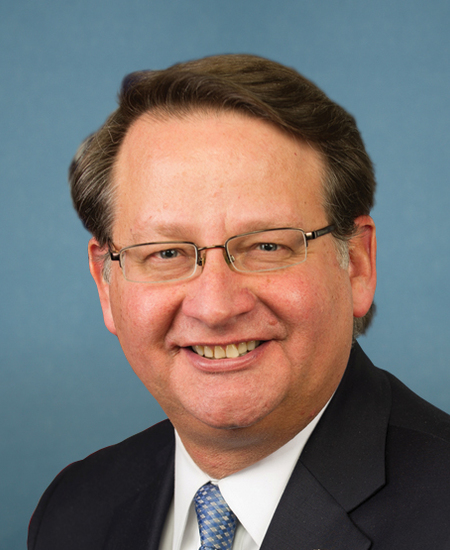
Photo of Gary C. Peters
D United States Senate · Michigan

Sen. Gary C. Peters

Compare
Total votes
1,037
all sessions
Attendance
100%
5 missed
Near the chamber average
With party
97%
of cast votes
Near the chamber average
Bipartisan score
2%
crosses aisle rarely
Near the chamber average
Sponsored
1,460
bills & resolutions
Near the chamber average
Committees
19
assignments
1,460 bills and resolutions

Sponsored bills

Total
1,460
Primary
358
Co-sponsor
1,102
This page
1,460
matching current filters
Primary S 727
Passed · Washington Senate · Lead sponsor
U.S. Customs and Border Protection Officer Retirement Technical Corrections Act

Maddy summaryThis bill corrects retirement benefits for specific U.S. Customs and Border Protection (CBP) officers hired between 2008. It applies to officers who received a job offer before July 6, 2008, but started work on or after that date. The bill ensures these officers receive the minimum retirement benefit amount required by law and are exempt from mandatory retirement age rules. It also requires retroactive payments to officers who retired before the law’s enactment.

Passed Dec 17, 2025 0 co-sponsors
Primary S 594
Passed · Washington Senate · Lead sponsor
HELP Response and Recovery Act

Maddy summaryThis bill repeals an outdated requirement from the 2006 Post-Katrina Emergency Management Reform Act that restricted how FEMA could award emergency contracts without bidding. It directly affects FEMA's contracting process during disasters, allowing the agency to enter contracts without soliciting bids under urgent circumstances. The bill requires the Secretary of Homeland Security to submit annual reports detailing the number, cost, and purpose of these emergency contracts, as well as how the repeal prevented waste, fraud, and saved taxpayer money. These reports must cover contracts entered during specific periods and include details about the states and disasters involved. The law aims to streamline emergency contracting while adding transparency through mandatory reporting.

Passed Dec 17, 2025 0 co-sponsors
Co-sponsor S 3486
In committee · Washington Senate · Co-sponsor
Expand the Behavioral Health Workforce Now Act

Maddy summaryThis bill (S 3486) requires the U.S. Department of Health and Human Services (HHS) to issue non-mandatory guidance to states within 12 months of enactment. The guidance will focus on strategies for states to improve mental health and substance use disorder care provider education, training, recruitment, and retention through Medicaid (Title XIX) and CHIP (Title XXI) programs. It specifically emphasizes expanding workforce capacity in rural and underserved areas and details how states can use existing authorities like Medicaid waivers (Section 1115) to achieve this. The bill directly affects states administering Medicaid/CHIP programs and the providers participating in those programs, aiming to strengthen behavioral health services without creating new federal funding.

In committee Dec 16, 2025 1 co-sponsor
Primary S 3481
In committee · Washington Senate · Lead sponsor
SAFER SKIES Act

Maddy summaryThe SAFER SKIES Act (S 3481) grants state, local, tribal, and territorial law enforcement and correctional agencies new authority to counter drone threats to public safety and critical infrastructure, including venues for large gatherings and correctional facilities. It requires these agencies to complete federal training and certification before using counter-drone technologies, and mandates 48-hour notifications to federal authorities after taking action. The bill establishes a national training program, creates reporting requirements for agencies using these authorities, and provides funding for purchasing counter-UAS systems through existing grant programs. It also increases penalties for unauthorized drone use near prisons and in national defense airspace, with state and local counter-drone authorities set to expire in 2031.

In committee Dec 15, 2025 0 co-sponsors
Primary S 642
Passed · Washington Senate · Lead sponsor
Keweenaw Bay Indian Community Land Claim Settlement Act of 2025

Maddy summaryThis bill resolves historical land claims by the Keweenaw Bay Indian Community (KBIC) regarding 2,743 acres of "Reservation Swamp Lands" and 1,333-2,720 acres of "Reservation Canal Lands" within their L’Anse Reservation in Michigan. It provides $33.9 million in compensation to KBIC for land taken by the federal government without just payment under the Fifth Amendment, while clearing title for current non-Indian landowners who acquired the land in good faith. Upon receiving the payment, KBIC’s claims to these specific lands are extinguished, and current owners gain clear title free of tribal rights. The settlement avoids prolonged litigation and allows KBIC to use funds for government services, economic development, or land acquisition (excluding gaming).

Passed Dec 15, 2025 0 co-sponsors
Co-sponsor S 620
Passed · Washington Senate · Co-sponsor
Veterinary Services to Improve Public Health in Rural Communities Act

Maddy summaryS 620, the "Veterinary Services to Improve Public Health in Rural Communities Act," authorizes the Indian Health Service to provide public health veterinary services to tribal communities in rural areas to prevent and control zoonotic diseases (diseases that spread between animals and humans). These services include spaying/neutering, vaccinations, disease surveillance, and other activities that reduce disease transmission risk. The bill also requires the Department of Agriculture to study the delivery of oral rabies vaccines to wildlife in Arctic regions to protect tribal members, and mandates biennial reports to Congress on program implementation.

Passed Dec 15, 2025 1 co-sponsor
Primary S 3450
In committee · Washington Senate · Lead sponsor
Emergency Response Authority Act

Maddy summaryThis bill allows state governors to temporarily assign National Guard members on Active Guard and Reserve duty to respond to state disasters, with Defense Secretary approval. It limits this "State disaster response duty" to 14 days per member yearly (extendable to 60 days for catastrophic events), requires states to reimburse the military for costs, and clarifies that Guard members performing this duty are not considered federal agents for liability purposes. The law directly affects state governors, National Guard members, and state governments managing disaster response funding. Key provisions include strict time limits, mandatory state reimbursement, and liability protections to ensure state control over Guard deployment during emergencies.

In committee Dec 11, 2025 0 co-sponsors
Primary S 3446
In committee · Washington Senate · Lead sponsor
A bill to require the Secretary of Defense to submit a strategy to accelerate the response efforts of the Department of Defense with respect to releases of perfluoroalkyl substances or polyfluoroalkyl substances from the activities of the Department.

Maddy summaryThis bill requires the Department of Defense (DoD) to create and submit a strategy within 180 days to speed up cleanup efforts at military bases and National Guard facilities contaminated with PFAS chemicals (like firefighting foam). The strategy must detail how the DoD prioritizes sites based on health/environmental risks, set specific cleanup timelines for each location, and outline plans to add labs, staff, or technology to reduce delays. It also mandates a public online dashboard updated every six months, showing funding use, cleanup progress, completion dates, and community contacts for each affected site. The bill directly affects military installations and National Guard facilities with PFAS contamination and aims to improve transparency and accelerate remediation under federal cleanup law.

In committee Dec 11, 2025 0 co-sponsors
Primary S 3469
In committee · Washington Senate · Lead sponsor
BIOSECURE Act of 2025

Maddy summaryS 3469, the BIOSECURE Act of 2025, prohibits U.S. federal agencies from contracting with or using biotechnology equipment/services from companies identified as "biotechnology companies of concern" (primarily those linked to foreign adversaries like China that pose national security risks, such as through unauthorized collection of genetic data). It directly affects federal agencies, contractors, and grant recipients by banning purchases or contracts involving such companies' products, with exceptions for intelligence activities, overseas health care for military personnel, and public health emergencies. Key mechanisms include a defined list of prohibited companies (updated annually), waiver options for national security needs (requiring congressional notice), and strict rules for identifying risks related to multiomic data (genomic, proteomic, etc.). The law aims to prevent U.S. citizens' biological data from being exploited by foreign adversaries through federal contracts.

In committee Dec 11, 2025 0 co-sponsors
Primary S 3445
In committee · Washington Senate · Lead sponsor
A bill to require the provision of alternative drinking water to households whose private drinking water is contaminated with perfluorooctanesulfonic acid and perfluorooctanoic acid substances from activities of the Department of Defense.

Maddy summaryThis bill requires the Department of Defense to provide alternative drinking water to households with private wells contaminated by PFOS/PFOA chemicals from military activities. It applies to households downgradient from a military base where contamination exceeded EPA safety levels, and where other nearby households in the same community already receive assistance. Alternative water options include bottled water, connection to public systems, or home filtration systems. Exceptions apply if the community already has municipal water or if EPA actions have already resolved the contamination. The law ensures DoD coordination with existing environmental cleanup authorities like CERCLA.

In committee Dec 11, 2025 0 co-sponsors
Showing 111 to 120 of 1,460 bills
Previous 1 11 12 13 146 Next