

Healthy Dog Importation Act This bill imposes requirements on the importation of live dogs. Specifically, the bill prohibits the importation of a live dog into the United States unless the Department of Agriculture (USDA) determines the dog (1) is in good health, (2) has received all necessary vaccinations and demonstrated negative test results as evidenced by a certificate from a licensed veterinarian, and (3) is officially identified by a permanent method approved by USDA. Additionally, dogs entering the United States for transfer must be at least six months of age and accompanied by a USDA permit. Transfer is defined as a change of ownership or control of an imported dog to another person, including by sale, adoption, exchange, or donation. USDA must provide an exception to any requirements under the bill for dogs that are transferred for (1) research purposes; (2) veterinary treatment under certain conditions, including appropriate quarantining; or (3) lawful importation into the state of Hawaii if the dog is not transported out of Hawaii for transfer at less than six months of age. USDA also has enforcement authority under the bill.
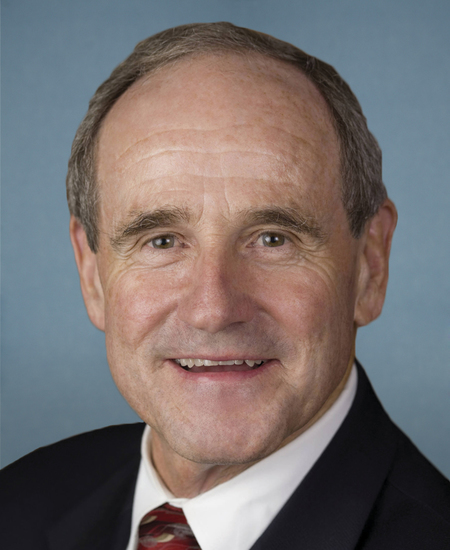
Sen. James E. Risch
Sponsored bills
This resolution recognizes and expresses support for efforts to promote democracy and human rights in Cuba.
Directed Energy Threat Emergency Response Act This bill requires actions to address anomalous health incidents. The President must designate an appropriate senior official as the Anomalous Health Incidents Interagency Coordinator. The interagency coordinator must (1) coordinate the U.S. government's response to anomalous health incidents, (2) ensure that affected personnel and dependents get access to care, and (3) ensure adequate training and education for relevant U.S. government personnel. The bill also requires certain agencies, including the Department of Defense and the Office of the Director of National Intelligence, to designate an appropriate senior official to serve as the Anomalous Health Incident Agency Coordination Lead. These officials must (1) work with the interagency coordinator to achieve objectives related to anomalous health incidents, and (2) jointly provide quarterly briefings to Congress on its activities. Such agencies must also develop updated workplace guidance to address anomalous health incidents, including processes to self-report suspected exposure to a possible anomalous health incident.
This resolution expresses the condolences of the Senate regarding the death of the Honorable Carl Levin, former Senator for Michigan.
This resolution expresses the condolences of the Senate regarding the death of the Honorable Mike Enzi, former Senator for Wyoming.
International Pandemic Preparedness and COVID-19 Response Act of 2021 This bill outlines U.S. foreign policy to respond to the COVID-19 pandemic and to future pandemics and disasters. With respect to COVID-19, the Department of State must develop a strategy to expand and expedite access to COVID-19 vaccines in other countries. The bill also allows for the use of any foreign assistance for activities to combat COVID-19, regardless of the original purpose of the funding. Additionally, the State Department and the U.S. Agency for International Development must protect and support humanitarian actors responding to secondary effects of the pandemic (e.g., food insecurity). Furthermore, the State Department must report on, and take other steps to address, restrictions and violations of human rights in the COVID-19 response measures of other countries, and the U.S. Agency for Global Media must focus its communication programs on combating propaganda and providing accurate information related to COVID-19. With respect to future pandemics and disasters, the bill (1) designates agencies responsible for carrying out preparedness and response activities, and (2) authorizes a committee within the National Security Council to coordinate government-wide response efforts. Additionally, the President must establish a strategy for advancing U.S. global health security; the bill creates a position in the State Department to promote this strategy. Moreover, the State Department must work with other international actors to establish a financing mechanism and otherwise promote global health security, including by strengthening health systems and disease surveillance in developing countries. Additionally, funding authorized by this bill may not be made available to China.
Navigable Waters Protection Act of 2021 This bill enacts definitions that determine which bodies of water fall under the scope of the Clean Water Act and are thereby under federal jurisdiction. Specifically, the bill provides statutory authority for the definitions related to the waters of the United States, commonly known as WOTUS, in regulations when the bill is enacted.
This resolution amends the Standing Rules of the Senate to require each Senate committee report to contain an analytical statement as to whether, and the extent to which, the increased budget authority, outlays, or revenue produced by the enactment of the bill or joint resolution into law may have an inflationary impact on prices and costs in the operation of the national economy or the purchasing power of low- and middle-income families.
This bill prohibits the U.S. International Development Finance Corporation from prohibiting or restricting the source of energy used by a power-generation project that has as its purpose the provision of affordable electricity in certain countries. Such countries are those that are eligible for support either solely from the International Development Association (IDA) or jointly from the IDA and the International Bank for Reconstruction and Development. Further, the corporation (1) may not reject a power-generation project in such a country based on the source of energy used by the project; and (2) must promote a technology- and fuel-neutral energy development strategy for such countries that includes the use of oil, natural gas, coal, hydroelectric, wind, solar, and geothermal power and other sources of energy.
Tree Spiking Mitigation Act of 2021 This bill directs the Forest Service and the Bureau of Land Management (BLM) to coordinate to take necessary actions to ensure the detection, identification, and, as determined to be appropriate, mitigation of tree spiking devices located on federal lands. A tree spiking device includes spikes, nails, or other objects hammered, driven, fastened, or otherwise placed into or on any timber to impede logging. To carry out such activities, the Forest Service and the BLM shall prioritize areas in which (1) incidences of tree spiking devices have occurred, or (2) the Forest Service and the BLM suspect that there are tree spiking devices. No later than 90 days after the enactment of this bill, the Forest Service and the BLM shall, where appropriate, update safety guidelines and training protocols to include the awareness, detection, identification, and mitigation of tree spiking devices.