

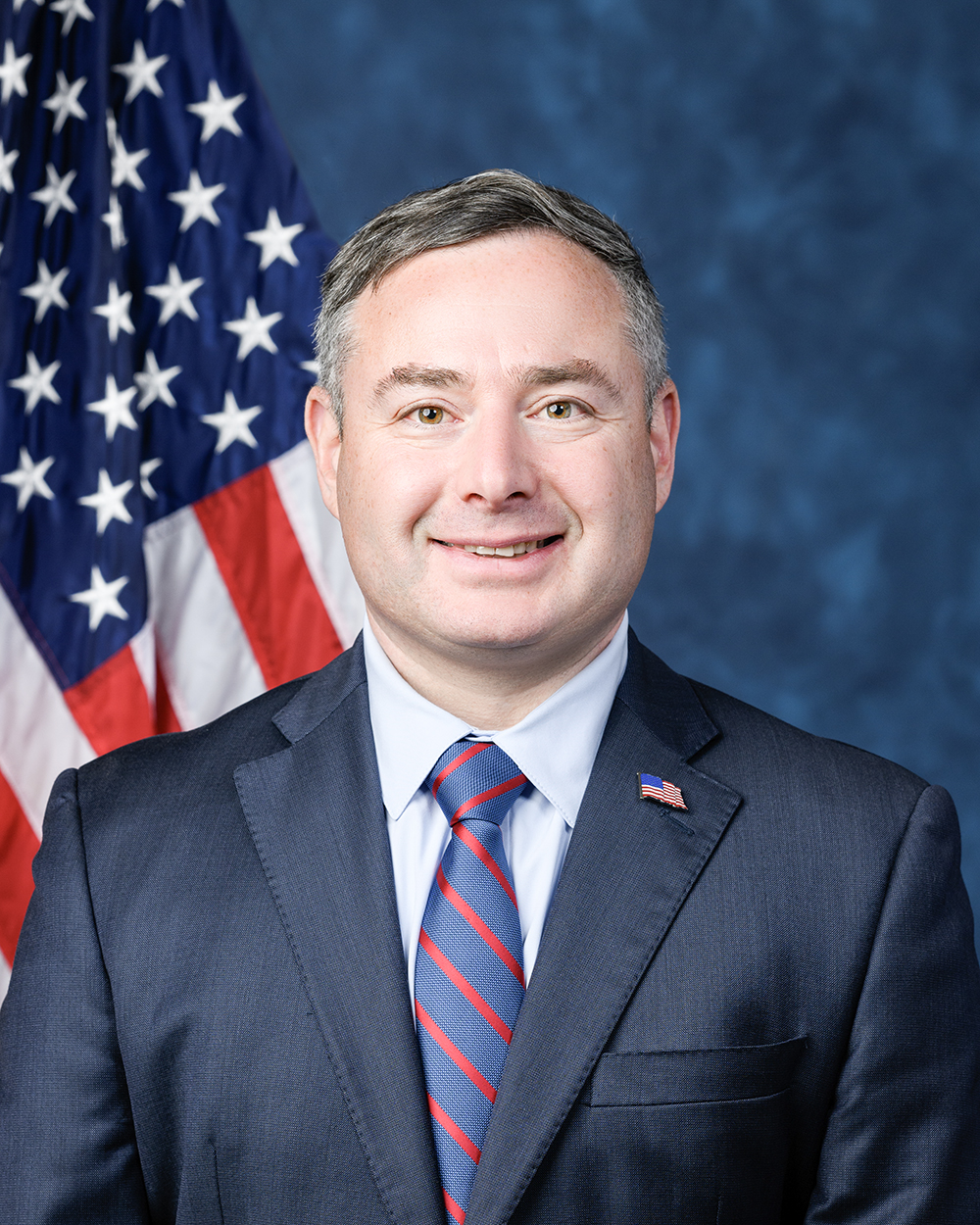
Photo of Eugene Simon Vindman
D United States House · District 7 · Virginia On the 2026 ballot

Rep. Eugene Simon Vindman

Compare
Total votes
650
all sessions
Attendance
99%
5 missed
Higher than 80% of chamber peers
With party
91%
of cast votes
Lower than 93% of chamber peers
Bipartisan score
5%
crosses aisle rarely
Higher than 92% of chamber peers
Sponsored
1,089
bills & resolutions
Higher than 98% of chamber peers
Committees
6
assignments
1,089 bills and resolutions

Sponsored bills

Total
1,089
Primary
69
Co-sponsor
1,020
This page
1,089
matching current filters
Co-sponsor HR 1027
In committee · Washington House · Co-sponsor
QUIET Act

Maddy summaryThe QUIET Act (HR 1027) requires that robocalls or text messages using artificial intelligence to mimic human communication must disclose at the beginning that AI is being used. It doubles penalties for violations involving AI impersonation intended to defraud, cause harm, or obtain value, applying to automated calls sent to stored numbers or generated randomly. The bill excludes calls requiring substantial human intervention, focusing on transparency and deterrence in AI-driven automated communications.

In committee Feb 6, 2025 1 co-sponsor
Primary HR 977
In committee · Washington House · Lead sponsor
Support Military Families Act

Maddy summaryHR 977, the Support Military Families Act, allows federal employees who are spouses of active-duty military members to work remotely full-time without returning to in-person work. It directly affects eligible military-spouse federal employees in the executive branch who were already permitted telework before January 20, 2025. The bill requires the Government Accountability Office (GAO) to report on the number of affected employees, their typical commute distances, and the estimated economic costs if they were forced to work in-person. This policy change aims to reduce relocation barriers for military families by maintaining existing telework flexibility for these employees.

In committee Feb 5, 2025 0 co-sponsors
Co-sponsor HR 999
In committee · Washington House · Co-sponsor
Right to Contraception Act

Maddy summaryThis bill establishes a federal right to access contraception, protecting individuals' ability to obtain contraceptives and health care providers' ability to offer them without government interference. It prohibits states from banning or restricting contraceptive services, products, or information, including laws that force providers to deny care based on personal beliefs or limit access to specific methods. The law immediately overrides conflicting state regulations and ensures that contraception remains available regardless of factors like race, income, disability, or location. It applies to all individuals and providers, building on existing federal protections like the Affordable Care Act's coverage requirements.

In committee Feb 5, 2025 1 co-sponsor
Co-sponsor HR 958
In committee · Washington House · Co-sponsor
Train More Primary Care Doctors Act of 2025

Maddy summaryHR 958, the Train More Primary Care Doctors Act of 2025, increases annual funding for primary care training programs under the Public Health Service Act. It raises the annual appropriation from $48,924,000 (for fiscal years 2021-2025) to $49,924,000 (for fiscal years 2025-2030). This funding supports medical training programs focused on preparing primary care physicians, directly benefiting medical schools and residency programs. The bill makes a specific budgetary adjustment without creating new requirements or altering program eligibility.

In committee Feb 4, 2025 1 co-sponsor
Co-sponsor HR 929
In committee · Washington House · Co-sponsor
Dr. Lorna Breen Health Care Provider Protection Reauthorization Act

Maddy summaryThis bill reauthorizes the Dr. Lorna Breen Health Care Provider Protection Act, extending mental health support programs for healthcare professionals through 2030 (previously ending in 2024). It requires funded programs to specifically address reducing administrative burdens on healthcare workers while continuing to promote access to mental health and substance use disorder services. The legislation directly affects healthcare providers across the U.S. who may access these federally supported resources. Key provisions include extending funding periods and mandating that grant recipients focus on easing workplace administrative tasks, alongside maintaining existing awareness initiatives. The bill does not create new programs but continues and refines existing mental health support for the healthcare workforce.

In committee Feb 4, 2025 1 co-sponsor
Co-sponsor HR 924
In committee · Washington House · Co-sponsor
NO BAN Act

National Origin-Based Antidiscrimination for Nonimmigrants Act or the NO BAN Act This bill imposes limitations on the President's authority to suspend or restrict aliens from entering the United States. It also prohibits religious discrimination in various immigration-related decisions, such as whether to issue an immigrant or nonimmigrant visa, unless there is a statutory basis for such discrimination. The President may temporarily restrict the entry of any aliens or class of aliens after the Department of State determines that the restriction would address specific and credible facts that threaten U.S. interests such as public safety. The bill also imposes limitations on such restrictions, such as requiring the President, State Department, and the Department of Homeland Security (DHS) to (1) only issue a restriction when required to address a compelling government interest, and (2) narrowly tailor the suspension to use the least restrictive means to achieve such an interest. Before imposing a restriction, the State Department and DHS shall consult with Congress. The State Department and DHS shall report to Congress about the restriction within 48 hours of the restriction's imposition. If such a report is not made, the restriction shall immediately terminate. Individuals or entities present in the United States and unlawfully harmed by such a restriction may sue in federal court. The bill transfers the authority to suspend the entry of aliens traveling to the United States on a commercial airline that failed to comply with regulations related to detecting fraudulent travel documents from the Department of Justice to DHS.

In committee Feb 4, 2025 1 co-sponsor
Co-sponsor HR 911
In committee · Washington House · Co-sponsor
Patriot Day Act

Maddy summaryThe Patriot Day Act (HR 911) designates "Patriot Day" as a federal holiday by adding it to the list of designated holidays in Title 5 of the U.S. Code. This change would require federal offices to close on Patriot Day, aligning it with other federal holidays like Labor Day. The bill does not establish a specific date for the holiday or alter existing holiday observances. It is a procedural measure to formally recognize Patriot Day as a day for federal holiday closure.

In committee Feb 4, 2025 1 co-sponsor
Co-sponsor HR 912
In committee · Washington House · Co-sponsor
9–8–8 Lifeline Cybersecurity Responsibility Act

Maddy summaryThis bill requires the National Suicide Prevention Lifeline (9-8-8 hotline) program to address cybersecurity vulnerabilities and report incidents. It mandates that the program’s network administrator and participating local crisis centers must report identified security weaknesses or cyber incidents to federal officials within a reasonable time, while protecting user privacy. The law also requires a study by the Comptroller General within 180 days to evaluate cybersecurity risks specific to the 9-8-8 system. These changes directly affect the federally funded 9-8-8 hotline program and its local crisis centers.

In committee Feb 4, 2025 1 co-sponsor
Co-sponsor HR 136
In committee · Washington House · Co-sponsor
Veteran Overmedication and Suicide Prevention Act of 2025

Maddy summaryThis bill requires the Department of Veterans Affairs (VA) to commission an independent review by the National Academies of Sciences, Engineering, and Medicine into the suicides and violent/accidental deaths of veterans treated by the VA during a five-year period ending in 2025. The review will analyze medication use (including drugs with serious safety warnings), treatment approaches for conditions like PTSD, mental health staffing levels, and data-sharing practices across VA facilities and state programs. It mandates a detailed report on findings, including patterns in overprescribing, effectiveness of non-medication treatments, and facility-specific prescription rates, to be submitted to Congress and made public within 30 days of completion. The bill directly affects veterans who died by suicide or violent/accidental death while receiving VA care during the specified period.

In committee Feb 3, 2025 1 co-sponsor
Co-sponsor HR 834
In committee · Washington House · Co-sponsor
Disaster Assistance Fairness Act

Maddy summaryThis bill updates disaster assistance rules to clarify eligibility for specific housing types affected by disasters. It defines "residential common interest communities" (including condos, housing co-ops, and manufactured home communities) and requires the President to issue rules allowing debris removal from these properties when a state determines it threatens safety or recovery. It also expands repair funding eligibility for essential shared areas (like roofs, elevators, and utilities) in these communities, provided residents document their share of costs. The changes apply to disasters declared after the bill's enactment, directly affecting residents of these housing types who seek federal disaster aid.

In committee Feb 1, 2025 1 co-sponsor
Showing 1,041 to 1,050 of 1,089 bills