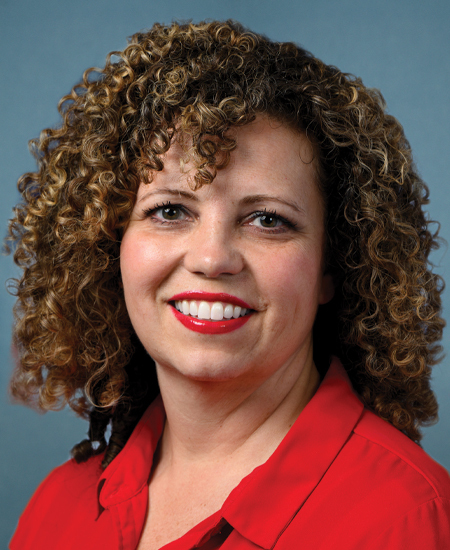
Photo of Celeste Maloy
R United States House · District 2 · Utah On the 2026 ballot

Rep. Celeste Maloy

Compare
Total votes
1,213
all sessions
Attendance
64%
666 missed
Higher than 76% of chamber peers
With party
96%
of cast votes
Near the chamber average
Bipartisan score
3%
crosses aisle rarely
Near the chamber average
Sponsored
252
bills & resolutions
Lower than 84% of chamber peers
Committees
7
assignments
252 bills and resolutions

Sponsored bills

Total
252
Primary
41
Co-sponsor
211
This page
252
matching current filters
Primary HR 9165
In committee · Washington House · Lead sponsor
Public Land Search and Rescue Act

Maddy summaryThe Public Land Search and Rescue Act (HR 9165) creates a federal grant program to fund remote search and rescue operations on public lands managed by the Department of the Interior or Agriculture. It provides up to 75% federal funding for eligible recipients - such as states, local governments, or their designees - to purchase equipment, maintain gear, or reimburse costs for locating and rescuing people lost or injured in remote areas. The program prioritizes applications from regions with high visitor-to-resident ratios, focusing on areas where search and rescue demand is greatest. This legislation directly supports state and local search teams conducting critical safety operations on federal lands.

In committee Nov 19, 2024 0 co-sponsors
Co-sponsor HR 7666
In committee · Washington House · Co-sponsor
To require the Secretary of Agriculture to develop a strategy to increase opportunities to utilize livestock grazing as a means of wildfire risk reduction.

Maddy summaryThis bill requires the U.S. Department of Agriculture to create a strategy expanding the use of livestock grazing on federal lands to reduce wildfire risks. It specifically directs the Secretary of Agriculture to develop plans for using grazing during droughts or wildfires, implementing targeted grazing, issuing temporary permits for fuel reduction, and incorporating grazing into postfire recovery efforts. The strategy would apply to livestock permit holders on federal lands and aim to leverage grazing as a tool for managing vegetation that fuels wildfires. The bill does not mandate specific actions but sets a requirement for the agency to develop these approaches using existing legal authorities.

In committee Nov 19, 2024 1 co-sponsor
Co-sponsor HR 6441
In committee · Washington House · Co-sponsor
Ranching Without Red Tape Act of 2023

Maddy summaryHR 6441, the Ranching Without Red Tape Act of 2023, simplifies minor improvements for ranchers on federal grazing lands managed by the U.S. Forest Service (USFS) and Bureau of Land Management (BLM). It requires the agencies to issue regulations within one year allowing permittees to make small fixes - like repairing fences, wells, or water pipelines - without lengthy approvals. Specifically, ranchers must notify the local manager 30 days in advance; if no response is given within that period, the work can proceed. The bill also mandates that agencies respond to improvement requests within 30 days and expedite approved projects using existing administrative tools. This directly affects ranchers holding grazing permits on USFS and BLM lands.

In committee Nov 19, 2024 1 co-sponsor
Co-sponsor HR 6951
In committee · Washington House · Co-sponsor
College Cost Reduction Act

Maddy summary# Summary of Proposed Higher Education Act Amendments This document outlines significant proposed amendments to the Higher Education Act of 1965, primarily as part of the "College Cost Reduction Act." The key elements include: ## Accreditation Reform - Major overhaul of accreditation standards, requiring accrediting agencies to demonstrate independence from trade associations - New requirements for accrediting agencies to assess student achievement outcomes, including median value-added earnings relative to median total price charged - Introduction of an "Alternative Quality Assurance Experimental Site Initiative" to test non-accredited institutions - Protections for religious institutions, including a new process for appealing accreditation decisions related to religious mission - Removal of "litmus tests" that would require institutions to support specific political viewpoints ## Student Success Initiatives - Establishment of "Postsecondary Student Success Grants" to increase participation, retention, and completion rates for high-need students - Focus on evidence-based practices, with tiered requirements (tier 1, 2, and 3 reforms) - Mandatory inclusion of high-need student populations (low-income, first-generation, military-connected, etc.) - Requirements for institutions to report on completion rates, retention rates, and student demographics ## Regulatory Changes - Repeal of numerous existing regulations including: * Closed school discharges * Borrower defense to repayment * Pre-dispute arbitration * False certification requirements * Ability-to-benefit rules * Financial responsibility regulations - New restrictions on incentive compensation for recruiters - Changes to third-party servicer definitions and regulations ## Transfer and Credit Policies - New requirement that institutions cannot deny transfer credit based solely on the source of accreditation - Requirements for transparent transfer policies - Changes to reverse transfer policies ## Other Key Provisions - Modifications to the National Advisory Committee on Institutional Quality and Integrity (NACIQI) - New definitions for "total price" and "value-added earnings" - Changes to the process for institutions to change accrediting agencies - New requirements for institutions to report on student outcomes The overall focus of these proposed amendments is to reduce regulatory burden on institutions, promote transparency, improve student outcomes (particularly for high-need students), modernize accreditation processes, and protect religious institutions' rights in accreditation decisions.


In committee Nov 18, 2024 1 co-sponsor
Co-sponsor HR 9957
In committee · Washington House · Co-sponsor
Western Refined Fuel Reserve Act of 2024

Maddy summaryHR 9957, the Western Refined Fuel Reserve Act of 2024, requires the U.S. Department of Energy to conduct a 6-month study on establishing a Western refined fuel storage reserve. The study examines potential salt cavern locations in Western States, infrastructure needs (like rail/highway access), supply chain vulnerabilities during disasters, and economic feasibility. It will assess existing storage capacity and identify benefits for energy security, leading to a congressional report with recommendations on location, operations, funding, and partnerships. This bill does not create the reserve itself but sets the groundwork for future decisions about expanding the Strategic Petroleum Reserve system to better serve the Western U.S. in emergencies.

In committee Oct 11, 2024 1 co-sponsor
Primary HCONRES 127
Passed · Washington House · Lead sponsor
Authorizing the use of Emancipation Hall in the Capitol Visitor Center for the unveiling of a statue of Martha Hughes Cannon.

Maddy summaryThis concurrent resolution authorizes the use of Emancipation Hall in the Capitol Visitor Center for the unveiling of a statue honoring Martha Hughes Cannon on December 11, 2024. It directly affects the event organizers and the Capitol Visitor Center by permitting the venue for this commemorative ceremony. The bill contains no policy changes - only a procedural authorization requiring physical preparations to follow the Architect of the Capitol's guidelines. It is a ceremonial resolution, not a substantive legislative measure.

Passed Sep 26, 2024 0 co-sponsors
Co-sponsor HR 6319
In committee · Washington House · Co-sponsor
911 SAVES Act of 2024

Maddy summaryHR 6319 (the 911 SAVES Act of 2023) requires the Office of Management and Budget to reclassify public safety telecommunicators as "Protective Service Occupations" within 30 days of enactment. This change corrects their current misclassification in the federal Standard Occupational Classification (SOC) system, which is used for statistical data on jobs. The bill directly affects how these professionals - critical in emergency calls involving missing children, active threats, and officer safety - are officially categorized in government workforce data. It does not create new benefits or funding but aims to better recognize their lifesaving role through accurate federal job classification.

In committee Sep 19, 2024 1 co-sponsor
Co-sponsor HJRES 163
In committee · Washington House · Co-sponsor
Providing for congressional disapproval under chapter 8 of title 5, United States Code, of the rule submitted by the Environmental Protection Agency relating to "New Source Performance Standards for Greenhouse Gas Emissions From New, Modified, and Reconstructed Fossil Fuel-Fired Electric Generating Units; Emission Guidelines for Greenhouse Gas Emissions From Existing Fossil Fuel-Fired Electric Generating Units; and Repeal of the Affordable Clean Energy Rule".

Maddy summaryThis bill (HJRES 163) is a congressional disapproval resolution targeting an Environmental Protection Agency (EPA) rule finalized on May 9, 2024. The EPA rule established new emissions standards for greenhouse gases from fossil fuel power plants (both new and existing) and repealed a previous rule called the Affordable Clean Energy Rule. The resolution would block this EPA rule from taking effect by invoking the Congressional Review Act (Chapter 8 of Title 5, U.S. Code). If passed, it would prevent the EPA rule from being enforced, directly affecting fossil fuel power plant operators and the EPA’s regulatory authority over emissions.

In committee Sep 18, 2024 1 co-sponsor
Co-sponsor HR 9625
In committee · Washington House · Co-sponsor
JUDGES Act of 2024

Maddy summaryThe JUDGES Act of 2024 authorizes new federal district court judgeships across multiple states to address rising case backlogs in the federal judiciary. It specifies new permanent judgeships for districts including California (multiple districts), Florida, Texas, Delaware, Indiana, Iowa, New Jersey, and New York, with implementation phased through 2035, and creates temporary judgeships for Oklahoma districts with specific vacancy rules. The bill authorizes funding for these positions and requires reports on judicial caseloads and detention space needs, while mandating public access to the Judicial Conference's judgeship recommendations. The bill directly affects federal district courts in the specified locations by increasing judicial staffing to handle growing case volumes.

In committee Sep 17, 2024 1 co-sponsor
Co-sponsor HR 8282
Passed · Washington House · Co-sponsor
Illegitimate Court Counteraction Act

Maddy summaryHR 8282, the "Illegitimate Court Counteraction Act," imposes U.S. sanctions on foreign individuals or entities supporting the International Criminal Court (ICC) in investigating or prosecuting "protected persons." Protected persons include U.S. military personnel, officials, and allied personnel (from non-ICC member countries) who are not under ICC jurisdiction. The bill requires the President to block assets and deny visas to targeted foreign persons and their immediate family members within 60 days of the ICC attempting such actions. It mandates congressional notification of sanctions and allows termination if the ICC ceases all such efforts against protected persons. The law focuses on restricting U.S. economic and travel access to ICC supporters targeting specific U.S. and allied personnel.

Passed Sep 11, 2024 1 co-sponsor
Showing 191 to 200 of 252 bills
Previous 1 19 20 21 26 Next