

Maddy summaryThe PORCUPINE Act amends the Arms Export Control Act to include Taiwan alongside New Zealand and Israel in specific certification and reporting requirements related to U.S. arms exports. This legislative change ensures Taiwan is treated similarly to these allied nations in certain foreign policy contexts involving defense article transfers. The bill also directs the Secretary of State to assess the feasibility of creating an expedited licensing process for military equipment transfers from designated allies to Taiwan within 90 days. Additionally, the act requires biennial reports on the implementation of these amendments and includes a provision stating that the legislation does not alter existing U.S. policy toward Taiwan under the Taiwan Relations Act. The entire measure is set to expire seven years after its enactment.
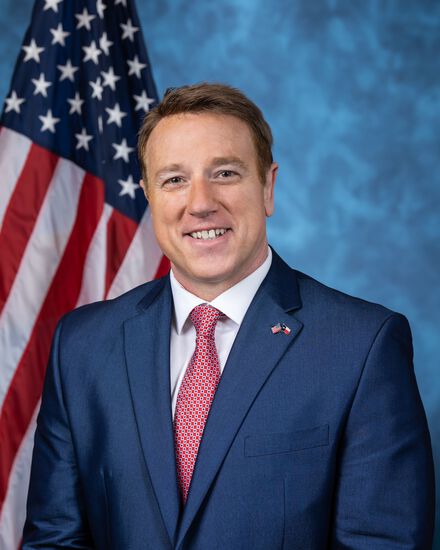
Rep. Pat Fallon
Sponsored bills
Maddy summaryHR 5010, the Farm Credit Adjustment Act, amends the Farm Credit Act of 1971 to allow the Farm Credit Administration (FCA) to extend examination cycles for low-risk Farm Credit System institutions to a maximum of 24 months. This change directly affects rural banks, credit unions, and other Farm Credit System institutions deemed low-risk by the FCA. The key provision removes a previous restriction ("in no event") and gives the FCA discretion to conduct examinations every 24 months instead of more frequently for these institutions. The amendment takes effect on October 1, 2026.
Maddy summaryHR 2426 requires the VA Secretary to commission an independent study comparing the quality of mental health and addiction care provided by VA health care providers versus non-VA providers for veterans. The study must examine health outcomes, use of proven treatment methods, care coordination, veteran satisfaction, and access times across different care types like telehealth and in-person visits. It mandates a report to Congress and public release within 18 months, detailing findings on factors like symptom improvement, suicide risk assessment, and whether veterans with multiple conditions receive integrated care. This bill directly affects veterans seeking mental health or addiction therapy services and aims to identify gaps in care quality between VA and non-VA systems.
Maddy summaryHR 909, the Crime Victims Fund Stabilization Act of 2025, modifies how funds from the False Claims Act are deposited into the Crime Victims Fund. It specifies that from 2025 through 2029, certain False Claims Act proceeds (specifically those for qui tam plaintiff payments and government damage reimbursements) cannot be deposited into the fund. This change directly affects the composition of the Crime Victims Fund by excluding these specific revenue streams during the specified period. The bill does not create new benefits or alter victim services; it only adjusts fund allocation rules for existing False Claims Act revenues.
Maddy summaryThe Securing Energy Supply Chains Act requires the Secretary of Energy to create and maintain an "Energy Non-Procurement List" identifying foreign entities deemed a threat to U.S. national security, energy security, or foreign policy. This list includes entities linked to Chinese military companies, sanctioned groups, or those engaging in activities harmful to U.S. interests, as well as their subsidiaries. Beginning one year after enactment, the Department of Energy (DOE) cannot enter into or renew contracts with listed entities unless no alternative sources exist for the required goods or services. Contractors must certify they aren’t working with listed entities, and the DOE must report to Congress on exceptions and efforts to develop domestic supply chains.
Strengthening Agency Management and Oversight of Software Assets Act This bill requires federal agencies and Intelligence Community (IC) elements to assess their software inventory and develop software management plans. The bill requires each agency and each IC element to complete a comprehensive assessment of the software paid for by, in use at, or deployed throughout the agency or element. The assessment must include information such as (1) the current inventory of software; (2) contracts and other arrangements used to acquire, build, deploy, or use the software; (3) costs and fees not included in the initial contract or agreement; and (4) the interoperability of the software and restrictions on its use. Each agency and IC element must use their assessment to develop a plan to consolidate software entitlements, develop procedures for cost-effective acquisition strategies, and restrict subordinate entities from using any software entitlement without approval. (A software entitlement is software that has been purchased, leased, or licensed by or billed to an agency and that is subject to use limitations.) Such plans must be submitted to the Office of Management and Budget (OMB) and Congress. Within two years of enactment, OMB must submit recommendations to Congress regarding government software procurement policies and practices to • increase the interoperability of software licenses; • consolidate licenses when appropriate; • reduce costs; • improve performance; and • modernize the management and oversight of agency software. The GAO must report on certain related topics, including governmentwide trends in agency software asset management practices and comparisons of such practices among agencies.
Miracle on Ice Congressional Gold Medal Act This act provides for the award of Congressional Gold Medals to the members of the 1980 U.S. Olympic men's ice hockey team in recognition of the team's achievement at the 1980 Winter Olympic Games.
Maddy summaryThe AI Talent Act (HR 6573) creates specialized hiring teams within federal agencies to streamline recruitment for technology and artificial intelligence positions. It establishes agency-level "AI talent teams" to improve job announcements, assessments, and hiring for tech roles, while the Office of Personnel Management (OPM) will lead a central team to coordinate cross-agency hiring efforts, share technical assessments, and develop an online platform for standardized skills evaluations. The bill directly affects federal agencies hiring for AI and tech roles and applicants seeking those positions by changing how technical skills are assessed - requiring job-specific evaluations (like coding tests or structured interviews) instead of relying solely on self-assessments after 5 years. Key provisions include sharing assessment tools between agencies, allowing customization of evaluations, and mandating that assessments be based on job analysis to measure relevant skills. The law aims to modernize federal hiring for high-demand tech talent without altering pay or creating new government programs.
Give Kids a Chance Act of 2025 This bill expands the Food and Drug Administration’s (FDA’s) authority with respect to research on rare pediatric diseases, including by permitting the FDA to take enforcement action against drug sponsors that fail to satisfy pediatric study requirements and by reauthorizing programs that support pediatric research. Specifically, the bill modifies requirements relating to molecularly targeted pediatric cancer investigations to permit research on new drugs in combination with active ingredients that have already been approved, provided certain conditions are met; permits the FDA to take enforcement action against drug sponsors that fail to comply with pediatric study requirements, if such sponsors demonstrated a lack of due diligence in satisfying the requirement; renews the FDA’s authority to award priority review vouchers to sponsors of new products intended to treat rare pediatric diseases through September 30, 2029; and reauthorizes through FY2027 certain funding for the National Institutes of Health to support priority pediatric research. The bill also provides statutory authority for the FDA’s interpretation of the orphan drug exclusivity period. The bill specifies, consistent with FDA regulations, that the seven-year market exclusivity period for drugs for rare diseases or conditions (i.e., orphan drugs) prohibits the approval of the same drug for the same approved use or indication with respect to the disease or condition. (In Catalyst Pharmaceuticals, Inc. v. Becerra , a court rejected the FDA’s interpretation and held that orphan drug exclusivity extends to all uses or indications for the disease or condition.)
Maddy summaryHRES 912 is a ceremonial resolution recognizing the 75th anniversary of the Battle of the Chosin Reservoir (November 27-December 13, 1950) during the Korean War. It commemorates the military campaign involving U.S. and UN forces, highlighting their resilience against Chinese forces amid extreme cold, the evacuation of over 105,000 troops, and the valor of units like the 1st Marine Division. The resolution urges the House to honor the sacrifices of service members who suffered over 10,500 battle casualties and 7,310 nonbattle casualties (primarily from frostbite). As a non-binding commemorative measure, it does not create new policies or affect any individuals or entities.