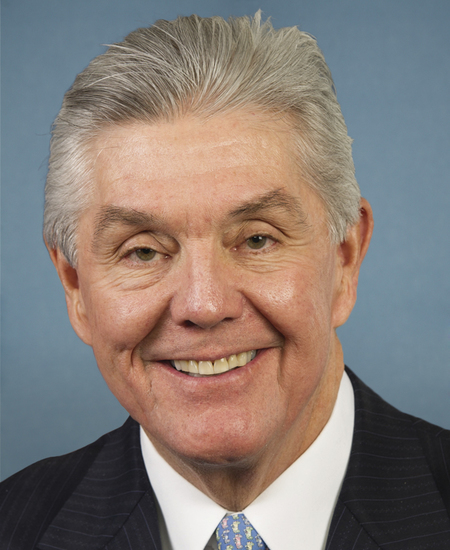
Photo of Roger Williams
R United States House · District 25 · Texas On the 2026 ballot

Rep. Roger Williams

Compare
Total votes
2,818
all sessions
Attendance
94%
182 missed
Near the chamber average
With party
95%
of cast votes
Near the chamber average
Bipartisan score
3%
crosses aisle rarely
Near the chamber average
Sponsored
795
bills & resolutions
Near the chamber average
Committees
4
assignments
795 bills and resolutions

Sponsored bills

Total
795
Primary
83
Co-sponsor
712
This page
795
matching current filters
Co-sponsor HR 1078
In committee · Washington House · Co-sponsor
Respect State Housing Laws Act

Respect State Housing Laws Act This bill eliminates a provision that requires a 30-day notice period before a landlord may begin eviction proceedings against a tenant in federally assisted or federally backed housing.

In committee Feb 25, 2026 1 co-sponsor
Co-sponsor HRES 1076
In committee · Washington House · Co-sponsor
Recognizing the 10th anniversary of the first export shipment of liquefied natural gas produced in the lower 48 States.

Maddy summaryHRES 1076 is a House resolution recognizing the 10th anniversary of the first U.S. liquefied natural gas (LNG) export shipment from the lower 48 states, which occurred on February 24, 2016. The resolution celebrates this milestone as a historic achievement in American energy production, highlighting its role in supporting over 273,000 annual jobs and $400 billion in economic growth over the past decade. It honors the workers and communities involved and acknowledges LNG exports' contribution to U.S. economic growth, energy security, and global partnerships. The resolution has no binding effect or policy changes - it solely expresses recognition of a past event.

In committee Feb 24, 2026 1 co-sponsor
Primary HR 7412
In committee · Washington House · Lead sponsor
Put America on Commission Act of 2026

Maddy summaryHR 7412, the "Put America on Commission Act of 2026," creates a new Office of Whistleblower Awards within the Small Business Administration (SBA) to incentivize reporting of fraud related to SBA COVID-19 relief loans. The bill establishes a Whistleblower Award Fund funded by civil penalties collected from individuals or entities convicted of or settling fraud in these specific loan cases. Whistleblowers who provide original information leading to a final conviction or settlement can receive 10% (for U.S. persons/entities) or 15% (for foreign persons/entities) of the penalties collected. The program includes anti-retaliation protections, requires the SBA to track submissions, and expires once all related cases are resolved. It directly affects whistleblowers reporting SBA loan fraud and SBA loan recipients facing fraud allegations.

In committee Feb 20, 2026 0 co-sponsors
Co-sponsor HR 1028
In committee · Washington House · Co-sponsor
Protection of Women in Olympic and Amateur Sports Act of 2026

Protection of Women in Olympic and Amateur Sports Act This bill requires certified national governing bodies (NGBs) of amateur sports (e.g., USA Gymnastics) to prohibit a person whose sex is male from participating in an amateur athletic competition that is designated for females, women, or girls. Under the bill, male  means an individual who has, had, will have—or would have, but for a developmental or genetic anomaly or historical accident—the reproductive system that at some point produces, transports, and utilizes sperm for fertilization.

In committee Feb 17, 2026 1 co-sponsor
Co-sponsor HR 7539
In committee · Washington House · Co-sponsor
SAFE Act

Maddy summaryHR 7539, the SAFE Act, requires the Comptroller General to study "chameleon carriers" (motor carriers evading safety rules by changing names or ownership) and develop an automated tool for the Federal Motor Carrier Safety Administration (FMCSA) to detect such applicants during Department of Transportation (DOT) number registration. The bill mandates the tool to identify patterns like shared ownership, similar addresses, insurance lapses, or continuity of operations to flag suspicious applications. It directly affects motor carriers applying for DOT numbers and FMCSA staff, who must use the tool to review applications while preserving final decision-making authority. The law also requires an appeals process for denied applications, data privacy safeguards, and a two-year effectiveness report on the tool.

In committee Feb 13, 2026 1 co-sponsor
Co-sponsor HR 7548
In committee · Washington House · Co-sponsor
SCAM Act

Maddy summaryThe SCAM Act requires online platforms that display paid advertisements (like social media sites) to verify advertiser identities, implement scam detection systems, and remove fraudulent ads within 24 hours of confirmation. It directly affects platforms that accept payment for ads, targeting scams such as fake giveaways, romance scams, and AI impersonations that cost consumers $195 billion in 2024 (per FTC data). Key mechanisms include mandatory identity checks for advertisers, active monitoring systems, and a 72-hour investigation window for reported scams. The law aims to reduce fraud by shifting responsibility to platforms, with enforcement by the FTC and state attorneys general.

In committee Feb 12, 2026 1 co-sponsor
Co-sponsor HR 7442
In committee · Washington House · Co-sponsor
National Bridge Funding Reform Act

Maddy summaryHR 7442 establishes a new National Bridge Program under federal highway law to allocate funding for bridge replacement, rehabilitation, and construction. It changes how funds are distributed: 75% based on the total deck area of bridges on federal-aid highways in each state, and 25% based on the deck area of bridges in poor condition. This directly affects state transportation departments managing federal-aid highway bridges, requiring them to prioritize projects using this updated formula starting after December 31, 2024. The bill eliminates prior programs (Carbon Reduction and PROTECT) and revises related funding mechanisms.

In committee Feb 10, 2026 1 co-sponsor
Co-sponsor HR 5221
In committee · Washington House · Co-sponsor
PART Act

Maddy summaryThe PART Act requires new vehicles to have catalytic converters marked with a unique identification number that links directly to the vehicle's identification number, stored in a law enforcement-accessible database. It establishes a $7 million grant program to help repair shops, dealers, law enforcement, and fleet owners purchase equipment for marking converters with visible, durable identifiers (using die or pin stamping and high-visibility paint). The bill also mandates that businesses buying catalytic converters keep detailed seller records (including vehicle information) for two years and use traceable payments, banning cash or cryptocurrency transactions. Additionally, it creates new federal criminal penalties for stealing or trafficking in catalytic converters, with potential sentences of up to five years in prison.


In committee Feb 10, 2026 1 co-sponsor
Co-sponsor HR 3699
In committee · Washington House · Co-sponsor
Energy Choice Act

Maddy summaryThis bill prevents state or local governments from banning or restricting energy connections (like installation, modification, or access) based on the type or source of energy, such as electricity, natural gas, or renewable fuels. It directly affects consumers choosing energy providers and energy companies seeking to offer services. The key provision prohibits local laws, regulations, or policies that limit energy services sold in interstate commerce, covering all energy types listed in the bill’s definitions. It does not create new programs but limits regulatory authority at the state or local level. The law aims to ensure open access to diverse energy sources without source-based restrictions.

In committee Feb 4, 2026 1 co-sponsor
Co-sponsor HR 7300
In committee · Washington House · Co-sponsor
Make Elections Great Again Act

Maddy summaryThe Make Elections Great Again Act (HR 7300) would require voters to present photo identification to cast ballots in person or by mail for federal elections, with limited exceptions for religious objections or military voters. It would establish new requirements for proving U.S. citizenship during voter registration, including documentary proof of citizenship and proof of state residency. The bill would change mail-in ballot procedures by requiring voters to request mail-in ballots (rather than universal mail-in voting), implementing barcode tracking for mail-in ballots, and setting strict deadlines for ballot receipt. These provisions would apply to all states for federal elections held in 2027 or later, affecting how voters register, vote in person, and submit mail-in ballots for federal office elections.

In committee Feb 2, 2026 1 co-sponsor
Showing 51 to 60 of 795 bills
Previous 1 5 6 7 80 Next