

Maddy summaryThe ALERT Act (HR 7613) requires the Federal Aviation Administration to improve aviation safety through several key measures. It mandates the evaluation and potential implementation of enhanced collision avoidance systems (ACAS-Xa) for commercial aircraft and ACAS-Xr for rotorcraft, with specific deadlines for rulemaking and installation. The bill establishes committees to develop recommendations for safety technology requirements, requires safety risk assessments for air traffic controllers, and addresses operational procedures at high-traffic airports like Ronald Reagan Washington National. These provisions affect air carriers, air traffic controllers, rotorcraft operators, and Department of Defense aircraft operations. The act aims to enhance situational awareness and reduce midair collision risks through technology upgrades and improved safety protocols.
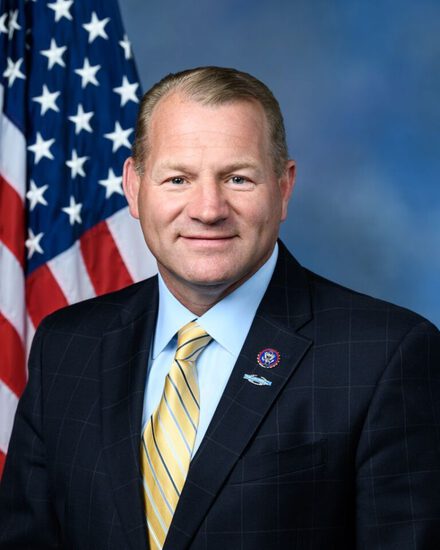
Rep. Troy E. Nehls
Sponsored bills
Maddy summaryThis bill would prohibit federal laws from requiring manufacturers to install emissions control devices or onboard diagnostic systems on diesel trucks and other motor vehicles. It removes the Environmental Protection Agency's authority to enforce existing emissions regulations and eliminates liability for anyone who manufactures, sells, or modifies vehicles without these devices. The legislation also repeals current federal regulations related to emissions controls and would erase criminal or civil penalties for past violations of these rules.
Maddy summaryThe Supersonic Aviation Modernization Act requires the Federal Aviation Administration (FAA) to issue new regulations within one year of enactment, enabling commercial supersonic flights (faster than the speed of sound) over U.S. airspace without special permission. These regulations would only permit such flights if the aircraft is operated to prevent sonic booms from reaching the ground. The bill directly affects companies developing and operating supersonic aircraft, as well as the FAA, which must revise existing rules to accommodate this change. This policy shift removes current barriers to routine supersonic travel in U.S. airspace under specific noise-reduction conditions.
Maddy summaryHR 556, the Protecting Access for Hunters and Anglers Act, prevents federal agencies from banning lead ammunition or tackle on public lands and waters managed for hunting or fishing. It directly affects hunters and anglers using federal lands (like national wildlife refuges, public forests, and BLM lands) by blocking nationwide restrictions on lead products. The bill allows limited exceptions only for specific locations where wildlife decline is directly linked to lead use, and the restriction must align with state law or get approval from the state wildlife agency. This changes how federal land managers can regulate lead, requiring state coordination for any local restrictions.
Maddy summaryThis bill creates a new provision (Section 238A) in immigration law requiring the Department of Homeland Security to expedite the removal (deportation) of certain non-citizens. It directly affects individuals who are: (1) criminal gang members or members of a foreign terrorist organization, or (2) convicted of specific serious crimes including felonies, assaults against vulnerable groups (defined as children under 16, pregnant women, disabled individuals, or seniors over 65), sexual offenses, domestic violence, or child exploitation crimes. The bill mandates mandatory detention and faster removal proceedings for these individuals, and explicitly states they cannot seek withholding of removal (a form of protection from deportation). It does not change existing immigration categories but adds these specific grounds for expedited removal.
Maddy summaryHR 5688, the Non-Domiciled CDL Integrity Act, changes rules for issuing commercial driver's licenses (CDLs) to people who don't live in the state where the license is issued. It allows states to issue CDLs to foreign nationals with lawful U.S. immigration status and work-related visas (valid for up to one year or until their stay ends), requiring states to verify status before issuing and keep records for two years. For residents of U.S. territories like Puerto Rico, it requires proof of U.S. citizenship or permanent residency before issuing CDLs, with similar verification and record-keeping rules. The bill directly affects commercial drivers from foreign countries and U.S. territories seeking CDLs in states where they are not residents.
Maddy summaryThis bill, known as the CODIS Access Modernization Act, would allow accredited private forensic DNA laboratories to directly upload DNA profiles to the National DNA Index System, which is currently restricted to government-run labs. The legislation requires private labs to meet the same quality standards as public facilities, including ISO/IEC 17025 accreditation and regular FBI audits, while prohibiting them from searching or retrieving DNA data from the system. The Department of Justice and FBI would establish specific regulations within six months of enactment to define eligibility criteria and security safeguards for this new access. The primary goal is to reduce DNA testing backlogs and speed up criminal investigations by expanding the number of facilities that can contribute directly to the national DNA database.
Maddy summaryHR 7640, the "Shut Down Sanctuary Policies Act of 2026," requires state and local governments to cooperate with federal immigration enforcement by mandating that law enforcement agencies comply with federal requests to hold individuals for immigration status checks and share related information. It overrides state or local laws that restrict such cooperation, with non-compliant jurisdictions losing eligibility for specific federal law enforcement grants (like Byrne JAG funds) and facing potential lawsuits if released immigrants commit crimes. The bill creates a private right to sue state/local entities that fail to honor federal detainers, allowing victims of crimes committed by such individuals to seek damages. This directly affects state and local governments, law enforcement agencies, and jurisdictions with "sanctuary" policies that previously limited immigration cooperation.
Maddy summaryThis bill, titled the No Federal Tax Dollars for Illegal Aliens Health Insurance Act of 2026, amends the Affordable Care Act to restrict the use of federal taxpayer funds for health insurance coverage. It directly affects states that receive funding under the ACA and individuals seeking health insurance coverage through federal programs. The key provision prohibits states from using pass-through funding to pay for health insurance or related benefits for individuals who are not U.S. citizens, nationals, or lawfully present aliens. Additionally, the bill requires the Secretary of Health and Human Services to rescind any existing waivers that would have allowed such funding for unauthorized individuals had the new restrictions been in place at the time of approval.
Maddy summaryThis bill, known as the Dalilah Law, would restrict commercial driver's licenses to U.S. citizens, lawful permanent residents, and holders of specific work visas. It requires states to verify the citizenship or visa status of all CDL applicants and renewals within 180 days of enactment, while also mandating English language proficiency testing for all license holders. States that fail to enforce these requirements or issue licenses to ineligible individuals risk losing federal transportation funding. The law also imposes lifetime disqualifications for operating commercial vehicles without proper immigration status.