

Maddy summaryThis bill increases loan limits for small manufacturers under two federal programs. It defines "small manufacturer" as a business primarily in U.S. manufacturing sectors (31-33) with all facilities in the U.S. The bill raises the maximum Small Business Administration 7(a) loan limit for these manufacturers from $3.75 million to $7.5 million (capping at $10 million), and doubles the export loan limit from $5 million to $10 million. These changes directly affect qualifying U.S.-based manufacturing businesses seeking federal loan support for operations or exports. The policy modifies specific loan caps without altering other program requirements.
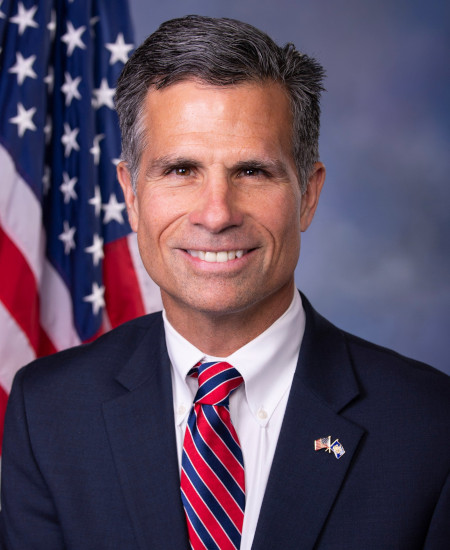
Rep. Daniel Meuser
Sponsored bills
Maddy summaryThis bill would amend federal law to strengthen penalties for organized retail crime by expanding definitions of theft to include digital goods, gift cards, and setting a $5,000 aggregate value threshold for charges over a 12-month period. It would establish a new "Organized Retail and Supply Chain Crime Coordination Center" under Homeland Security to coordinate Federal, State, local, and Tribal law enforcement efforts against cross-jurisdictional theft groups. The Center would share information with retailers, transportation companies, and law enforcement agencies, track crime trends, and produce annual reports on organized retail crime. This legislation directly affects retailers, supply chain businesses, and law enforcement agencies, while targeting organized crime groups responsible for a 93% increase in larceny incidents and rising safety concerns for retail employees. The bill aims to address significant financial losses and supply chain disruptions noted in the National Retail Federation's 2023 data.
Maddy summaryThis resolution expresses support for designating the week of May 3 through May 9, 2026, as "National Small Business Week." It aims to honor the contributions of small businesses and entrepreneurs across the United States, acknowledging their role in supporting millions of jobs. The bill does not create new laws or regulations but serves as a formal statement of appreciation from the House of Representatives.
Maddy summaryThis bill requires federal agencies to analyze indirect economic costs on small businesses when creating new rules, including costs affecting businesses that interact with regulated entities (like suppliers or partners). It creates a new process allowing small businesses to petition the Small Business Administration's Chief Counsel to review agency certifications claiming a rule won't significantly impact them. Agencies must then provide detailed cost analyses, publish guidance online for small business feedback, and face penalties if they fail to cooperate with reviews. The bill does not change existing regulations but adds new review steps for small business input.
Maddy summaryThis resolution expresses support for designating April as Sikh History Month to honor the history, culture, and contributions of the Sikh community. The measure highlights key Sikh principles such as equality, honest labor, and community service, noting that April often coincides with the significant festival of Vaisakhi. By encouraging schools and public institutions to host educational events, the bill aims to increase awareness of Sikh heritage and reduce misunderstandings about the faith. Ultimately, this non-binding resolution serves as a formal recognition of the Sikh community's role in American society rather than creating new legal requirements.
New Source Review Permitting Improvement Act This bill modifies terminology for purposes of the New Source Review (NSR) permitting program of the Environmental Protection Agency (EPA). In order for a change to a stationary source to be a modification (a change to a stationary source that increases the air pollutant emissions or results in new pollutants) for purposes of the NSR permitting program, the maximum hourly emission rate achievable by such source must be higher than the maximum hourly rate achievable by such source during any hour in the 10-year period preceding the change. A change at a stationary source is not considered to be a modification under the bill if it is designed to (1) reduce the amount of any air pollutant emitted; or (2) restore, maintain, or improve the reliability of operations at, or safety of, the source. However, such changes are not excepted if the EPA determines the increase in the maximum achievable hourly emission rate from such change would cause an adverse effect on human health or the environment. Construction , in connection with a major emitting facility (a type of stationary source), does not include a change at such a facility that does not result in a significant emissions increase or a significant net emissions increase. In relation to major emitting facilities in nonattainment areas, the terms modifications and modified do not include changes at such facilities that do not result in a significant emissions increase or a significant net emissions increase.
Maddy summaryThis bill requires the Department of Housing and Urban Development to report estimates of improper payments for rental assistance programs by December 2027. It mandates that the Secretary notify the Inspector General if spending or the number of recipients in a specific area increases by more than 100 percent in a single year. Additionally, the Inspector General must conduct annual audits of programs showing a 400 percent increase over five years and submit a fraud risk assessment for the $50 billion in annual rental assistance. These measures aim to improve oversight and detect potential fraud by establishing specific reporting thresholds and requiring detailed data analysis.
Maddy summaryThis bill modernizes housing assistance programs for Native American tribes and Native Hawaiians by streamlining environmental reviews, extending funding authorization through 2032, and expanding loan guarantee options. Key provisions include consolidating environmental review requirements to reduce paperwork for tribes, allowing 99-year leasehold interests on trust lands for housing, and creating new rental assistance specifically for homeless or at-risk Native American veterans. The legislation also clarifies rent rules, waives certain housing counseling certifications for tribal entities, exempts tribal housing projects from some federal civil rights and Buy America requirements, and establishes a direct loan guarantee process for tribal housing projects.
Maddy summaryThe Small Business Tax Cut Act increases the qualified business income deduction from 20 percent to 23 percent for eligible taxpayers, directly affecting small business owners and investors. The bill modifies income thresholds that limit this deduction for higher earners and extends the phase-in rules for taxable income above certain limits. Additionally, it allows dividends from qualified business development companies to be treated similarly to qualified REIT dividends for deduction purposes. These changes apply to taxable years beginning after December 31, 2026.
Maddy summaryThe Guidelines for Use, Access, and Responsible Disclosure of Financial Data Act strengthens privacy protections for consumers by amending the Gramm-Leach-Bliley Act to require financial institutions to limit data collection to what is necessary, provide clearer privacy notices, and offer new rights for customers to access or delete their personal information. Key provisions include requiring explicit opt-in consent for sensitive data like biometric information, restricting how third parties can use consumer login credentials, and mandating that institutions disclose how they use artificial intelligence in processing financial data. The bill also establishes a right for former customers to request deletion of their data within 45 days and requires regulators to consider the impact of rules on smaller financial institutions with $15 billion or less in assets.