

Maddy summaryHR 1719, the Honoring Our Fallen Heroes Act of 2023, establishes a presumption that certain cancers diagnosed in public safety officers (like police and firefighters) are work-related if linked to their duties. It defines 22 specific cancers (including lung, mesothelioma, and WTC-related cancers) as "exposure-related," allowing officers or their families to receive benefits without proving direct work connection, provided they were diagnosed within 15 years of leaving active service. The bill also creates a process for adding new cancers to the list based on scientific evidence, requiring the Bureau to review petitions and make decisions within 180 days. This applies to deaths or disabilities occurring on or after January 1, 2023, directly affecting officers who developed covered cancers during service.
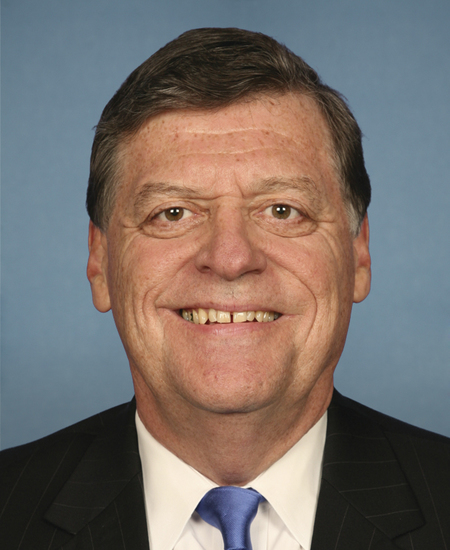
Rep. Tom Cole
Sponsored bills
Maddy summaryThis bill provides $2.29 billion for veterans' compensation and pensions and $597 million for readjustment benefits to address funding shortfalls. It requires the VA Secretary to submit reports on budget forecasting improvements and to regularly update Congress on fund usage through 2026. The bill mandates an Inspector General review of the causes behind the 2024 Veterans Benefits Administration funding shortfall and the expected 2025 Veterans Health Administration shortfall. These provisions focus on improving financial accountability and preventing future funding gaps for veterans' programs. The bill is focused on funding and oversight rather than changing benefit eligibility or amounts.
Maddy summaryHR 6319 (the 911 SAVES Act of 2023) requires the Office of Management and Budget to reclassify public safety telecommunicators as "Protective Service Occupations" within 30 days of enactment. This change corrects their current misclassification in the federal Standard Occupational Classification (SOC) system, which is used for statistical data on jobs. The bill directly affects how these professionals - critical in emergency calls involving missing children, active threats, and officer safety - are officially categorized in government workforce data. It does not create new benefits or funding but aims to better recognize their lifesaving role through accurate federal job classification.
Maddy summaryThis bill (HJRES 163) is a congressional disapproval resolution targeting an Environmental Protection Agency (EPA) rule finalized on May 9, 2024. The EPA rule established new emissions standards for greenhouse gases from fossil fuel power plants (both new and existing) and repealed a previous rule called the Affordable Clean Energy Rule. The resolution would block this EPA rule from taking effect by invoking the Congressional Review Act (Chapter 8 of Title 5, U.S. Code). If passed, it would prevent the EPA rule from being enforced, directly affecting fossil fuel power plant operators and the EPA’s regulatory authority over emissions.
Maddy summaryThe Continuing Appropriations and Other Matters Act, 2025, provides funding for federal agencies through March 28, 2025, while including the SAVE Act (Safeguard American Voter Eligibility Act) as its key policy component. The SAVE Act requires voters to present documentary proof of U.S. citizenship when registering for federal elections, defining acceptable forms including passports, military IDs, birth certificates, and naturalization documents. It mandates states to verify citizenship using government databases like the SAVE system and remove non-citizens from voter rolls, with processes for those without standard proof of citizenship. This directly affects all voters registering for federal elections in all 50 states and the District of Columbia.
Maddy summaryThe DeOndra Dixon INCLUDE Project Act of 2024 establishes a new National Institutes of Health (NIH) research program focused on Down syndrome. It requires the NIH to study medical conditions often linked to Down syndrome - such as Alzheimer's disease, heart problems, and autoimmune disorders - to develop better treatments and improve quality of life for individuals with Down syndrome. The program must coordinate existing NIH research, expand clinical trials involving people with Down syndrome, and submit biennial reports to Congress on progress. The bill authorizes $250 million annually for fiscal years 2025-2030 to fund this initiative, supplementing but not replacing current NIH funding for Down syndrome research.
Maddy summaryHR 2864, the Countering CCP Drones Act, adds DJI Technologies (Shenzhen Da-Jiang Innovations Sciences and Technologies Company Limited) and its equipment/services to the list of prohibited communications products under the Secure and Trusted Communications Networks Act. The bill directly affects U.S. federal agencies and entities receiving federal funds by prohibiting them from using DJI's telecommunications or video surveillance equipment or services. Its key mechanism requires federal agencies to remove DJI equipment from their networks and bans future procurement or use of such equipment. This policy change aims to address security concerns related to Chinese-owned drone technology in U.S. communications infrastructure.
Maddy summaryHR 7015, the CAREERS Act, expands federal funding for workforce training programs to better serve rural communities. It modifies eligibility to include career and technical education schools and requires training programs to align with specific rural industry sectors like broadband, healthcare, agriculture, manufacturing, and water services. The bill mandates grantees to report on employment outcomes for participants and addresses rural workforce challenges such as worker displacement and youth migration. This directly affects rural workforce development boards, training providers, and workers in designated rural industries seeking job skills and career pathways.
Maddy summaryThe PROTECT Act of 2024 allows tribal courts to issue search warrants for electronic communications in Indian country using tribal procedures, rather than requiring state court warrants. It explicitly grants tribal courts jurisdiction over drug trafficking (including possession of controlled substances or paraphernalia) and firearms offenses (such as firearm use in crimes or by domestic violence offenders) within tribal lands. This directly affects tribal nations by expanding their authority to enforce laws on their territories for these specific crimes. The bill also extends a federal program for tribal prisoner reentry to include individuals convicted of drug trafficking or firearms offenses under tribal jurisdiction.
Maddy summaryHRES 1365 is a non-binding House resolution calling for the immediate termination of Kimberly Cheatle as U.S. Secret Service Director. It directly addresses the Secret Service Director and the executive branch, though it has no legal force to remove her from office. The resolution’s sole provision is a formal request for her termination, reflecting the sponsors' position on her leadership. As a symbolic gesture, it does not change her employment status or require any action from the President or Secret Service.