

Maddy summaryHR 940 (FAIR Exams Act) requires federal banking regulators to deliver final examination reports to financial institutions within 60 days after an exit interview or when additional information is provided. It creates an Office of Independent Examination Review led by a presidentially appointed Director to handle appeals of material supervisory determinations, including investigating complaints and reviewing exam procedures. Financial institutions gain the right to request an independent review of exam findings within 60 days, with the Director making final recommendations to regulators within 60 days, and prohibits retaliation for using these appeal rights. The bill directly affects all federally regulated banks, credit unions, and their representatives subject to federal examinations.
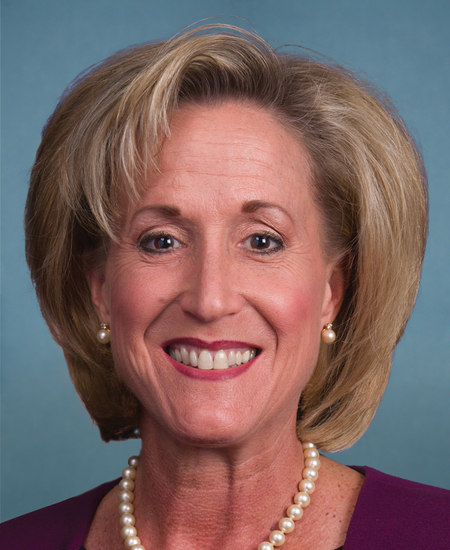
Rep. Ann Wagner
Sponsored bills
Maddy summaryHR 4606, the Ally’s Act, requires private health insurance plans (including employer-sponsored plans and individual coverage) to cover hearing implants and related services. It directly affects people with hearing loss who need cochlear implants, bone conduction devices, or external sound processors, as determined by a physician or audiologist. The bill mandates coverage for devices, maintenance, repairs, upgrades every 5 years, hearing assessments, surgery, and rehabilitation - without separate cost-sharing or stricter limits than other medical services. Insurers cannot deny coverage if a provider deems the service medically necessary. The law applies to all applicable health plans and takes effect for plan years beginning January 1, 2026.
Maddy summaryHR 4620 amends federal law to include rioting as a form of racketeering activity under Title 18, United States Code. This change would allow prosecutors to charge individuals who organize or participate in riots as part of a larger criminal enterprise under federal racketeering laws. The bill specifically targets coordinated riot activities linked to organized crime, not isolated or spontaneous protests.
Maddy summaryThis bill requires the Securities and Exchange Commission (SEC) to regularly review and update its definition of "small entities" (such as small businesses and organizations subject to SEC regulations). Every five years, the SEC must study whether the current definition aligns with regulatory goals, reflects market growth, and covers a meaningful number of entities, then submit detailed recommendations to Congress. The SEC must revise its rules based on these studies and adjust dollar thresholds in the definition annually to account for inflation using the Consumer Price Index. This directly affects small entities regulated by the SEC, ensuring their definition stays relevant to current market conditions.
Maddy summaryThe Greenlighting Growth Act (HR 3343) eases financial reporting requirements for emerging growth companies (EGCs) during initial public offerings (IPOs) and subsequent acquisitions. It exempts EGCs from presenting historical financial statements of acquired companies for periods before their IPO, as long as they only show financial data from their earliest audited period following the IPO. This applies to SEC filings under both the Securities Act of 1933 and the Securities Exchange Act of 1934, specifically removing the need to include pre-IPO financial records required under SEC rules (17 CFR 210.3-05 and 210.8-04). The bill directly affects EGCs - typically newer, smaller companies with under $1 billion in annual revenue - by reducing administrative burdens when going public or acquiring other businesses.
Maddy summaryThe Senior Security Act of 2025 establishes a Senior Investor Taskforce within the Securities and Exchange Commission (SEC) to address challenges faced by senior investors (defined as those over age 65), including financial exploitation and cognitive decline. The Taskforce will identify regulatory gaps, coordinate with agencies like state regulators and law enforcement, and issue biennial reports to Congress with recommendations for improving protections. Additionally, the bill mandates a Government Accountability Office (GAO) study on the economic costs, frequency, and reporting of financial exploitation of seniors, analyzing factors like race, social isolation, and income to inform future policy.
Frederick Douglass Trafficking Victims Prevention and Protection Reauthorization Act of 2025 This bill reauthorizes programs and activities that combat international trafficking; establishes a new program to help victims of trafficking; and updates various elements of the federal framework to combat international trafficking. Specifically, this bill reauthorizes through FY2029 programs and activities at various federal departments and agencies to combat international trafficking and reduce the prevalence of modern slavery. The bill also reauthorizes International Megan’s Law through FY2029. Among its provisions, the law requires sex offenders to provide certain information about their intended travel outside of the United States. Additionally, the bill authorizes the Department of Health and Human Services to carry out a new program to help victims of trafficking integrate or reintegrate into society. The bill requires the Department of State's Trafficking in Persons Report to include information about trafficking in persons for the purposes of organ removal. With respect to country rankings for anti-trafficking efforts, the bill narrows the types of countries that are listed on the Tier 2 Watch List and increases the length of time a country may remain on the Tier 2 Watch List after being downgraded to the lowest ranking and then reinstated to the watch list. (The Tier 2 Watch List refers to countries that are making efforts to meet international standards for combatting human trafficking but still have a significant number of severe trafficking cases.) Finally, the bill requires counter-trafficking strategies, activities, and efforts to be further incorporated into U.S. foreign assistance.
Maddy summaryHR 1919, the "Anti-CBDC Surveillance State Act," prohibits the Federal Reserve from developing, testing, or issuing any central bank digital currency (CBDC) or similar digital assets. It specifically bans the Fed from offering direct financial products to individuals, maintaining individual accounts, or issuing CBDCs directly or indirectly through intermediaries like banks. The bill also blocks the Fed from using any digital asset for monetary policy and clarifies that physical currency's privacy protections remain intact. This policy directly affects the Federal Reserve System's ability to create or manage digital monetary tools.
Maddy summaryHR 4474, the Equal Shot Act of 2025, prohibits the Small Business Administration (SBA) from denying financial assistance - such as loans or guarantees - to firearm businesses solely because of their industry. It directly affects firearm manufacturers, distributors, trade associations, and affiliated entities like shooting ranges or training providers. The bill requires the SBA to treat these applicants equally under existing law, removing any policy that would block them based on their connection to firearms. This is a concrete policy change ensuring firearm-related businesses have the same access to SBA programs as other eligible applicants.
Maddy summaryHR 4470, the *Removing Burdens From Organ Donation Act*, requires hospitals to electronically notify organ procurement agencies when a potential donor is deceased or near death, with remote access to updated electronic health records (EHRs). This applies to most hospitals starting two years after the law's enactment, but allows exemptions for rural hospitals lacking reliable internet, those hit by cyberattacks, or disaster-affected facilities. The bill mandates federal guidance for hospitals and EHR companies on implementation, plus annual reports on exemptions and a GAO study on costs, rural challenges, and transplant outcomes. It directly affects hospitals, organ procurement agencies, and EHR providers by streamlining donor notification processes.