

Maddy summaryThis bill establishes a framework to protect American-owned closed-source AI models from unauthorized extraction by foreign entities, particularly those from China and Russia. It requires the Secretary of State to conduct assessments identifying which foreign entities are conducting model extraction attacks or facilitating them through fraudulent account networks, then publish a public list of these actors for up to five years. The legislation authorizes the President to impose economic sanctions on identified entities and their affiliates, while also creating mechanisms for industry coordination and sharing information about threats. Importantly, the bill distinguishes between legitimate AI research conducted under contractual terms and unauthorized extraction attempts that bypass access controls or violate usage agreements.
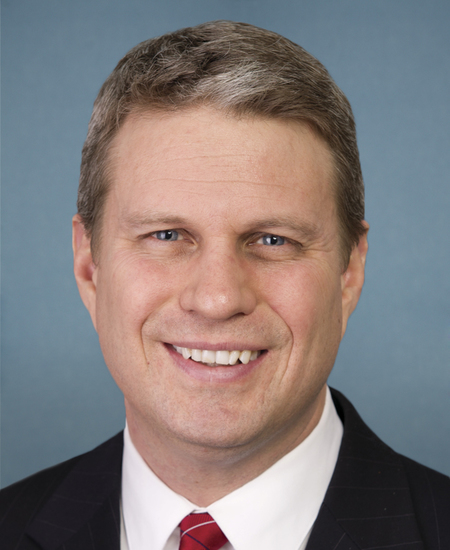
Rep. Bill Huizenga
Sponsored bills
Maddy summaryThe MATCH Act requires U.S. agencies to align export controls on semiconductor manufacturing equipment with allied nations to prevent adversaries from accessing critical technology. It mandates a 150-day period for diplomatic efforts to secure countrywide denial policies from allied suppliers, after which U.S. jurisdiction would extend to equipment exported from countries not complying with these controls. The bill specifically targets semiconductor manufacturing equipment that the U.S. cannot currently produce in high volume and includes a list of Chinese companies deemed to warrant comprehensive restrictions. If allies fail to implement matching controls, the Act would allow the U.S. to regulate equipment exported from non-compliant allied countries and restrict servicing of restricted items at facilities in adversary nations. The legislation includes a sunset provision that expires five years after enactment, with annual reporting requirements to Congress on progress and compliance.
Maddy summaryThis bill, known as the Full AI Stack Export Promotion Act, aims to increase the global export of U.S.-developed artificial intelligence systems, computing hardware, and related standards. It directs the Secretary of Commerce to establish a program that helps industry groups export U.S. AI technology to allied nations while working with the State Department to remove foreign barriers to these exports. The legislation also requires government agencies to develop security measures to prevent unauthorized access by foreign adversaries and to track the success of these export efforts through regular reports to Congress.
Maddy summaryThe STRIDE Act requires the U.S. State Department to coordinate with allied nations on semiconductor supply chain security, specifically targeting prevention of technology transfers to countries of concern like China. It establishes mechanisms for aligning export controls on semiconductor manufacturing equipment, materials, and design tools, and mandates regular reporting on diplomatic progress. Countries failing to implement sufficient security measures face potential U.S. export restrictions under the Foreign Direct Product Rule. The bill directly affects U.S. trade policy with allies and semiconductor companies operating in global supply chains.
Maddy summaryHR 4505 establishes a new 5-year Export Control Officer Program to address gaps in U.S. export enforcement. The bill requires the Commerce Department to station at least 20 export control officers at U.S. diplomatic posts within 90 days, significantly increasing the current count of 11 officers covering 60 countries. These officers will conduct end-use checks to verify that exported items comply with U.S. license rules, advise embassies on export policies, and coordinate with foreign governments to prevent unauthorized use of controlled technology. The program directly affects the Bureau of Industry and Security (BIS) and aims to strengthen enforcement by expanding on-the-ground oversight of U.S. exports globally.
Maddy summaryThe Guidelines for Use, Access, and Responsible Disclosure of Financial Data Act strengthens privacy protections for consumers by amending the Gramm-Leach-Bliley Act to require financial institutions to limit data collection to what is necessary, provide clearer privacy notices, and offer new rights for customers to access or delete their personal information. Key provisions include requiring explicit opt-in consent for sensitive data like biometric information, restricting how third parties can use consumer login credentials, and mandating that institutions disclose how they use artificial intelligence in processing financial data. The bill also establishes a right for former customers to request deletion of their data within 45 days and requires regulators to consider the impact of rules on smaller financial institutions with $15 billion or less in assets.
Maddy summaryThis House Resolution recognizes the efforts and public safety contributions of linemen and the important role they play in maintaining the nation's energy infrastructure. It expresses support for designating April 18, 2026, as "National Lineman Appreciation Day" and acknowledges linemen as first responders.
Maddy summaryThe DPA Modernization Act of 2026 updates the Defense Production Act of 1950 to strengthen national defense manufacturing and supply chain resilience. It creates a Defense Production Act Committee with specific roles, establishes a Defense Production Act Fund with a new Fund manager, and adds new provisions for critical minerals resilience. The bill increases funding limits for certain programs (e.g., raising caps from $10,000 to $100,000) and requires new reporting requirements to improve transparency. It also creates a Defense Production Act Dashboard for tracking activities and adds fraud risk management requirements. The bill affects Federal agencies that use the Defense Production Act authorities to support national defense manufacturing and supply chains.
Maddy summaryThe ALERT Act (HR 7613) requires the Federal Aviation Administration to improve aviation safety through several key measures. It mandates the evaluation and potential implementation of enhanced collision avoidance systems (ACAS-Xa) for commercial aircraft and ACAS-Xr for rotorcraft, with specific deadlines for rulemaking and installation. The bill establishes committees to develop recommendations for safety technology requirements, requires safety risk assessments for air traffic controllers, and addresses operational procedures at high-traffic airports like Ronald Reagan Washington National. These provisions affect air carriers, air traffic controllers, rotorcraft operators, and Department of Defense aircraft operations. The act aims to enhance situational awareness and reduce midair collision risks through technology upgrades and improved safety protocols.
Maddy summaryThe Empowering Shareholders Act of 2026 amends the Investment Advisers Act of 1940 to change how investment advisers vote proxies for shares held in passively managed funds. For non-routine matters, it mandates that advisers choose one of four methods: follow beneficial owner instructions (which can include selecting a published voting policy), vote with the issuer's board recommendations, abstain, or mirror other shareholders' votes. The bill provides a legal safe harbor for advisers adhering to these rules and requires them to disseminate information and options for beneficial owners to select a voting policy. This directly affects investment advisers and investors in passively managed funds by altering proxy voting procedures and increasing investor influence over how their shares are voted.