

Maddy summaryThis bill prohibits Members of Congress, their spouses, and dependent children from owning or trading certain investments, including stocks, commodities, and derivatives (referred to as "covered investments"). It requires affected individuals to divest these investments within 90-180 days, with specific exemptions for Treasury bonds, diversified mutual funds, small business interests, and family trusts meeting strict conditions. Violations incur penalties of 10% of the investment's value plus disgorgement of profits, paid directly to the U.S. Treasury. The law applies to all covered individuals during federal service, with exceptions for investments acquired through inheritance or occupational trading (e.g., a spouse’s finance job).
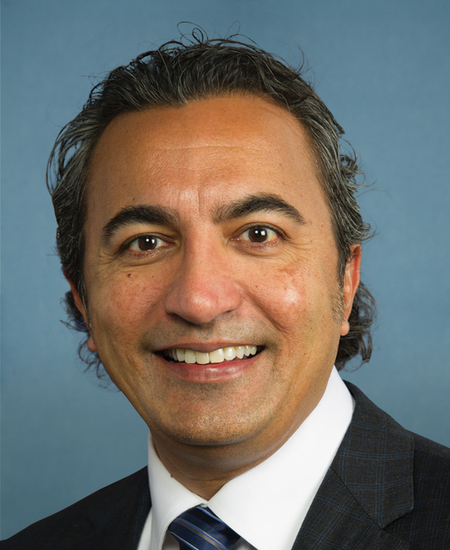
Rep. Ami Bera
Sponsored bills
Maddy summaryThis bill is a congressional resolution expressing U.S. policy priorities regarding Xinjiang. It urges China to open Xinjiang to international access, cease repression of Uyghurs and other minorities, release specific detained individuals (including Ekper Asat, Dr. Gulshan Abbas, and Kamile Wayit), and stop transnational repression against Uyghur families abroad. The bill directs the State Department to coordinate U.S. policy on Uyghur issues, prioritize support for Uyghur communities, establish reporting mechanisms for transnational repression, and develop strategies to pressure China on detention facilities. It also requires U.S. diplomatic posts in China to have Uyghur-language capabilities and directs U.S. advocacy at the United Nations to address human rights concerns.
Maddy summaryHR 5077, the Strengthening Housing Supply Act of 2025, amends the Community Development Block Grant (CDBG) Program to allow local governments and community organizations to use CDBG funds for the **new construction of affordable housing**. This directly affects communities receiving CDBG funding by expanding eligible uses beyond rehabilitation to include building new homes meeting federal affordability standards. The key change adds "new construction of affordable housing" as a permitted activity under the CDBG program, referencing existing definitions from the Cranston-Gonzalez Act. The bill applies only to funds appropriated after its enactment, not to current or past allocations.
Maddy summaryThis bill establishes a federal grant program to fund research on using generative AI in healthcare. The Secretary of Health and Human Services will award grants to eligible entities like universities, non-profits, and government agencies to study how AI can improve clinical documentation, reduce administrative burdens, speed up insurance claims, and enhance patient service. Grants prioritize projects focused on reducing clinician burnout, addressing health disparities, and expanding care for medically underserved populations. The law aims to support practical AI applications that make healthcare more efficient and accessible without mandating specific technologies or outcomes.
Maddy summaryThis bill would require U.S. companies to obtain both Commerce Department approval and a specific congressional joint resolution before exporting advanced AI semiconductors to China. The Commerce Secretary must first conduct an interagency review assessing national security risks, military applications, human rights concerns, and economic impacts. Congress would then need to pass a dedicated resolution approving each export, effectively giving lawmakers a veto over such transactions. The bill defines "advanced AI semiconductors" by technical thresholds (e.g., 2,400+ processing performance) and applies to all exports targeting China, including Hong Kong and Macau.
Maddy summaryThis bill permanently establishes the Coordinator for Afghan Relocation Efforts (CARE) within the State Department, expanding their role to prioritize family reunification for U.S. military personnel and veterans with Afghan allies. It mandates the Coordinator to collect detailed data on Afghan applicants (including special immigrant visa seekers, refugees, and parolees), vetting timelines, and pending family reunification cases into a centralized database. The Coordinator must report this data to Congress every 90 days to ensure transparency and inform policy decisions. The law directly affects Afghan allies and their families seeking U.S. relocation, particularly those connected to U.S. military service.
Maddy summaryHR 4989, the Streamlining Rural Housing Act of 2025, requires the Departments of Housing and Urban Development (HUD) and Agriculture (USDA) to simplify coordination for rural housing projects funded by both agencies. Within 180 days, they must create a memorandum of understanding to evaluate environmental review processes, designate a lead agency for efficiency, and maintain existing environmental standards. The bill establishes an advisory group with housing stakeholders - including nonprofits, developers, and residents - to guide implementation. It mandates a report within one year with recommendations to improve project efficiency without reducing resident safety, shifting long-term costs, or undermining environmental standards. This bill directly affects rural housing projects funded by HUD or USDA by targeting bureaucratic delays in approvals.
Maddy summaryThis bill extends the expiration date for a provision allowing certain vehicles to use High Occupancy Vehicle (HOV) lanes without meeting standard occupancy requirements. Specifically, it amends federal law to change the deadline from September 30, 2025, to September 30, 2031. The change directly affects drivers and vehicle operators who currently qualify for this exemption under existing rules. It is a procedural reauthorization, not a policy change, maintaining the current HOV lane exemption rules for an additional six years.
Maddy summaryThe CLEAN Pacific Act of 2025 establishes a U.S. program to assist 16 Pacific Island nations - including Fiji, Palau, and Samoa - in combating drug trafficking by improving their capacity to seize, destroy, and manage chemicals used in illicit drug production and related hazardous waste. The program requires the U.S. Secretary of State to create a 5-year implementation plan for each country, including specific goals for clearing chemical backlogs, preventing re-entry into drug production, and reducing environmental harm, with annual progress reports to Congress. It mandates funding from existing foreign aid budgets to support law enforcement training, shared equipment, and infrastructure upgrades in beneficiary countries. The initiative directly affects U.S. agencies (State, Defense, Justice) and the listed Pacific nations through concrete policy actions focused on counternarcotics operations and environmental safety.
Maddy summaryThe TRAPS Act establishes a federal Task Force on Payment Scams, chaired by the Treasury Secretary, to coordinate efforts across agencies like the FTC, Federal Reserve, and consumer groups. The Task Force will study current scam tactics (such as fake text messages or fraudulent payment platforms), evaluate prevention strategies, and develop recommendations to help consumers avoid and report scams. It must submit an initial report within one year and annual updates, focusing on improving federal-state coordination and education programs. This bill directly affects government agencies and stakeholders participating in the Task Force, with the goal of protecting consumers from evolving payment scams.