

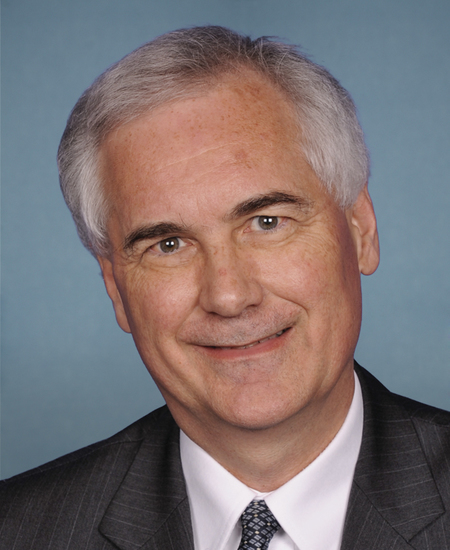
Photo of Tom McClintock
R United States House · District 5 · California On the 2026 ballot

Rep. Tom McClintock

Compare
Total votes
2,818
all sessions
Attendance
98%
65 missed
Near the chamber average
With party
87%
of cast votes
Lower than 89% of chamber peers
Bipartisan score
6%
crosses aisle rarely
Higher than 88% of chamber peers
Sponsored
568
bills & resolutions
Lower than 95% of chamber peers
Committees
7
assignments
568 bills and resolutions

Sponsored bills

Total
568
Primary
61
Co-sponsor
507
This page
568
matching current filters
Co-sponsor HR 1057
In committee · Washington House · Co-sponsor
Safe Passage on Interstates Act of 2025

Maddy summaryHR 1057, the Safe Passage on Interstates Act of 2025, creates a new federal criminal offense for intentionally obstructing interstate highways. It makes it illegal to deliberately delay traffic, stand near vehicles, or endanger movement on interstates with the intent to block normal use. The bill directly affects individuals who engage in such obstruction, with penalties including fines up to $15,000 or imprisonment up to 20 years (or life if death results). Exceptions cover lawful activities authorized by federal, state, or local governments. This bill amends Title 18 of the U.S. Code to establish specific penalties for highway obstruction.

In committee Feb 6, 2025 1 co-sponsor
Co-sponsor HR 991
In committee · Washington House · Co-sponsor
Cost Estimates Improvement Act

Maddy summaryHR 991, the Cost Estimates Improvement Act, requires the Congressional Budget Office (CBO) and Joint Committee on Taxation (JCT) to include debt servicing costs (interest payments on the national debt) in their budget estimates "to the extent practicable." This change directly affects how Congress evaluates the fiscal impact of proposed legislation, as these estimates determine whether bills qualify for budget reconciliation and influence funding decisions. The key mechanism amends the 1974 Congressional Budget Act to mandate this inclusion within existing cost estimation processes. The bill does not alter spending or tax policy but aims to make budget scoring more comprehensive by accounting for ongoing interest costs.

In committee Feb 5, 2025 1 co-sponsor
Co-sponsor HR 861
In committee · Washington House · Co-sponsor
American Music Fairness Act of 2025

American Music Fairness Act of 2025 This bill establishes that the copyright holder of a sound recording shall have the exclusive right to perform the sound recording through an audio transmission. (Currently, the public performance right only covers performances through a digital audio transmission in certain instances, which means that nonsubscription terrestrial radio stations generally do not have to get a license to publicly perform a copyright-protected sound recording.) Under the bill, a nonsubscription broadcast transmission must have a license to publicly perform such sound recordings. The Copyright Royalty Board must periodically determine the royalty rates for such a license. When determining the rates, the board must base its decision on certain information presented by the parties, including the radio stations' effect on other streams of revenue related to the sound recordings. Terrestrial broadcast stations (and the owners of such stations) that fall below certain revenue thresholds may pay certain flat fees, instead of the board-established rate, for a license to publicly perform copyright-protected sound recordings.

In committee Jan 31, 2025 1 co-sponsor
Co-sponsor HR 21
Passed · Washington House · Co-sponsor
Born-Alive Abortion Survivors Protection Act

Maddy summaryHR 21, the Born-Alive Abortion Survivors Protection Act, requires medical staff at abortion facilities to provide the same immediate care and hospital admission to any infant born alive during an abortion as they would for any newborn. It mandates reporting failures to provide this care to law enforcement and imposes penalties of up to 5 years in prison for violations, with harsher penalties for intentional killing. The bill also allows women who undergo abortions to sue for civil damages, including triple the abortion cost, and provides for attorney fees. It defines "abortion" to exclude procedures performed after viability to preserve a live birth. This law directly affects healthcare providers at abortion facilities and creates new federal legal obligations for them.

Passed Jan 24, 2025 1 co-sponsor
Co-sponsor HR 569
In committee · Washington House · Co-sponsor
Birthright Citizenship Act of 2025

Birthright Citizenship Act of 2025 This bill limits birthright citizenship by redefining what it means to be subject to the jurisdiction of the United States. Currently, a person born in the United States and subject to U.S. jurisdiction is entitled to citizenship. Under the bill, a person is subject to U.S. jurisdiction if he or she is born to a parent who is (1) a U.S. citizen or national, (2) a lawful permanent resident residing in the United States, or (3) a non-U.S. national ( alien under federal law) with a lawful immigration status who is performing active service in the Armed Forces. The bill does not affect the citizenship or nationality status of any person born before the bill's enactment date.

In committee Jan 21, 2025 1 co-sponsor
Co-sponsor HR 587
In committee · Washington House · Co-sponsor
To remove the lesser prairie-chicken from the lists of threatened species and endangered species published pursuant to the Endangered Species Act of 1973 and to amend that Act to exclude the lesser prairie-chicken from the authority of that Act.

Maddy summaryHR 587 removes the lesser prairie-chicken (all populations) from the federal lists of threatened and endangered species under the Endangered Species Act. It also permanently amends the law to prevent the U.S. Fish and Wildlife Service from ever listing the bird as threatened or endangered in the future. This bill directly affects the lesser prairie-chicken by ending its current legal protections under the Endangered Species Act. The key mechanism is a specific exclusion added to the Act’s listing authority, blocking any future federal protection for this species.

In committee Jan 21, 2025 1 co-sponsor
Co-sponsor HR 578
In committee · Washington House · Co-sponsor
Sarah’s Law

Maddy summaryHR 578, "Sarah’s Law," requires mandatory detention for certain non-citizens (aliens) charged with crimes resulting in death or serious bodily injury. It directly affects non-citizens facing such charges and their victims' families. Key provisions mandate that the Department of Homeland Security detain these individuals immediately and notify victims or their closest living relatives (like parents or spouses) about the alien’s identity, immigration status, custody details, and removal efforts. The bill adds specific categories of non-citizens to the mandatory detention list, including those whose visas were revoked or who are deportable for prior immigration violations. This creates a formal process for victim notification while expanding detention requirements under immigration law.

In committee Jan 21, 2025 1 co-sponsor
Co-sponsor HR 30
Passed · Washington House · Co-sponsor
Preventing Violence Against Women by Illegal Aliens Act

Maddy summaryThis bill amends U.S. immigration law to deny entry to noncitizens convicted of or admitting to certain violent crimes, and to make them deportable. It directly affects noncitizens who have been convicted of or admitted to sex offenses, domestic violence, stalking, child abuse/neglect, or violating protection orders involving threats of violence. Key provisions add these offenses as grounds for denying entry (inadmissibility) under Section 212(a)(2) and as grounds for deportation (deportability) under Section 237(a)(2). The law specifies that domestic violence and protection order violations are included regardless of whether the jurisdiction received specific federal grant funding.

Passed Jan 17, 2025 1 co-sponsor
Co-sponsor HR 318
In committee · Washington House · Co-sponsor
Border Safety and Security Act of 2025

Maddy summaryThis bill grants the Secretary of Homeland Security authority to temporarily suspend entry of certain individuals at U.S. borders to achieve "operational control" (defined as effective border management). It specifically applies to people seeking entry without proper documentation who would be denied entry under current law (e.g., lacking visas or asylum eligibility). The Secretary must block entry if they cannot detain or process these individuals as required by existing immigration law. States may also sue the government if they believe border security rules are violated.

In committee Jan 9, 2025 1 co-sponsor
Co-sponsor HR 251
In committee · Washington House · Co-sponsor
Legal Workforce Act

Legal Workforce Act This bill directs the Department of Homeland Security (DHS) to create an electronic employment eligibility confirmation system modeled after and to replace the E-Verify system, which allows employers and recruiters to verify the immigration status of individuals. The bill also mandates the use of such a system, where currently only some employers, such as those with federal contracts, are required to use E-Verify. The bill specifies documents that can establish an individual's identity and employment authorization. During the period starting when a job offer is made until three business days after hiring, the individual must attest to his or her employment authorization, and the employer or recruiter must attest that it has examined the individual's required documents. Employers shall reverify certain types of employees who were not previously verified using E-Verify. The Social Security Administration shall notify employees if their Social Security number has been used multiple times in an unusual manner. DHS shall establish programs for blocking and suspending misused numbers. Employers that are required to use the verification system shall not be liable for any employment-related action based on a good-faith reliance on the system. The bill establishes a phased-in participation deadline for different sizes and categories of employers, including agricultural employers. The bill increases civil penalties related to hiring individuals without work authorization. It also preempts state laws relating to hiring and employment eligibility verification, but states may use their authority of business licensing to penalize employers for failing to comply with the bill's provisions.

In committee Jan 9, 2025 1 co-sponsor
Showing 81 to 90 of 568 bills
Previous 1 8 9 10 57 Next