

Maddy summaryThe Honor Our Commitment Act of 2026 prevents the government from detaining or deporting specific Vietnamese nationals who entered the United States on or before July 12, 1995, and have lived there continuously. This protection applies to individuals with existing deportation orders, though it does not cover those who pose a security threat or face extradition. The Department of Homeland Security must grant these individuals work authorization and notify them of their rights within 60 days of the law taking effect. Finally, the bill allows people harmed by violations of these rules to seek legal relief in federal court.
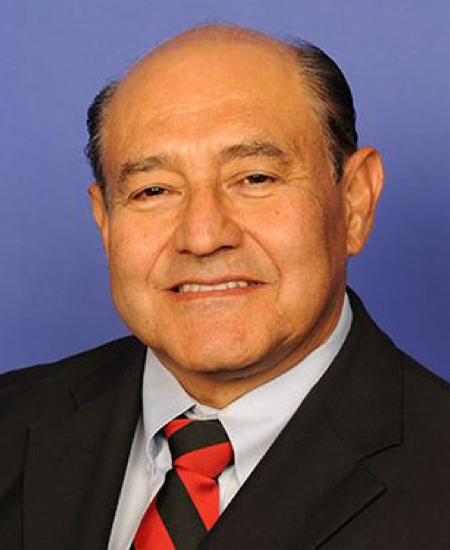
Rep. J. Luis Correa
Sponsored bills
Maddy summaryThis bill establishes a new federal entity called the Language Access Board to ensure individuals with limited English proficiency can access government programs and services. The Board will be composed of 32 members, including public appointees and heads of federal agencies, who will develop standards for public-facing resources like websites and forms. Federal departments must comply with these accessibility standards, and the Board has the authority to investigate complaints and issue orders of compliance. Additionally, the Board will review existing language access laws and submit regular reports to Congress on progress and enforcement actions.
Maddy summaryHR 2488 designates the U.S. Postal Service facility at 3817 Marysville Boulevard in Sacramento, California, as the "Grantland Johnson Post Office." This bill updates all federal references in laws, maps, and documents to use the new name for that specific location. It directly affects the postal service facility and any federal records mentioning it. The bill is purely procedural, with no policy changes or financial impacts beyond the name designation.
Maddy summaryThe HELP Act of 2026 directs the Department of Health and Human Services to create a program that strengthens and coordinates 211 services, which provide free information and referrals for health and human services like food assistance and housing. The bill authorizes $250 million annually from 2026 to 2032 to fund grants for state-level 211 networks, requiring recipients to match at least 25% of the funding with local resources. A designated nonprofit administering agency will distribute these funds, oversee coordination between 211, 911, and 988 systems, and run public awareness campaigns to ensure all individuals can access these services regardless of location or disability.
Maddy summaryThe Saving Lives on Campuses Act of 2026 requires public colleges and universities receiving federal funding to provide opioid overdose rescue kits across their campuses. These kits, which contain naloxone or similar FDA-approved medications, must be placed in classrooms, libraries, dormitories, and other student facilities, often near automated external defibrillators. Institutions are also tasked with registering kit locations, replacing expired supplies, and training new students on how to find and use them. The law aims to increase access to life-saving treatment for opioid overdoses by ensuring these medical supplies are readily available in high-traffic campus areas.
Maddy summaryThe Supporting Energy and Economic Development (SEED) Act extends tax credits for biodiesel and renewable diesel production through 2029. It prevents taxpayers from receiving both the production credit and the fuel use credit for the same fuel, ensuring only one benefit is claimed. These changes apply to fuel sold or used after the bill becomes law.
Maddy summaryThe ACCESS Act of 2026 aims to improve compliance with the Americans with Disabilities Act (ADA) for public accommodations, affecting individuals with disabilities, business owners, and website/app developers. It directs the Department of Justice to create an education program on accessibility strategies for property and website owners. A key provision requires individuals to provide written notice of an architectural or technological access barrier and a 60-day period for the owner to address it before a civil lawsuit can be filed. Additionally, the bill mandates a study on various website accessibility standards and directs the Judicial Conference to develop a model mediation program for architectural barrier claims.
Maddy summaryThe Momnibus Act is a comprehensive legislative bill designed to improve maternal health outcomes across the United States by addressing social determinants of health, expanding access to care, and reducing disparities among pregnant and postpartum individuals. The bill establishes a federal task force to coordinate efforts between agencies and stakeholders to eliminate preventable maternal mortality and severe morbidity, while providing sustained funding to community-based organizations to address nonclinical factors like housing, nutrition, and transportation. Key provisions include extending WIC eligibility to 24 months postpartum, creating grants to grow and diversify the perinatal workforce, implementing respectful maternity care training for all healthcare employees, and establishing compliance programs to track and address bias in maternity care settings. The legislation also includes specific measures for incarcerated mothers, veterans, and vulnerable populations affected by climate change, alongside funding for maternal mental health services and technology-enabled care models to expand access in underserved areas.
Maddy summaryThis resolution expresses the sense of the House of Representatives that former President Donald Trump, his Special Envoy Steven Witkoff, and all federal officials must comply with the Constitution's Foreign Emoluments Clause. It specifically calls for them to immediately turn over to the Department of the Treasury any payments received from the United Arab Emirates or other foreign states. Furthermore, the resolution urges them to divest from all business interests linked to foreign governments, including those tied to United Arab Emirates officials.
Maddy summaryThis resolution expresses the House of Representatives' opinion that the Department of Justice and other federal agencies should not administratively settle legal claims for money filed against the United States by a sitting President, specifically referencing President Donald Trump. The House believes that such settlements would violate the Domestic Emoluments Clause of the Constitution, which prevents a President from receiving payments from the government beyond their official salary. Therefore, the resolution advises the Department of Justice to refuse any administrative settlement of these claims, while clarifying that a President can still pursue lawsuits in independent courts. This position directly affects how the Department of Justice would handle such claims from a President.