

Maddy summaryThis resolution directs the House to agree to a Senate amendment for a comprehensive housing bill that updates federal programs to increase housing supply, improve affordability, and modernize regulations. The legislation directly affects homeowners, renters, local governments, financial institutions, and federal agencies by establishing new grant programs, revising loan limits, and streamlining environmental reviews for construction projects. Key provisions include creating incentives for small-dollar mortgages, expanding funding for affordable housing and rural development, updating standards for manufactured and modular homes, and enhancing oversight of housing regulators and community banks. Additionally, the bill introduces specific measures to address homelessness, support veterans, and improve the efficiency of interagency coordination among HUD, USDA, and VA.
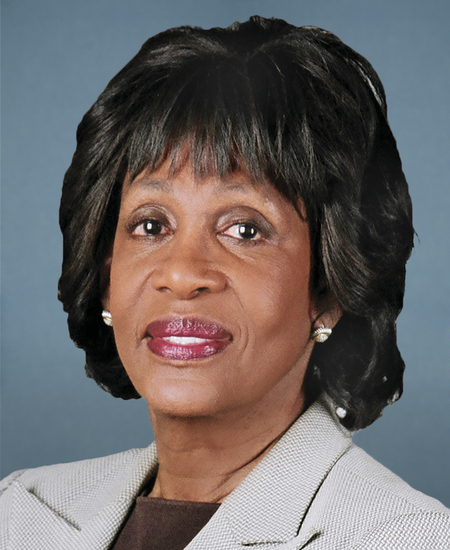
Rep. Maxine Waters
Sponsored bills
Maddy summaryThe Closing the HPV Testing Gap Act directs the National Institutes of Health to conduct a comprehensive study on developing a standardized, noninvasive test for human papillomavirus in men. This research must be completed within 24 months and will involve coordination with federal agencies like the CDC and the FDA, as well as scientific experts and community stakeholders. The study aims to evaluate various testing methods, assess feasibility across diverse populations, and provide recommendations for future implementation and regulatory approval. Additionally, the bill requires an interagency working group to oversee the process and mandates a final report to Congress within 30 months outlining findings and strategies for improving cancer prevention and health equity.
Maddy summaryThe No Taxpayer-Funded Settlement Slush Funds Act of 2026 prohibits the use of federal money to pay specific settlements involving high-ranking government officials and their close associates. It bars payments to the President, Vice President, their immediate families, cabinet members, senior executive staff, political appointees, and individuals connected to these roles, as well as any entity owned by the President or Vice President. Additionally, the bill restricts settlements related to claims about the January 6 Capitol attack, foreign election interference, or previously dismissed lawsuits, while requiring Treasury reports for large settlements and allowing the government to seek repayment if rules are broken.
Dental Care for Veterans Act This bill expands eligibility for veterans for dental care provided by the Department of Veterans Affairs (VA). Specifically, the bill makes all veterans who are enrolled in the VA health care system eligible for VA-provided dental services. Currently, only veterans who have a service-connected dental issue or meet other narrow criteria are eligible for certain dental services. The bill phases in eligibility over four years based upon existing eligibility, degree of service-connected disability or other disability, prisoner of war status, award of a Purple Heart, financial need, or VA health care eligibility.
Maddy summaryThis joint resolution expresses Congress's disapproval of a Centers for Medicare & Medicaid Services rule that requires doctors to obtain prior authorization for certain medical services under the WISeR Model. The bill directly affects healthcare providers and patients by seeking to cancel the rule, which would otherwise mandate that specific services be approved before they are delivered. If passed, the provision would render the rule ineffective, preventing the new prior authorization requirements from taking effect. This action is part of a standard legislative process used to reject federal regulations without needing to pass a new law.
Maddy summaryThe Restoring Overtime Pay Act of 2026 raises the minimum salary required for certain employees to be exempt from federal overtime pay rules, starting at $45,000 per year and increasing annually until it reaches $75,000 by 2029. The bill also mandates that this threshold automatically updates each year to match the 55th percentile of weekly earnings for full-time salaried workers nationwide, with adjustments taking effect based on Bureau of Labor Statistics data. Additionally, the law modifies the duties test for exemption, requiring that at least 20 percent of an employee's time be spent on executive or administrative tasks rather than the current 40 percent standard. These changes directly affect employers and workers covered by the Fair Labor Standards Act by redefining eligibility for overtime exemptions and establishing a new mechanism for adjusting salary requirements over time.
Maddy summaryThis resolution expresses the House of Representatives' preference for a trade policy that prioritizes American workers, consumers, independent farmers, small businesses, and the environment over corporate interests. It calls for trade agreements to include binding labor and environmental standards, fair wage guarantees, and strict rules of origin to prevent companies from moving jobs overseas. The measure also supports strengthening domestic manufacturing requirements, maintaining tariffs against unfair trade practices, and ensuring that public procurement favors American-made goods. Additionally, it urges the inclusion of provisions to protect data privacy, regulate artificial intelligence, and ensure affordable access to medicine while preventing monopolies.
Maddy summaryThis non-binding resolution expresses the House of Representatives' view that the FDA should regulate mifepristone, a medication used for abortion, based on scientific evidence rather than political pressure. It highlights over 25 years of data showing the drug is safe and effective when prescribed via telemedicine or dispensed by mail and pharmacy. The bill advocates for policies that ensure equitable access to this care, particularly for marginalized communities facing barriers due to state-level restrictions. By citing numerous studies and medical organizations, the resolution calls for transparent, science-based decisions to maintain current access methods.
Maddy summaryThe Protecting Our Democracy Act is a comprehensive legislative bill designed to prevent abuses of presidential power, restore checks and balances, and defend elections against foreign interference. Key provisions include prohibiting the President from granting self-pardons, requiring congressional oversight for pardons involving the President or their family, and banning the President from accepting payments from individuals who have received clemency. The bill also strengthens enforcement of the Hatch Act and ethics rules for political appointees, mandates greater transparency in presidential tax returns and campaign finances, and restricts the use of federal property for political conventions. Additionally, it expands reporting requirements for foreign contacts in federal campaigns and imposes stricter penalties for violations of election laws.
Maddy summaryThis bill, the Tax Cut for Striking Workers Act of 2026, allows workers who are on strike or lockout to receive tax-free strike benefits from their labor unions. These benefits are intended to replace wages lost due to the labor dispute and will not be counted as taxable income for the recipient. The law applies to compensation received after December 31, 2026, and specifically covers members of tax-exempt labor organizations. By excluding these payments from gross income, the bill aims to provide financial relief to striking employees without increasing their tax liability.