

Maddy summaryThe Housing Crisis Response Act of 2025 is a comprehensive federal bill that provides substantial new funding to address the housing affordability crisis. It directly affects low- and moderate-income households, seniors, people with disabilities, and rural communities through expanded access to affordable housing. Key mechanisms include $10 billion for public housing repairs and construction, $15 billion for housing vouchers, $1.8 billion for rural rental housing, and new requirements for housing accessibility and energy efficiency. The bill also establishes a Community Restoration and Revitalization Fund to support community-led housing initiatives and creates new downpayment assistance programs for first-generation homebuyers. Overall, it represents a major federal investment in creating and preserving affordable housing across multiple housing program categories.
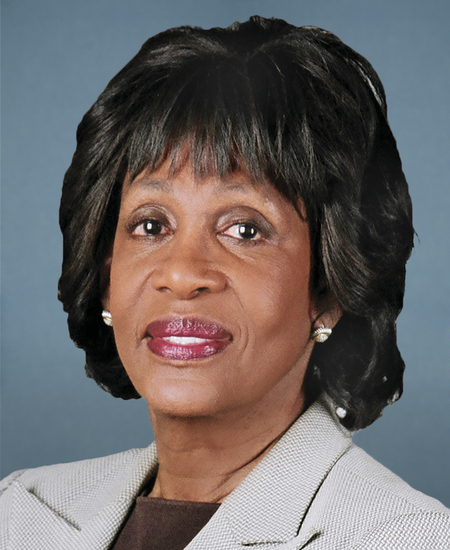
Rep. Maxine Waters
Sponsored bills
Maddy summaryThis bill requires recipients of federal housing funds (grantees) to create and maintain a searchable online database listing all undeveloped land they own. It amends the Housing and Community Development Act of 1974 to add this new requirement for grant recipients. The database must be publicly accessible and identify all undeveloped parcels owned by the grantee. The requirement takes effect on October 1, 2026.
Maddy summaryThe San Gabriel Mountains, Foothills, and Rivers Protection Act of 2025 designates specific wilderness areas in California's Angeles National Forest, including Condor Peak (8,207 acres), additions to San Gabriel Wilderness (2,032 acres), additions to Sheep Mountain Wilderness (11,938 acres), and Yerba Buena Wilderness (6,694 acres). It also designates segments of Little Rock Creek and its tributaries as wild, scenic, or recreational rivers under the Wild and Scenic Rivers Act and requires a three-year study of additional San Gabriel River segments. The bill includes provisions for fire management activities, ensures tribal access for cultural and religious practices, and permits continued operation of certain water facilities in designated wilderness areas. These designations protect natural areas from development while maintaining opportunities for recreation, conservation, and tribal cultural activities.
Maddy summaryThis bill requires the U.S. government to improve how it reports on countries' efforts to combat narcotics-related money laundering. It amends reporting rules to mandate specific examples of progress (like new laws, enforcement actions, and international cooperation) and directs the Treasury Secretary to standardize Bank Secrecy Act examinations across financial regulators, submitting a report to Congress within 180 days. As a procedural bill focused on government reporting and internal processes, it does not directly affect citizens or businesses but aims to enhance the consistency and detail of U.S. assessments on international financial crime prevention.
Maddy summaryThe Fair Competition for Small Business Act of 2025 amends the Clayton Act to allow legal claims for violations of the Sherman Antitrust Act or for violations of the bill's own section (section 2). This technical change would directly affect small businesses and other entities involved in antitrust litigation by expanding the grounds for lawsuits under the Clayton Act. The key mechanism is a modification to the Clayton Act that references the bill's provisions, creating a new basis for claims. The bill does not specify additional substantive rules beyond this amendment.
Maddy summaryHR 6751 would repeal the 2001 Authorization for Use of Military Force (AUMF), a law passed after the September 11 attacks that has been used to justify military operations for over two decades. The bill states Congress finds the AUMF has been interpreted too broadly, conflicting with the Constitution's requirement that only Congress can declare war. It would formally end this legal authority 240 days after the bill becomes law, directly affecting future military actions authorized under the 2001 AUMF. The key provision is the repeal itself, removing the legal basis for ongoing military operations that rely on this specific 2001 law.
Maddy summaryThe ARMAS Act of 2025 transfers control of certain firearms export regulations from the Department of Commerce to the Department of State to better regulate exports to Mexico, Central America, and the Caribbean. It designates specific countries (including Mexico, Guatemala, Honduras, and El Salvador) as "covered countries" requiring stricter export oversight, including mandatory annual reports on firearms exports and end-use monitoring to prevent diversion to criminal groups. The bill requires the Department of State to develop a strategy to disrupt illegal firearm trafficking, including increased participation in the eTrace program for tracking U.S.-sourced firearms and improved data sharing with foreign governments. Based on findings that U.S.-sourced firearms are commonly used in crimes in these regions, the act aims to reduce the flow of weapons that fuel violence and crime.
Maddy summaryThe Protect America's Workforce Act cancels an executive order issued on March 27, 2025, that excluded certain groups from federal labor-management relations programs, making it legally unenforceable. It also ensures that all collective bargaining agreements between federal agencies and labor unions, which were active as of March 26, 2025, remain fully effective until their agreed terms expire. This directly affects federal agencies, labor unions, and the employees covered by these agreements. The bill prevents federal funds from being used to implement the canceled executive order while preserving existing labor agreements.
Maddy summaryThis bill increases federal student loan limits for graduate and professional students. Starting July 1, 2026, it sets a $50,000 annual limit and a $200,000 total aggregate limit (beyond undergraduate borrowing) for unsubsidized Federal Direct Stafford loans. These changes directly affect graduate and professional students pursuing advanced degrees who rely on federal loans for education costs. The provisions aim to provide higher borrowing capacity for these students' educational expenses under the Higher Education Act.
Maddy summaryHR 6597, the LET’S Protect Workers Act, increases civil penalties for employers violating key labor laws to strengthen worker protections. It raises fines for child labor violations to up to $700,000 per incident causing death or serious injury, and doubles penalties for repeated wage/hour violations (up to $50,000 per violation). The bill also significantly boosts OSHA penalties (e.g., up to $800,000 for serious violations), adds new retaliation penalties for mine safety violations (up to $200,000 for repeat offenses), and clarifies that recordkeeping violations continue until corrected. These changes apply to employers across sectors, including manufacturing, agriculture, and mining, under the Fair Labor Standards Act, Occupational Safety and Health Act, and Mine Safety Act.