

Maddy summaryHR 7391, the Community Health Center Drug Pricing Protection Act, requires that Federally Qualified Health Centers (FQHCs) pay the discounted 340B ceiling price for covered drugs **at the time of purchase**, not later through rebates or adjustments. This directly affects FQHCs, which rely on 340B discounts to provide affordable care to low-income patients. The bill amends the Public Health Service Act to prohibit manufacturers from entering agreements where FQHCs initially pay more than the ceiling price, with later reimbursement. It takes effect immediately upon enactment for all new drug purchases and applies to existing agreements starting then.
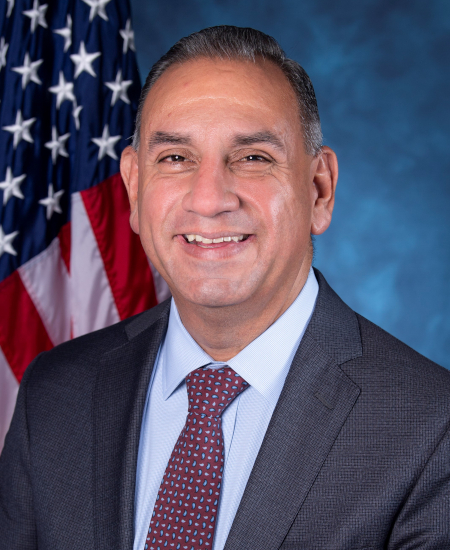
Rep. Gilbert Ray Cisneros, Jr.
Sponsored bills
Maddy summaryHRES 1038 is a non-binding House resolution expressing the sense of Congress that the U.S. must reaffirm its commitment to the Fourteenth Amendment’s guarantees of birthright citizenship, due process, and equal protection under the law. It calls on all federal branches to defend these rights against actions that threaten them, such as policies undermining birthright citizenship or restricting voting access. The resolution specifically urges Congress to oppose legislation or executive actions that weaken these constitutional protections and to work toward full equal protection for all people. As a symbolic resolution, it does not create new law or impose legal requirements but emphasizes the importance of upholding these constitutional principles for democratic fairness.
Maddy summaryHR 7345 directs the Congressional Budget Office (CBO) to study the long-term economic effects of immigration policies implemented beginning January 20, 2025. The CBO must assess impacts across specific sectors (like healthcare, agriculture, STEM fields), public safety concerns, demographic shifts, small business effects, and tax revenue at federal, state, and local levels. Federal agencies - including Homeland Security, the Bureau of Labor Statistics, and the IRS - must provide requested data to support this study. The report must be completed within 180 days of the bill’s enactment or by the end of the current congressional session, whichever comes first. This is a procedural study bill, not a policy change.
Maddy summaryThe Rebuild America's Schools Act of 2026 authorizes $20 billion annually from 2027 to 2031 to improve public school facilities nationwide. The bill provides grants to states to fund school construction, renovation, and modernization projects that focus on safety, energy efficiency, and accessibility, with priority given to schools serving high percentages of students eligible for free or reduced-price lunch. Funds cannot be used for routine maintenance, athletic facilities, or vehicles, and must meet specific environmental, safety, and energy efficiency standards. The bill also includes specific provisions for repairing school foundations affected by pyrrhotite, a mineral that causes concrete deterioration, and requires use of American-made materials for construction projects.
Maddy summaryHR 7335 establishes comprehensive humanitarian standards for individuals held in U.S. Immigration and Customs Enforcement (ICE) and U.S. Customs and Border Protection (CBP) custody. The bill requires facilities to provide immediate health screenings within 12 hours (6 hours for high-risk individuals like children, pregnant people, or those with medical conditions), ensure access to adequate water, sanitation, food (with 2,000+ calories daily for adults), and age-appropriate shelter. It mandates specific facility standards including separate housing for males and females, accessible accommodations for people with disabilities, daily outdoor access for those detained over 48 hours, and proper medical equipment and personnel on-site. The bill also requires regular inspections, staff training on humanitarian protocols, and public reporting of sexual abuse complaints. These standards directly affect all individuals detained by ICE or CBP, with special protections for vulnerable groups like children, pregnant people, and those with medical needs.
Maddy summaryThe AI-WISE Act requires the Small Business Administration (SBA) to create and maintain free, publicly available online educational resources about artificial intelligence specifically for small business owners. These resources must cover practical topics like understanding AI limitations, identifying AI-generated outputs, managing risks, protecting user privacy, and determining when AI tools are suitable for business use - without favoring any specific AI product or company. The SBA must develop these materials within 180 days of the bill’s enactment, consulting with an Advisory Working Group of AI experts and small business outreach professionals. This initiative directly affects small business owners by providing accessible, neutral guidance to help them navigate AI adoption safely and effectively.
Maddy summaryThis bill requires the Small Business Administration (SBA) to annually analyze risks across all loans guaranteed under its 504 program, which provides long-term financing for small business real estate and equipment purchases. The SBA must submit detailed reports to Congress by December 1 each year, including risk analyses by industry, loan size, borrower type (e.g., new businesses), loan age, and default management. Reports must also include public data on development companies handling loans, loan defaults, and enforcement actions. The bill directly affects the SBA’s oversight of the 504 program and the development companies administering these loans.
Maddy summaryHR 5764, the "AI for Main Street Act," amends the Small Business Act to require the Small Business Administration (SBA) to provide guidance and training to small business concerns on using artificial intelligence. It directly affects small businesses by adding new SBA responsibilities to help them evaluate AI for operations, including best practices, cybersecurity, data protection, regulatory compliance, and customer trust. Key provisions mandate the SBA to offer information, training, and outreach on incorporating AI into business processes, such as planning for unexpected circumstances. The bill does not authorize new funding for these activities. It defines "artificial intelligence" using the existing term from the National AI Initiative Act.
Maddy summaryThe Main Street Parity Act (HR 5763) adjusts eligibility rules for small businesses seeking SBA loans to acquire, build, convert, or expand facilities. It modifies Section 502(3)(C) of the Small Business Investment Act by removing two specific criteria and reorganizing the remaining requirements. This change directly affects small businesses applying for these particular SBA loans, simplifying the application process by eliminating outdated or redundant conditions. The bill makes technical adjustments to the loan criteria without creating new programs or altering funding levels.
Maddy summaryThe Northern Mariana Islands Small Business Access Act expands eligibility for the federal microloan program to include the Commonwealth of the Northern Mariana Islands (CNMI), which was previously excluded. This change, made by amending the Small Business Act, allows small businesses in the CNMI to access low-interest loans through the same program currently available to businesses in Guam. The bill updates two sections of the law to insert "the Commonwealth of the Northern Mariana Islands" after "Guam" in eligibility requirements. As a result, CNMI small business owners will gain access to federal funding to support startup costs, equipment purchases, or business expansion.