

Maddy summaryHRES 788 is a non-binding resolution expressing congressional support for designating October 8, 2025, as "National Hydrogen and Fuel Cell Day." It does not create new laws or policies but aims to raise public awareness about hydrogen and fuel cell technologies. The resolution highlights their role in clean energy, transportation (including vehicles and backup power), and U.S. innovation, citing their use in space programs and current applications. This symbolic gesture directly affects public awareness and industry recognition, not specific individuals or regulations.
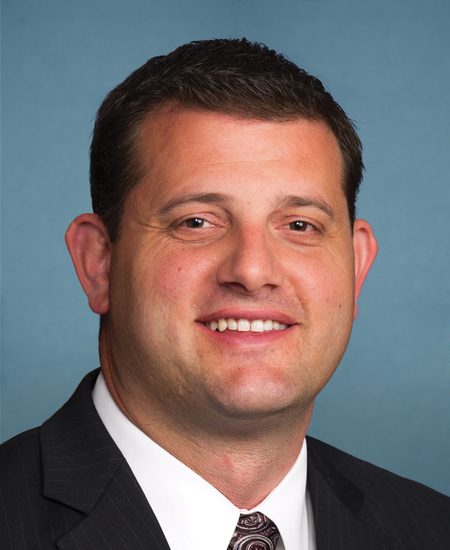
Rep. David G. Valadao
Sponsored bills
Maddy summaryThis bill adds Medicare coverage for multi-cancer early detection screening tests (blood or biological tests analyzing cell-free DNA) starting January 1, 2028. It directly affects Medicare beneficiaries aged 68 and older (starting in 2028, with the age limit increasing by 1 year annually), requiring tests to be FDA-cleared and deemed reasonable/necessary by the Secretary for early cancer detection across multiple organ sites. Payment will initially match current stool DNA test rates before 2031, then shift to a lower rate or new payment system after 2031, with limits preventing more than one test per year. The bill explicitly states it does not alter coverage for existing cancer screenings like breast, colorectal, or prostate cancer tests.
Maddy summaryThis bill would require all states to recognize valid concealed carry permits issued by other states, allowing permit holders to carry concealed handguns (excluding machine guns) in any state that either issues such permits or doesn't prohibit concealed carry. It directly affects law-abiding gun owners with valid permits from their home state, ensuring they can carry in states with similar permit systems or no prohibitions. Key provisions include treating valid permit documents as proof of legal carry (reducing officer stops), shifting the burden of proof to prosecutors if challenged, and allowing civil lawsuits for violations with attorney's fee awards. The bill does not override state laws restricting firearms on private property or government land, nor does it affect federal gun restrictions like those in section 922(q).
Maddy summaryThe SAVES Act (HR 2605) creates a 5-year pilot program where the Department of Veterans Affairs (VA) awards competitive grants to nonprofit organizations to provide service dogs to veterans with specific disabilities. It directly affects veterans with covered conditions like blindness, mobility impairments, PTSD, traumatic brain injury, or other disabilities deemed appropriate for service dog assistance by the VA. Key provisions include: grants capped at $2 million per nonprofit (with $10 million annually authorized), no fees charged to veterans, VA-provided lifetime veterinary insurance for the dogs, and requirements for nonprofits to train veterans and maintain humane animal standards. The program aims to expand access to service dogs as a support tool for veterans managing qualifying disabilities.
Maddy summaryHRES 744 is a non-binding House resolution supporting the designation of September 21-27, 2025, as "Gold Star Families Remembrance Week." It honors families who lost members in military service (Gold Star Families) and families of veterans, recognizing their sacrifices. The resolution encourages Americans to observe the week through community service and by celebrating the lives of those who died defending the U.S. It does not create new laws or policies but formally recognizes these families annually. This is a commemorative measure, not a legislative change.
Maddy summaryThis bill allocates $5 million annually (2026-2030) to states for collecting de-identified stillbirth data through existing health systems, including risk factor analysis. It also provides $1 million yearly to develop standardized guidelines for healthcare providers and public educational materials about stillbirths, requiring consultation with medical professionals, bereavement organizations, and affected families. The bill mandates that all data collection complies with privacy laws and requires the Department of Health and Human Services to publish a public report on stillbirth guidelines within five years. It directly affects state health departments, healthcare providers, and families experiencing stillbirth by improving data quality and access to resources.
Maddy summaryThis bill ensures Medicare coverage for new medical devices designated as "breakthrough devices" during a 4-year period after FDA approval. To qualify, devices must meet specific criteria, including FDA priority review, clinical data from Medicare beneficiaries, and a safety review showing benefits outweigh risks. Medicare must finalize coverage decisions within 6 months of manufacturer applications and before the 4-year period ends. The law appropriates $10 million annually (2025-2030) for Medicare to administer this process.
Maddy summaryHR 3854 requires the Department of Veterans Affairs (VA) to develop and implement automation tools to modernize claims processing for veterans and survivors. The bill mandates that within 180 days of enactment, the VA must submit a plan to use technology that automates retrieving service/health records, compiling evidence, providing decision support, sharing information between agencies, and generating claim correspondence. It prioritizes deploying this technology to key VA offices like Pension and Fiduciary Service, Education Service, and the Board of Veterans’ Appeals within one year. The bill also requires the VA to implement automatic notices for certain children’s benefits (like dependency compensation increases) within one year and a plan to ensure correct document labeling in VA systems within 180 days. These changes directly affect veterans and survivors filing claims for benefits, pension, survivor benefits, or education assistance under VA-administered laws.
Maddy summaryHR 1107, the *Protecting Veteran Access to Telemedicine Services Act of 2025*, allows Department of Veterans Affairs (VA) health professionals to prescribe and dispense medications regulated under federal law (like opioids or stimulants) via telemedicine without requiring an in-person medical exam first. This directly affects veterans receiving VA care and VA-employed health professionals who provide telemedicine services. The bill requires providers to hold a valid state license, act within their professional scope, and ensure prescriptions serve a legitimate medical purpose. It does not change existing federal drug laws but streamlines access to controlled medications for veterans through telehealth, particularly benefiting those in rural or remote areas.
Maddy summaryHR 5309, the Congressional Tribute to Constance Baker Motley Act of 2025, authorizes a posthumous Congressional gold medal for Constance Baker Motley, a pioneering civil rights attorney and judge. The bill directs the Treasury Secretary to strike the medal with her image and name, to be presented to her son, Joel W. Motley III, and her niece, Constance Royster. It also permits the sale of bronze duplicates at cost to cover expenses, with proceeds going to the U.S. Mint fund. This is a commemorative measure with no substantive policy changes, honoring Motley’s legacy as the first African-American woman appointed to a federal judgeship.