

Maddy summaryThe Offshore Parity Act of 2026 grants the states of Louisiana, Mississippi, and Alabama greater control over offshore resources by expanding their jurisdiction to three marine leagues in the Gulf of Mexico. Under this bill, the Secretary of the Interior would delegate authority to these states to manage oil, gas, and other energy activities on the newly included lands, provided the states demonstrate they have the resources and administrative capacity to do so. The legislation also allows these states to set their own rental rates and royalties for new leases while retaining federal oversight for endangered species and national security matters. Additionally, the act extends state management powers to fisheries in the same expanded area, enabling local oversight of fishing resources within these new boundaries.
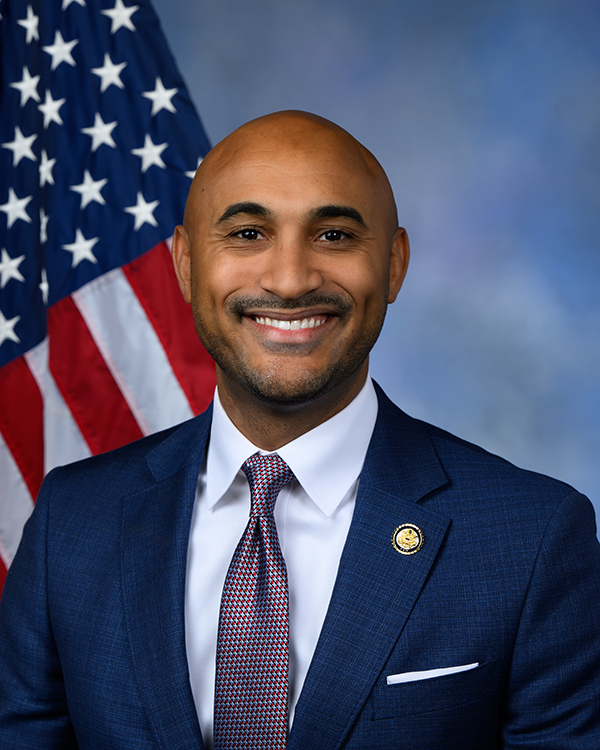
Rep. Shomari Figures
Sponsored bills
Maddy summaryThe American High-Speed Rail Act expands federal funding and streamlines regulations to support the development of high-speed and higher-speed rail projects across the United States. It authorizes billions of dollars in grants for corridor planning, technology improvements, and construction, while allowing the federal government to cover up to 100% of project costs under specific conditions. The bill also introduces new provisions to facilitate land acquisition, prioritize border projects, and extend labor protections to workers involved in federally funded rail infrastructure. Additionally, the legislation defines higher-speed rail as trains traveling between 110 and 186 miles per hour and includes tax incentives for rail carriers that sell or lease property to support these projects.
Maddy summaryThe RESTORE Third Spaces Act of 2026 establishes a three-year federal pilot program to provide grants for renovating and developing community gathering places known as "third spaces," which are public areas distinct from home and work. Administered by the Department of Commerce, the program offers up to $200 million to local governments, nonprofits, and other eligible entities to support projects that strengthen local economies and reduce social isolation. A key requirement of the bill is that at least 60% of the funding must go to low-income and underserved communities, and the resulting spaces must remain free or low-cost for the public. To ensure accountability, recipients must engage the community in the design process and report on attendance, economic impact, and social benefits, with a final report submitted to Congress after the pilot period concludes.
Maddy summaryThe Stay Cool Act establishes a comprehensive framework to help communities prepare for and respond to extreme heat events by creating cooling centers, improving housing conditions, and enhancing urban infrastructure. It directs federal funding to states and local governments to build and equip cooling facilities, install air conditioning in public housing, and develop green spaces and water features to lower temperatures. The bill also creates a national system to track heat-related health risks, mandates checks on vulnerable seniors during heatwaves, and allows tax credits for businesses that keep their doors open during heat emergencies. Additionally, it requires updates to utility assistance programs to account for cooling costs and calls for studies on heat-related mortality and safe residential temperature standards.
Maddy summaryThe Rural Hospital Revitalization Act of 2026 provides zero-interest loans to specific rural hospitals for building new facilities or renovating existing ones. To qualify, a hospital must be located in a county with fewer than 20,000 people, be at least 35 miles from the nearest hospital, have operated for at least 30 years, and demonstrate financial stability. The loans are initially interest-free for five years and can be refinanced later at standard rates if the hospital's financial situation improves, or renewed once under strict conditions if the hospital struggles financially. Additionally, receiving hospitals become eligible for technical assistance grants designed to help improve their operations and financial health.
Maddy summaryThe SCREEN for Type 1 Diabetes Act of 2026 directs the Centers for Disease Control and Prevention to launch a national public awareness campaign focused on type 1 diabetes detection, screening, and management. This initiative will provide written materials and public service announcements across various media platforms, including social media and television, while consulting with health organizations, schools, and community groups to ensure the content is culturally and linguistically appropriate. The bill authorizes $5 million annually from 2027 to 2031 to fund grants for nonprofit entities and state or local health departments to distribute these resources and increase screening access in communities with high incidence rates. Additionally, the law requires the Secretary of Health and Human Services to submit a report to Congress within one year detailing the campaign's activities and its impact on diabetes detection and management.
Maddy summaryThis bill creates a new funding program to hire more school counselors, psychologists, and social workers at schools with high numbers of low-income students. It provides federal grants to states, which then distribute money to local school districts to help them meet recommended staffing ratios of 250 students per counselor and 500 students per psychologist. To receive these funds, states must contribute matching money and submit detailed plans showing how they will improve student-to-provider ratios in their highest-need schools. The program is designed to address rising mental health issues among youth by increasing access to professional support directly within the school environment.
Maddy summaryThis bill authorizes the U.S. Mint to produce commemorative $5 gold and $1 silver coins marking the 25th anniversary of the September 11, 2001, terrorist attacks. The coins must feature designs honoring victims and first responders (including the inscription "Never Forget") and will be sold only during 2027-2028. All surcharges ($35 per gold coin, $10 per silver coin) collected from sales will fund the National September 11 Memorial and Museum at the World Trade Center, with no net cost to the federal government. The coins are legal tender but primarily intended for collectors, not circulation.
Maddy summaryThe Closing the HPV Testing Gap Act directs the National Institutes of Health to conduct a comprehensive study on developing a standardized, noninvasive test for human papillomavirus in men. This research must be completed within 24 months and will involve coordination with federal agencies like the CDC and the FDA, as well as scientific experts and community stakeholders. The study aims to evaluate various testing methods, assess feasibility across diverse populations, and provide recommendations for future implementation and regulatory approval. Additionally, the bill requires an interagency working group to oversee the process and mandates a final report to Congress within 30 months outlining findings and strategies for improving cancer prevention and health equity.
Maddy summaryThis bill nullifies a specific decision made by the Endangered Species Committee regarding oil and gas operations in the Gulf of America. It immediately cancels any exemptions previously granted to these activities under the Endangered Species Act and bars federal agencies from using funds to enforce the canceled order. For a three-year period starting when the bill is enacted, the committee is prohibited from issuing any new exemptions for Gulf oil and gas projects. Consequently, all standard environmental protections required by the Endangered Species Act will continue to apply fully to these activities.