

Real property tax; exemption for elderly and disabled individuals. Revises various provisions of the local real property tax exemption and deferral program for elderly and disabled individuals. The bill allows a locality to require that an individual (i) pay all delinquent taxes, penalties, and interest assessed by the locality and incurred prior to becoming eligible for an exemption or deferral; (ii) enter into an installment agreement with the locality for the payment of all such delinquent amounts in installments over a period that is reasonable under the circumstances, but that in no event shall exceed 72 months; (iii) submit and obtain the treasurer's agreement to an offer in compromise with respect to all amounts of delinquent taxes, penalties, and interest; or (iv) carry out a combination thereof. Additionally, the bill provides that notice of the terms and conditions of the exemption and deferral program may be included in any notice of change in assessment and that the treasurer shall post such information on the locality's website. Finally, the bill allows a locality to provide a prorated exemption or deferral for the portion of the taxable year during which the taxpayer would have qualified for such exemption or deferral but had not yet filed an application. This bill is identical to SB 816.
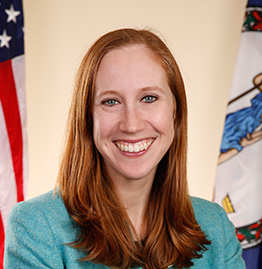
Sen. Elizabeth Bennett-Parker
Sponsored bills
School boards; student access to telehealth services; policies. Directs each school board to consider, for the purpose of increasing access to health care services for students, developing and implementing policies for permitting any public school student in the school division to schedule and participate in telehealth services, including mental health teletherapy services pursuant to a memorandum of understanding with a nationally recognized school-based telehealth provider developed in accordance with applicable law, on school property during regular school hours with parental consent. The bill requires any such policies developed and implemented by a school board to (i) require each public elementary and secondary school to designate a location in the school for student use for such telehealth appointments and implement measures to ensure the safety and privacy of any student participating in a telehealth appointment, (ii) prohibit any student from being subject to any disciplinary measure or consequence for participating in a telehealth appointment during regular school hours if such student would not be subject to any disciplinary measure or consequence for an absence for the purpose of receiving any health care services in person during regular school hours, and (iii) include such other requirements as the school board deems necessary and appropriate. Finally, the bill requires any school board that develops and implements any policies for permitting students to schedule and participate in telehealth services pursuant to the bill to provide and post in a publicly accessible location on its website at the beginning of each school year guidance relating to the implementation of such policies for administrative and instructional personnel. This bill is identical to SB 1037.
Childbirth; postpartum process. Requires health care facilities providing services related to labor and childbirth to develop policies to (i) allow every birthing person to have a companion or doula with the person during birth in addition to a partner or spouse; (ii) at the discretion of the treating physician, allow every birthing person to have a companion or doula with the person during birth when a partner or spouse is not permitted to be present; (iii) prioritize newborns bonding with their families in order to facilitate the postpartum process; (iv) prohibit excluding from care any person giving birth or prohibit interrupting the process of birth without the informed consent of the birthing person; (v) detail the facility's process related to receiving a pregnant person's patient information from any provider who has provided care for the pregnant person; (vi) establish processes to transfer and receive pregnant persons across levels of care of licensed facilities within the facility's capacity and capability; and (vii) establish a process to receive individuals who are pregnant, giving birth, or in the postpartum process from locations other than licensed facilities.
Public schools; interscholastic sports and athletics; guidelines and policies on student-athlete extreme heat safety and protection; development and implementation. Requires the Board of Education to develop, biennially review and update as necessary, and distribute to each local school division guidelines on policies relating to extreme heat safety and protection for student-athletes. The bill requires each school board to develop and update, in accordance with the guidelines developed by the Board of Education, policies on student-athlete extreme heat safety and protection that (i) are consistent with any heat guidelines based on Wet Bulb Globe Temperature (WBGT) levels developed by an organization or entity whose purpose it is to regulate or govern interscholastic athletics programs in the Commonwealth; (ii) establish tiered heat-acclimatization and modification procedures for outdoor athletics practices or games based on the WBGT levels to reduce the risks associated with extreme heat faced by student-athletes; (iii) require student-athletes to be given unhindered access to hydration at all times; (iv) include procedures relating to preventing, recognizing, and addressing heat-related illnesses; and (v) establish a process for reporting and investigating any instance in which a student-athlete experiences a heat-related illness requiring emergency medical treatment or resulting in death. This bill is identical to SB 1104.
Commission on Women's Health established; report. Establishes the Commission on Women's Health as a permanent commission in the legislative branch of state government for the purpose of studying and making recommendations on issues related to women's and maternal health. The Commission consists of 15 members, 10 of whom are legislative members and five of whom are nonlegislative citizen members with significant experience or expertise in women's or maternal health policy.
Captain Matthew "Chevy" Chiaverotti Memorial Bridge. Designates the bridge on Interstate 264 over South Rosemont Road in Virginia Beach the "Captain Matthew "Chevy" Chiaverotti Memorial Bridge."
School boards or division superintendents; review accessibility challenges in the local school division; report. Requires each school board or division superintendent, in consultation with such other stakeholders as it deems appropriate, to review the extent to which (i) public elementary and secondary school buildings and grounds in the local school division present physical accessibility challenges and barriers for individuals with disabilities, including challenges and barriers that may prevent such individuals from fully participating in school activities; (ii) challenges in access to programming and supports exist for individuals with disabilities at public elementary and secondary schools in the local school division; (iii) such schools have begun or plan to address and eliminate all such challenges and barriers; and (iv) state agencies can assist such schools to address and eliminate all such challenges and barriers and fully comply with all applicable state and federal laws. The bill requires each school board or division superintendent to report the findings of such review and any associated recommendations to the Chairs of the Senate Committee on Education and Health and the House Committee on Education no later than November 1, 2025.
Maternal health; protocols and resources for hospitals and outpatient providers; report. Requires all hospitals with an emergency department or labor and delivery, freestanding emergency departments, and birthing centers to implement standardized protocols for identifying and responding to obstetric emergencies, including obstetric hemorrhage, preeclampsia, and eclampsia. Such standardized protocols shall be based on protocols established by the Virginia Neonatal Perinatal Collaborative for inpatient and outpatient providers regarding the treatment of obstetric emergencies, the recognition of urgent maternal warning signs, and the transfer of pregnant and postpartum patients. The bill requires the Virginia Neonatal Perinatal Collaborative to collect data and submit an annual report to the Secretary of Health and Human Resources and the General Assembly with data relating to the implementation of standardized protocols and maternal health outcomes. This bill incorporates HB 2518 and is identical to SB 1279.
Constitutional amendment (first reference); marriage between two individuals; repeal of same-sex marriage prohibition; affirmative right to marry. Repeals the constitutional provision defining marriage as only a union between one man and one woman as well as the related provisions that are no longer valid as a result of the United States Supreme Court decision in Obergefell v. Hodges, 576 U.S. 644 (2015). The amendment provides that the right to marry is a fundamental right inherent in the liberty of persons and prohibits the Commonwealth and its political subdivisions from denying the issuance of a marriage license to two parties contemplating a lawful marriage on the basis of the sex, gender, or race of such parties. The Commonwealth and its political subdivisions are required to recognize any lawful marriage between two parties and to treat such marriages equally under the law, regardless of the sex, gender, or race of such parties. The amendment provides that religious organizations and clergy acting in their religious capacity have the right to refuse to perform any marriage.
Invasive plant species; retail sales. Requires, for the retail sale of certain invasive plant species for outdoor use, a retail establishment to post in a conspicuous manner on the property located in proximity to each invasive plant signage identifying such plant as invasive, educating consumers regarding invasive plant species, and encouraging consumers to ask about alternatives. The bill requires the Commissioner of Agriculture and Consumer Services to designate the format, size, and content of such signage no later than October 1, 2025, and requires the Commissioner to issue a stop sale order and mark or tag a plant in a conspicuous manner when an invasive plant is for sale at a retail establishment without appropriate signage. In such case, the bill requires the Commissioner to give written notice of a finding made to the owner, tenant, or person in charge of such retail establishment and requires the stop sale order issued to remain in effect until the required signage is posted. Certain provisions of the bill have a delayed effective date of January 1, 2027. This bill is identical to SB 1166.