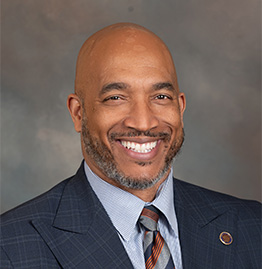
Maddy summaryHJ 600 is a ceremonial resolution commending Christian Tabash for their contributions. It has no policy provisions or direct impact on laws or regulations; it solely serves as a formal expression of appreciation from the legislature. The resolution passed unanimously in both the House and Senate with voice votes. As a procedural measure, it does not affect any constituents or require implementation.
Sponsored bills
Maddy summaryHJ 607 is a ceremonial resolution commending Thomas Heilman for his contributions. It does not create new laws or affect any policies, rights, or individuals. The resolution passed unanimously in both the House (February 10) and Senate (February 13) with voice votes and was formally adopted on March 20, 2025. As a non-binding expression of appreciation, it has no practical impact beyond the formal recognition.
Maddy summaryHJ 537 is a ceremonial resolution commending Elizabeth S. Kostelny for her contributions. It does not create new laws or affect policies; it is a formal expression of recognition by the legislature. The resolution passed both the House and Senate by voice vote in early 2025. As a procedural measure, it has no practical impact beyond acknowledging an individual's service.
Maddy summaryHJ 533 is a ceremonial joint resolution honoring Stella Dikos, a deceased individual. It does not create policy changes or affect any group; it simply expresses the legislature's recognition of her life. The resolution passed both the House and Senate in early 2025 and was enrolled as a formal legislative expression of commemoration.
Claims to unclaimed property; authority of administrator; emergency. Authorizes the State Treasurer or his designee to make payments relating to unclaimed property without receiving a claim if the property is cash property, the apparent owner is a natural person and the sole owner of such property, the apparent owner has been identified by the State Treasurer or his designee, and the amount to be paid does not exceed $5,000. The bill contains an emergency clause. This bill is identical to SB 996.
State plan for medical assistance services and health insurance; pediatric autoimmune neuropsychiatric disorders associated with streptococcal infections and pediatric acute-onset neuropsychiatric syndrome. Directs the Board of Medical Assistance Services to amend the state plan for medical assistance services to include a provision for payment of medical assistance for the prophylaxis, diagnosis, and treatment of pediatric autoimmune neuropsychiatric disorders associated with streptococcal infections (PANDAS) and pediatric acute-onset neuropsychiatric syndrome (PANS) that includes payment for treatment using antimicrobials, medication, and behavioral therapies to manage neuropsychiatric symptoms, immunomodulating medicines, plasma exchange, and intravenous immunoglobulin therapy.The bill also requires each insurer proposing to issue individual or group accident and sickness insurance policies providing hospital, medical and surgical, or major medical coverage on an expense-incurred basis; each corporation providing individual or group accident and sickness subscription contracts; and each health maintenance organization providing a health care plan for health care services to provide coverage for the prophylaxis, diagnosis, and treatment of PANDAS and PANS. The bill requires such coverage to include coverage for treatment using antimicrobials, medication, and behavioral therapies to manage neuropsychiatric symptoms, immunomodulating medicines, plasma exchange, and intravenous immunoglobulin therapy.The bill prohibits an insurer, corporation, or organization from (i) denying or delaying the coverage of PANDAS or PANS because the enrollee previously received treatment or because the enrollee was diagnosed with or received treatment for his condition under a different diagnostic name, including autoimmune encephalopathy; (ii) limiting coverage of immunomodulating therapies for the treatment of PANDAS or PANS in a manner that is inconsistent with the treatment guidelines developed by a consortium convened for the purposes of researching, identifying, and publishing best practice standards for diagnosis and treatment of PANDAS or PANS that are accessible for medical professionals and are based on evidence of positive patient outcomes; (iii) requiring a trial of therapies that treat only neuropsychiatric symptoms before authorizing coverage of immunomodulating therapies for the treatment of PANDAS or PANS; or (iv) denying coverage for out-of-state treatment if the service is not available within the Commonwealth. This bill is a recommendation of the Health Insurance Reform Commission.

Board of Nursing; faculty supervision of direct client care; faculty-to-student ratio. Directs the Board of Nursing to allow nursing education programs to apply for a waiver of the student-to-faculty ratios for direct client care. Under the bill, such waiver would permit a nursing education program to increase the ratio of students to faculty engaged in direct client care from 10 students per faculty member up to, but not to exceed, 15 students per faculty member. Current regulations permit faculty to supervise up to 10 students providing such care per faculty member without the utilization of a preceptor.
Maddy summaryHJ 510 is a ceremonial joint resolution commending the Gloucester County Branch of the NAACP for its community work. It does not create new laws or affect any policies, as it is purely a symbolic recognition passed by both the House and Senate via voice vote in early March 2025. The resolution formally acknowledges the organization's contributions without imposing any requirements or changes.
Amyotrophic Lateral Sclerosis Awareness Month. Designates May, in 2025 and in each succeeding year, as Amyotrophic Lateral Sclerosis Awareness Month in Virginia.
Maddy summaryHR 481 is a House resolution commending Lawrence Douglas Wilder, Virginia's first Black governor and former lieutenant governor. It serves as a formal, symbolic recognition of his contributions to public service and leadership. The bill does not create any policy changes or affect specific groups; it is purely a ceremonial gesture. The resolution passed unanimously by the House on January 16, 2025, and was engrossed for final passage.