

Commending Dr. Ben Fitzgerald, III.
Commending Dr. Ben Fitzgerald III.
Passed Feb 19, 2024
1 co-sponsor
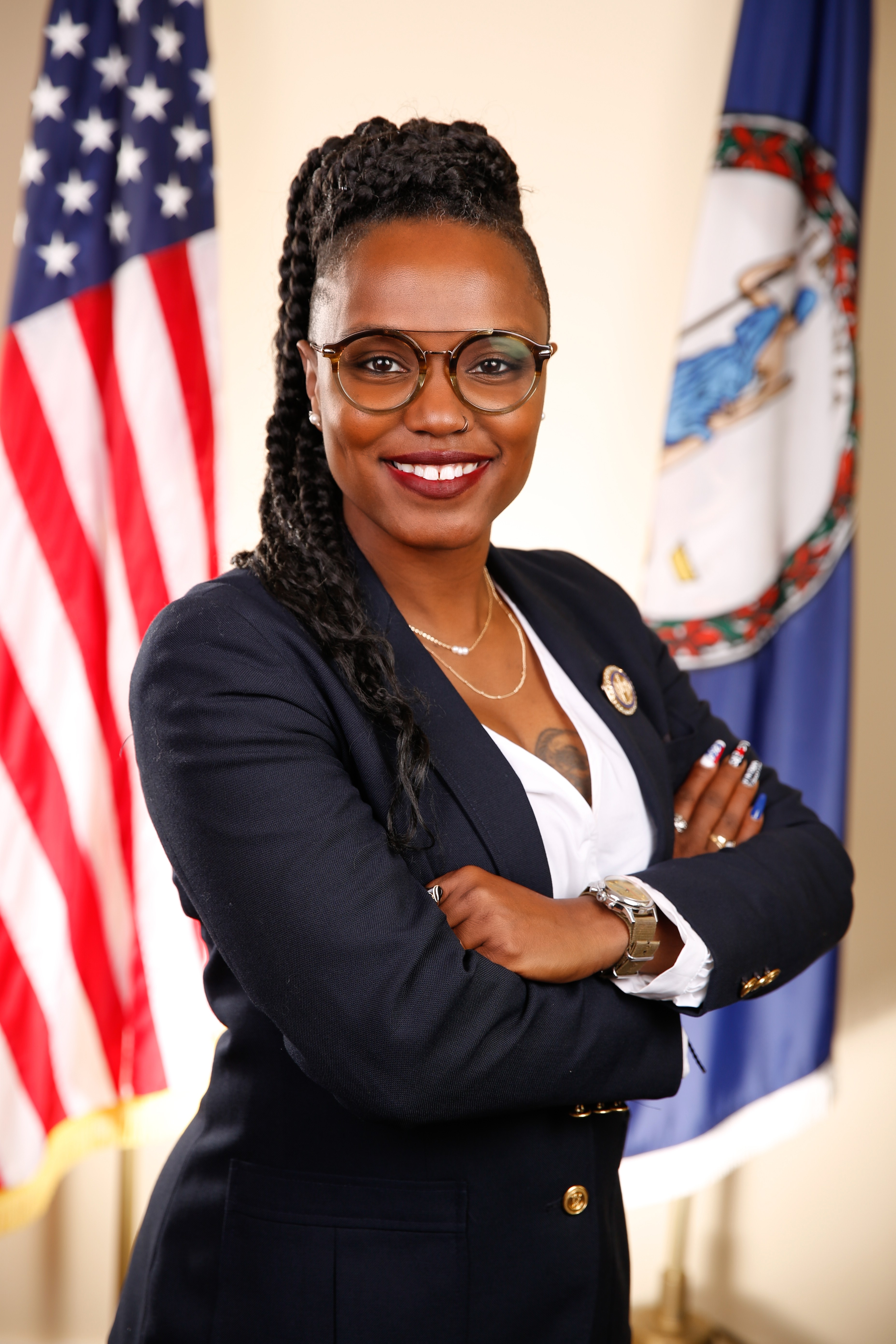
Commending Dr. Ben Fitzgerald III.
Commending the ASK Childhood Cancer Foundation.
Virginia Creative Economy Grant Program. Establishes the Virginia Creative Economy Grant Program, to be administered by the Virginia Innovation Partnership Corporation, for the purpose of awarding grants to independent content creators and creative economy entrepreneurs, as those terms are defined in the bill, for the purpose of developing and expanding the creative economy, as defined in the bill, in the Commonwealth. The bill provides for the award of grants of no more than $20,000 to any recipient.
Board of Medicine; breast implant patient decision checklist required. Directs the Board of Medicine to developa patient decision checklist for procedures involving breast implantsthat informs patients of the potential risks of breast implants. The bill requires physicians to obtain an executed breast implantpatient decision checklist from the patient before conducting anyprocedure that involves breast implants.
Fostering Futures program; eligibility; agelimit. Increases from 21 to 23 the age at which an individualmay no longer participate in the Fostering Futures program.
Department of Criminal Justice Services; law-enforcement agencies; use of generative artificial intelligence and machine learning systems. Provides that the Department of Criminal Justice Servicesshall have the power and duty to establish a comprehensive frameworkfor the use of generative artificial intelligence (AI) and machinelearning systems, both defined in the bill, by law-enforcement agencies,which shall include (i) developing policies and procedures for theuse of generative AI and machine learning systems in law-enforcementactivities; (ii) establishing and publishing a model policy for the use of generative AI and machine learning systems to serve as a guidelinefor criminal justice agencies in the Commonwealth; and (iii) establishing compulsory minimum training standards for basic training and recertificationof law-enforcement officers on the use of generative AI and machinelearning systems. The bill provides that the Department shall establishand publish such model policy by January 1, 2025, and that all criminaljustice agencies shall adopt a policy consistent with such modelpolicy by July 1, 2025. The bill requires any person employed asa law-enforcement officer prior to July 1, 2024, to complete thetraining required by the bill by January 1, 2026.
Social services; Dynamic Benefit AdjustmentSystem. Establishes a Dynamic Benefit Adjustment System thatgradually reduces public assistance benefits in response to beneficiaries'earned income. The bill requires the Department of Social Servicesto establish the formula for the system, collect and analyze dataon the System, and make regular reports on the System's performanceto the General Assembly.
Department of Criminal Justice Services; criminal justiceagencies; audiovisual surveillance technologies. Provides that theDepartment of Criminal Justice Services shall have the power and duty toestablish a comprehensive framework for the use of audiovisual surveillancetechnologies as defined in the bill, including license plate reader systems, bycriminal justice agencies within the Commonwealth. The comprehensive frameworkshall include (i) developing policies and procedures that ensure technologyusage, data security, and data retention are in compliance with existing lawsand regulations; (ii) establishing and publishing a model policy for the use ofaudiovisual surveillance technologies to serve as a guideline for criminaljustice agencies in the Commonwealth; and (iii) establishing compulsory minimumtraining standards for basic training and recertification of law-enforcementofficers operating or accessing audiovisual surveillance technologies, which shallinclude training on relevant state and federal laws, operational guidelines,privacy and civil liberties considerations, and proper data handling andretention. The bill provides that the Department shall establish and publishsuch model policy by January 1, 2025, and that all criminal justice agenciesshall adopt a policy consistent with such model policy by July 1, 2025. Thebill requires any law-enforcement officer who is authorized to operate oraccess audiovisual surveillance technologies to complete the training requiredby the bill by July 1, 2025.
Elections; conduct of election; ranked choice voting; locally elected offices; report. Allows elections for any local or constitutional office to be conducted by ranked choice voting. Under current law, only elections of members of a county board of supervisors or a city council are allowed to be conducted by ranked choice voting. The bill also clarifies requirements for conducting elections using ranked choice voting and requires results for elections conducted by ranked choice voting to be reported along with other results reported on election night, except that such results must clearly be identified as preliminary and based on the first rankings in a ranked choice voting election. The bill provides that final tabulation for an election for a local or constitutional office that is not shared by more than one county or city is required to be conducted on the same day as other results are canvassed by the local electoral board and that final tabulation for and election for a local or constitutional office that is shared by more than one county or city is required to be conducted at a centralized facility under the supervision of the Department of Elections. The bill specifies that ranking data is required to be made publicly available by the Department and requires the State Board of Elections to provide standards and to approve vote tabulating software for use with existing voting systems in elections conducted by ranked choice voting. The bill also limits a risk-limiting audit of an election conducted using ranked choice voting to the first choice rankings reported on voting systems. Finally, the bill directs the Department to review the testing and approval framework for voting equipment in the Commonwealth and submit a report of such review no later than the first day of the 2025 Regular Session of the General Assembly.
Persons employed to perform forensic science duties; training and certification; policies for reporting wrongdoing or misconduct. Requires the Department of Criminal Justice Services to establish a comprehensive framework, in coordination with the Department of Forensic Science and with the approval of the Forensic Science Board, for the employment, job entry training, and certification requirements for any person employed by any state or local law-enforcement agency to perform forensic laboratory services or forensic science duties, including a forensic specialist or forensic analyst, which training and certification shall be administered by the Department of Forensic Science. The bill provides that the comprehensive framework shall include (i) developing policies and procedures for such employees to report instances of wrongdoing or misconduct committed by another such employee, a law-enforcement officer, or an attorney for the Commonwealth; (ii) establishing and publishing a model policy for the employment, job entry training, and certification for such employees; and (iii) establishing compulsory minimum training standards for basic training and recertification of such employees.Additionally, the bill requires the Department of Criminal Justice Services to appoint a policy and curriculum review committee to assist the Department in carrying out its duties in establishing the comprehensive framework and requires that such establishment shall require approval of the majority of the members of the policy and curriculum review committee and is subject to final approval of the Forensic Science Board. The bill requires the Department of Criminal Justice Services to establish the comprehensive framework by January 1, 2025, and all law-enforcement agencies to adopt the policies and procedures by July 1, 2025. The bill also requires any person employed by any state or local law-enforcement agency to perform forensic laboratory services or forensic science duties, including a forensic specialist or forensic analyst prior to July 1, 2024, to complete the training required by the bill by January 1, 2026.The bill also requires the Forensic Science Board to develop policies and procedures for employees of the Department of Forensic Science to report instances of wrongdoing or misconduct committed by another employee of the Department of Forensic Science or an employee of an entity for which the Department of Forensic Science has the responsibility to perform forensic laboratory services.