

Firearm locking device required for purchase of a firearm; warning against accessibility to children; penalty. Requires any person who purchases a firearm to either (i) obtain or purchase from a licensed dealer a locking device for such firearm if a minor is present in such person's residence for 14 days or more in a calendar month or (ii) complete a certification statement on a form provided by the Department of State Police certifying that a minor is not present in such person's residence for 14 days or more in a calendar month, with exceptions enumerated in the bill. Accordingly, the bill provides that it is unlawful for any licensed manufacturer, licensed importer, or licensed dealer to sell, deliver, or transfer any firearm to any person, other than a licensed manufacturer, licensed importer, or licensed dealer, unless (a) the firearm is accompanied by a warning, in conspicuous and legible type in capital letters printed on a separate sheet of paper included within the packaging enclosing the firearm, that firearms should be locked and kept away from children and that there may be civil and criminal liability for failing to do so and (b) the transferee (1) obtains or purchases a locking device for such firearm if a minor is present in such person's residence for 14 days or more in a calendar month or (2) completes the certification statement. A violation of either provision is a Class 3 misdemeanor.
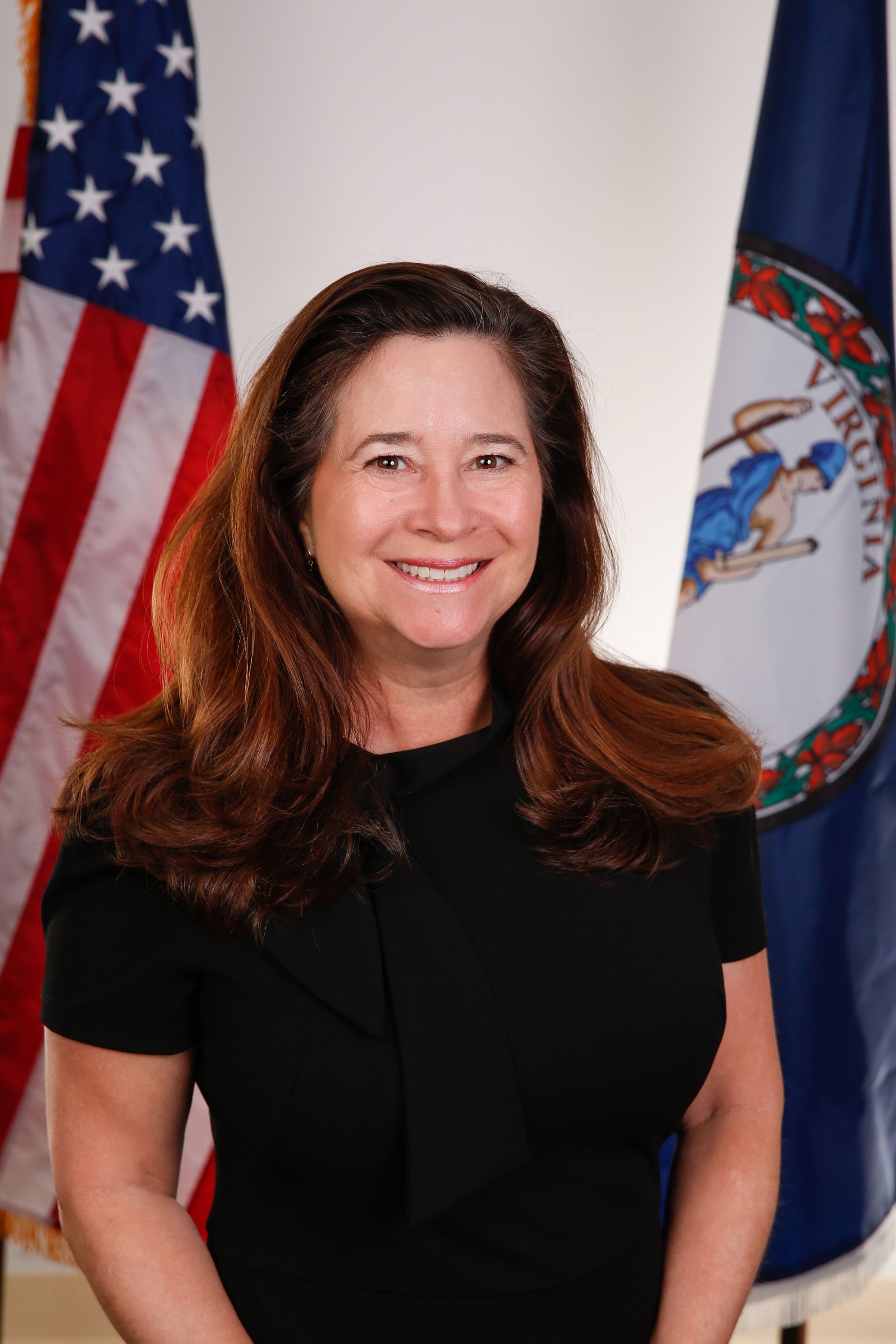
Del. Shelly Simonds
Sponsored bills
Fines, costs, forfeitures, penalties, and restitution; collection fees; assessment against incarcerated defendant; deferred payment agreement. Extends from 90 days without payment to 180 days without payment the period of delinquency necessary for an account to be included on the required monthly report of delinquent accounts made by the clerk of the circuit court and district court. The bill also provides that for any defendant sentenced to an active term of incarceration and ordered to pay any fine, cost, forfeiture, or penalty related to the charge that such defendant is incarcerated for, or any other charge for which such defendant was sentenced on the same day, the court shall enter such defendant into a deferred payment agreement for such fines, costs, forfeitures, or penalties. The bill requires the due date for such deferred payment agreement to be set no earlier than the defendant's scheduled release from incarceration on the charge for which such defendant received the longest period of active incarceration. The bill has a delayed effective date of January 1, 2025. This bill is identical to HB 612.
Carrying a firearm or explosive material within Capitol Square or building owned or leased by the Commonwealth; exemptions; public institutions of higher education; penalty. Limits the exemption from the prohibition on the carrying of any firearm or explosive material within any building owned or leased by the Commonwealth or agency thereof or any office where employees of the Commonwealth or any agency thereof are regularly present for the purpose of performing their official duties that currently applies to any property owned or operated by a public institution of higher education to instead apply to any individual within a building owned or operated by a public institution of higher education who possesses a weapon as part of such public institution of higher education's curriculum or activities or as part of any organization authorized by such public institution of higher education to conduct its programs or activities within such building, as such uses are approved through the law-enforcement or public safety unit of such institution. This bill is identical to SB 383.
Hazardous Substance Facility Response Plans; civil penalties. Requires any person that is required to submit a facility response plan under the U.S. Environmental Protection Agency's (EPA) Clean Water Act Hazardous Substance Worst Case Discharge Planning Regulations to submit evidence of an EPA-approved facility response plan to the Department of Environmental Quality within a certain time period and to comply with such plan. The bill provides certain requirements for reporting, recordkeeping, and inspection and authorizes the Department to initiate a civil action to obtain certain equitable relief for violations of the bill's provisions. The bill imposes civil penalties for any person that negligently, willfully, or knowingly (i) discharges or causes to discharge a hazardous substance from a facility or (ii) fails to implement or comply with an EPA-approved facility response plan. Finally, the bill provides a delayed effective date of the next fiscal year immediately following the effective date of the EPA's final rule on Clean Water Act Hazardous Substance Worst Case Discharge Planning and requires the Department to develop guidance to implement the provisions of the bill in the six months preceding such effective date.
Health insurance; coverage for contraceptivedrugs and devices. Requires health insurance carriers to providecoverage, under any health insurance contract, policy, or plan thatincludes coverage for prescription drugs on an outpatient basis,for contraceptive drugs and contraceptive devices, as defined inthe bill, approved for use as prescribed products or for over-the-counteruse. The bill prohibits a health insurance carrier from imposingupon any person receiving contraceptive benefits pursuant to theprovisions of the bill any copayment, coinsurance payment, or fee, except in certain circumstances. The provisions of the bill applyto health insurance contracts, policies, or plans delivered, issuedfor delivery, or renewed on and after January 1, 2025.
Equity in public school funding; student need; English language learner, special education, and at-risk students. Places several parameters on Standards of Quality funding calculations performed by the Department of Education, including (i) requiring the Department, when calculating the cost of salaries under the Standards of Quality funding formula, to include facilities staff and transportation staff salaries in the calculation of any cost of competing adjustment to salaries for instructional and support positions that is provided as part of the state share of basic aid pursuant to the general appropriation act; (ii) requiring the Department, when estimating the cost of any compensation supplement for instructional and support positions under the Standards of Quality funding formula, to include and estimate the cost of such a compensation supplement for facilities staff; (iii) prohibiting the Department from applying any cap on inflation rate adjustments to non-personal cost categories during the biennial process of rebenchmarking the direct aid to public education budget; and (iv) requiring the Department to utilize a three-year average of the most recently available data to calculate the composite index of local ability-to-pay for each school division. The bill also amends Standard of Quality 2 by (a) including in the definition of "support services position" any central office clerical position that is not otherwise set forth in such definition, (b) requiring a per-pupil Standards of Quality funding add-on to be provided for English language learner and special education students, (c) requiring, in addition to the positions supported by basic aid, state funding, pursuant to the general appropriation act, to be provided to cover the actual average school division cost to educate children with disabilities, and (d) establishing the At-Risk Program, defined in the bill as any state funding provided for programs of prevention, intervention, or remediation or pursuant to the at-risk add-on for the purpose of supporting programs for students who are educationally at risk. The bill requires (1) the determination of the amount of state funding for which a school division is eligible pursuant to such At-Risk Program to be based on the school division's identified student percentage, defined in the bill as the fraction, expressed as a percentage, that results from dividing the number of identified students enrolled in a school division by the total number of students enrolled in such school division, weighted by the factor of 1.5, and then adjusted by the addition of a percentage that corrects for undercounting English language learner students as identified students and (2) such funding to be distributed as follows: 60 percent on a flat per-student rate and 40 percent on a variable rate set out in the general appropriation act based on the concentration of poverty in the school division. The bill is a recommendation of the Joint Legislative Audit and Review Commission.
Consultation with federally recognized Tribal Nations in the Commonwealth; permits and reviews with potential impacts on environmental, cultural, and historic resources. Requires the Department of Conservation and Recreation, the Department of Environmental Quality, the Department of Historic Resources, and the Virginia Marine Resources Commission to establish policies and procedures for consulting with federally recognized Tribal Nations in the Commonwealth when evaluating certain permits and reviews relating to environmental, cultural, or historic resources that potentially impact those federally recognized Tribal Nations in the Commonwealth. The bill directs the Secretary of the Commonwealth to designate an Ombudsman for Tribal Consultation to facilitate communication and consultation with federally recognized Tribal Nations in the Commonwealth and requires the Ombudsman to develop by September 1, 2024, a list of localities in which federally recognized Tribal Nations in the Commonwealth shall be consulted to effectuate the provisions of the bill. The bill codifies Executive Order 82 (2021).
Public elementary and secondary schools; programs of instruction; mental health education; curriculum guidelines; instruction required. Requires each public elementary, middle, and high school to provide at each grade level, in addition to health instruction, an additional age-appropriate course of instruction on mental health. The bill directs the Board of Education to develop mental health curriculum guidelines for an age-appropriate, sequential mental health curriculum for each grade level and requires such curriculum guidelines to include instruction on (i) general themes of social and emotional learning, including self-awareness, self-management, responsible decision making, relationship skills, and social awareness; (ii) the signs and symptoms of common mental health challenges; (iii) mental health wellness and healthy strategies for coping with stress and negative feelings, including conflict resolution skills; (iv) the importance of and guidance on seeking assistance from an adult or mental health professional, including information on services offered within the school or the local school division; (v) the prevalence of mental health challenges and the importance of overcoming common stigmas surrounding such mental health challenges; (vi) the importance of mental health to a student's overall well-being, including physical health and academic success; and (vii) at such grade levels as the Board deems appropriate, the connection between mental health and substance use disorders and the safe use of and risks of abuse of prescription drugs. The bill permits the Board to consult with the Department of Behavioral Health and Developmental Services and other mental health experts in developing such curriculum guidelines and requires the Board to submit such guidelines to the State Board of Health for approval. The bill requires the Board to review and update by the beginning of the 2025–2026 school year the health Standards of Learning for each grade level to include such instruction on the mental health curriculum guidelines.
Contract actions; medical debt. Provides that in any action, including those brought by the Commonwealth, upon any contract to collect medical debt, as defined in the bill, such an action is barred if not commenced within three years from the due date applicable to the first invoice for a health care service unless the contract with a hospital or health care provider is for a payment plan that allows for a longer period of time for the collection of debt by the hospital or health care provider. The bill specifies that such limitation shall not apply to medical debt arising from services provided by programs administered by the Department of Medical Assistance Services.
Virginia Residential Landlord and Tenant Act;Department of Housing and Community Development; mandatory fees.Requires advertisements for rental units and rental agreements toinclude any mandatory fees that will be charged to a tenant in excessof the rent. The bill directs the Department of Housing and CommunityDevelopment to collect data regarding the type and amount of mandatoryfees tenants are required to pay and to include such data in itsannual report to the General Assembly.