

Comprehensive plan; healthy communities strategy. Authorizes a locality, beginning July 1, 2024, to adopt a healthy communities strategy as part of its next and any subsequent reviews of the comprehensive plan. The bill provides that the locality's strategy may include identifying (i) major sources of pollution or hazardous waste sites within the locality, (ii) policies to mitigate the unique or compounded health risks to residents that may be caused by such pollution sources or hazardous waste sites, (iii) objectives and policies to promote civic engagement in public decision-making processes by residents, (iv) objectives and policies that prioritize improvements and programs that promote healthy communities, and (v) objectives and policies that encourage linking public transit with community and health services and siting or co-locating health services in unconventional settings to ensure convenient access for all community members. This bill is identical to SB 595.
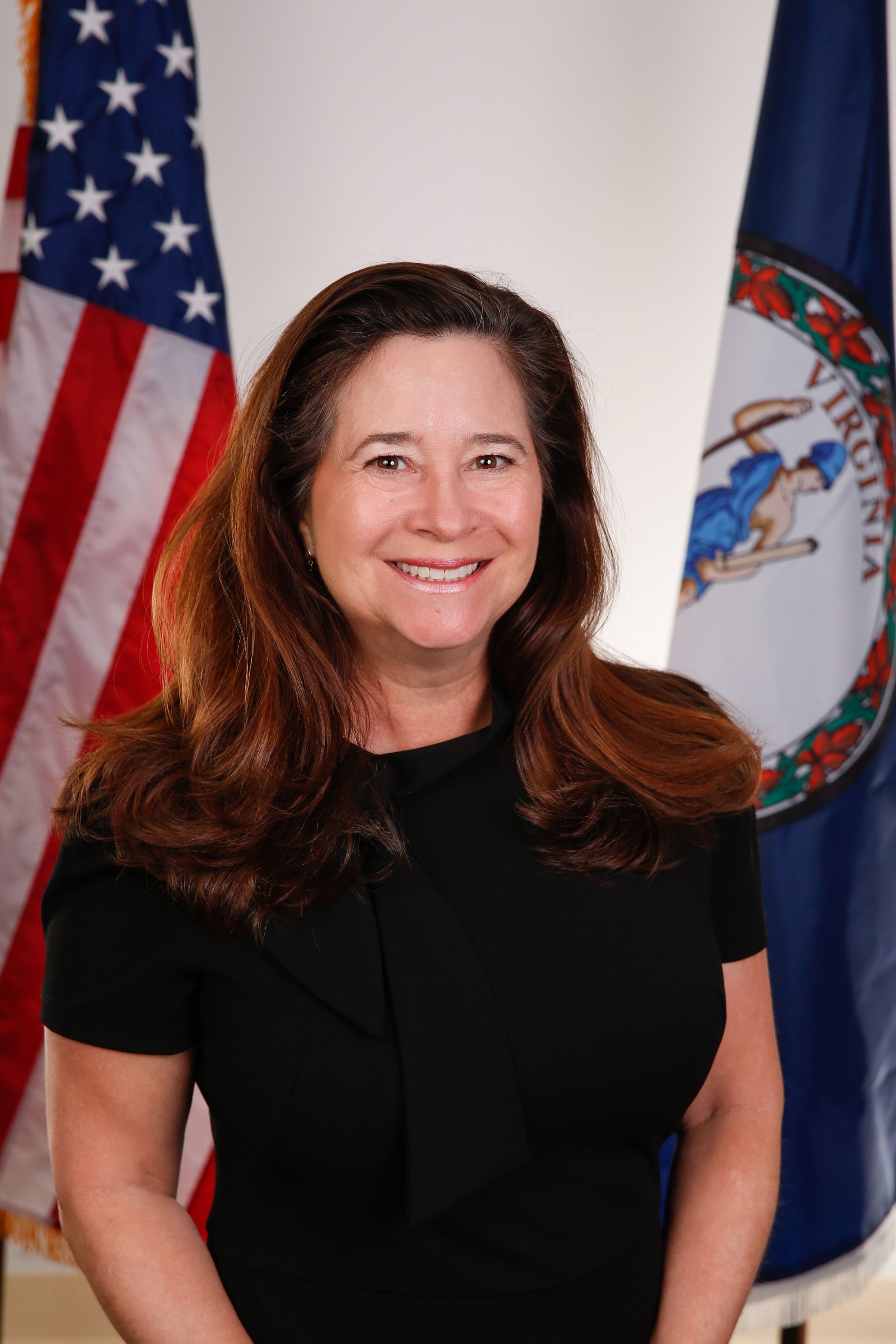
Del. Shelly Simonds
Sponsored bills
Limited-duration licenses and driver privilege cards and permits; expiration. Extends the validity of limited-duration licenses, driver privilege cards and permits, and identification privilege cards, other than REAL ID credentials and commercial driver's licenses and permits, to a period of time consistent with the validity of driver's licenses, which, under current law, is a period not to exceed eight years or, for a person age 75 or older, a period not to exceed five years, and permits and special identification cards. The bill directs the Department of Motor Vehicles to implement the extended validity periods for such documents upon reissuance. This bill is identical to SB 246.
Unpaid family bereavement leave; required; remedies. Requires that an employer that employs 50 or more employees provide eligible employees, defined in the bill, with up to 10 days of unpaid family bereavement leave in any 12-month period to (i) attend the funeral or funeral equivalent of a covered family member; (ii) make arrangements necessitated by the death of a covered family member; (iii) grieve the death of a covered family member; or (iv) be absent from work due to (a) a miscarriage, (b) an unsuccessful round of intrauterine insemination or of an assisted reproductive technology procedure, (c) a failed adoption match or an adoption that is not finalized because it is contested by another party, (d) a failed surrogacy agreement, (e) a diagnosis that negatively impacts pregnancy or fertility, or (f) a stillbirth. The bill requires the employee to provide notice of his intent to take the leave if reasonable and practicable and provides that an employer may require reasonable documentation of the death or event. The bill requires the employer to restore the employee's position following the leave, to continue to provide coverage for the employee under any health benefit plan, and to pay the employee any commission earned prior to the leave. The bill prohibits the employer from taking retaliatory action against the employee for taking family bereavement leave and provides that, if an employer fails to provide unpaid family bereavement leave or engages in such prohibited retaliatory action, an employee may bring an action against the employer in a court of competent jurisdiction.
Rate of fees; legal representation of indigent defendant. Limits the fees charged for the cost of court-appointed counsel or public defender representation to persons determined to be indigent to an amount no greater than the amount such person would have owed if such fees had been assessed on or before June 30, 2024.
Workers' compensation; presumption that certaininjuries arose out of employment. Provides that in any claimfor workers' compensation, where the employee suffers an unexplainedfall in the course of employment, it shall be presumed that the fallarose out of the employment, unless such presumption is overcomeby a preponderance of competent evidence to the contrary.
Additional local sales and use tax to support schools; referendum. Authorizes all counties and cities to impose an additional local sales and use tax at a rate not to exceed one percent with the revenue used only for capital projects for the construction or renovation of schools if such levy is approved in a voter referendum. The bill removes the requirement that such a tax must have an expiration date on either (i) the date of the repayment of any bonds or loans used for such capital projects or (ii) a date chosen by the governing body. Under current law, only Charlotte, Gloucester, Halifax, Henry, Mecklenburg, Northampton, Patrick, and Pittsylvania Counties and the City of Danville are authorized to impose such a tax. This bill incorporates HB 60, HB 193, HB 458, HB 600, HB 616, HB 1159, and HB 1437 and is identical to SB 14.
Limitation on sentence upon revocation of suspensionof sentence; technical violations. Provides that when conductinga revocation hearing, the court shall consider at the same revocationhearing all alleged technical violations that occurred prior to suchrevocation hearing and have not been previously considered by thecourt. The bill also requires that when a defendant has been takeninto custody for an alleged first or second technical violation forwhich the court may only impose up to 14 days of active incarceration,the court shall adjudicate such violation within 14 days of the defendantbeing taken into custody. The bill states that if such violationis not adjudicated within 14 days of the defendant being taken intocustody, the defendant shall be admitted to bail, unless (i) suchdefendant consents to being further detained while awaiting adjudicationor sentencing or (ii) the Commonwealth has established, by clearand convincing evidence, that the defendant presents a significantrisk of harm to himself or the community based on substance use disorderor serious mental illness and has been referred for residential treatment.Notwithstanding the foregoing, the bill provides that no such defendant shall be held in custody awaiting adjudication of or sentencing onsuch alleged technical violation for longer than 30 days.
Policies on parental notification of instructional material that includes sexually explicit content; scope and use. Provides that nothing in the law requiring the Department of Education to develop and make available to each school board model policies for ensuring parental notification of any instructional material that includes sexually explicit content and requiring each school board to adopt policies that are consistent with but may be more comprehensive than such model policies or that is in such model policies or school board policies shall be construed to permit the censoring of books in any public elementary or secondary school. This bill is identical to SB 235.
Prohibiting inquiry into the immigration statusof defendant; notification of consequences. Provides that nocircuit court, general district court, or juvenile and domestic relationsdistrict court shall, in connection with the prosecution of a criminalviolation of state or local law, inquire into the immigration statusof any defendant unless such inquiry is relevant to the offense forwhich such defendant is being prosecuted. The bill requires thatprior to the start of proceedings, such courts shall advise any defendantthat immigration consequences, including possible detention, incarceration,or deportation connected to an immigration action, are possible ifsuch defendant is convicted of a criminal violation of state or locallaw.
Modification of sentence for marijuana-relatedoffenses. Creates a process by which persons convicted of certainfelony marijuana-related offenses committed prior to July 1, 2021,who remain incarcerated or on community supervision on July 1, 2024,may receive an automatic hearing to consider modification of suchperson's sentence. The bill also allows persons convicted of anyfelony offense committed prior to July 1, 2021, who remain incarceratedor on community supervision on July 1, 2024, and whose sentencemay have been enhanced because of a previous felony marijuana offenseor without the involvement of marijuana such felony offense convictionor felony sentence enhancement would not have been possible, as theinvolvement of marijuana was necessary to satisfy the elements ofthe charged offense or the sentence enhancement, to petition the circuitcourt for modification of such person's sentence. The bill requiressuch petition to be filed by July 1, 2026. The provisions of thisbill sunset on July 1, 2027.