

Commemorating the life and legacy of Dr. Robert Russa Moton.
Commemorating the life and legacy of Dr. RobertRussa Moton.
Introduced Feb 13, 2020
1 co-sponsor
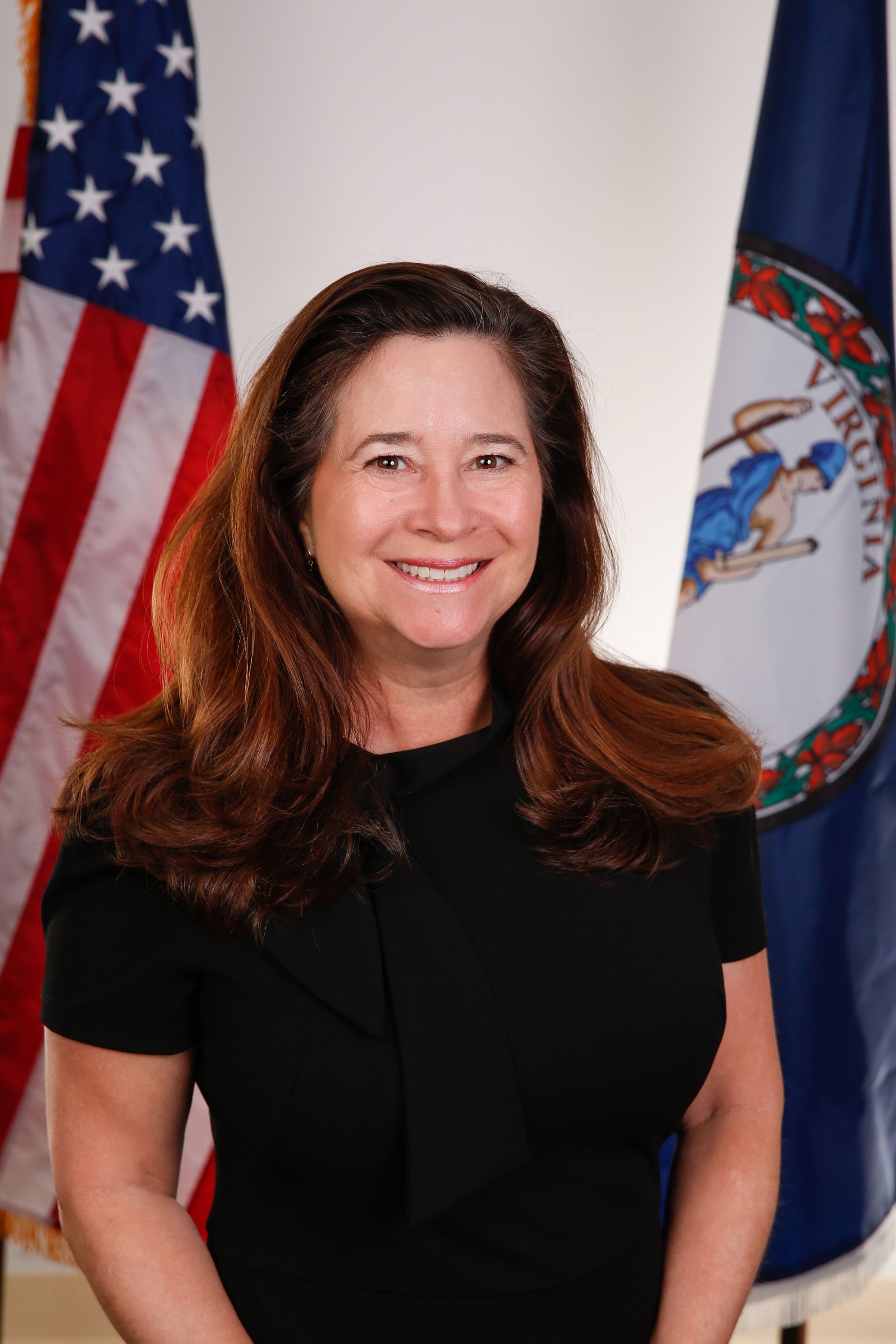
Commemorating the life and legacy of Dr. RobertRussa Moton.
Virginia Diverse Educator Scholarship Fund and Program established. Establishes the Virginia Diverse Educator Scholarship Fund and Program, to be administered by the State Council of Higher Education for Virginia, for the purpose of annually providing to each Historically Black College or University in the Commonwealth (Hampton University, Norfolk State University, Virginia State University, and Virginia Union University) such sums as are necessary for each such institution to annually provide scholarships on a competitive basis to no more than two students who (i) identify as African American, Asian, Hispanic or Latino, Native American or Native Alaskan, or Native Hawaiian or Pacific Islander; (ii) are accepted to or enrolled in such institution's education preparation program; and (iii) are eligible for a federal Pell Grant to attend such institution. The bill provides that each such scholarship would consist of the following sums: (a) the cost of tuition, mandatory fees, room and board, and textbooks at such institution; (b) the recipient's teacher licensure fees; (c) $5,000 toward teacher professional development activities for the recipient, including coursework, seminars, and conferences; and (d) $10,000 toward mentorship of the recipient by an experienced teacher who is deemed by the relevant school board to be highly effective and able to provide high quality mentorship. The bill requires each student who is awarded a scholarship pursuant to the Program to agree in writing to (1) teach in a public elementary or secondary school in the Commonwealth in which at least 75 percent of the enrolled students qualify for free or reduced price lunch or are members of families whose income is below the federal poverty guidelines established by the U.S. Department of Health and Human Services upon graduation for a period that is at least as long as the period during which the recipient used scholarship funds to attend a Historically Black College or University and (2) be mentored by an experienced teacher, as described in clause (d), during such period of employment.
Standards of Quality; work-based learning; teacher leadersand mentors; principal mentors; certain personnel positions and initiatives. Makesseveral changes to the Standards of Quality, including requiring the establishmentof units in the Department of Education to oversee work-based learning andprincipal mentorship statewide in Standard 1 and requiring the Board ofEducation to establish and oversee the local implementation of teacher leaderand teacher mentor programs in Standard 5. The bill also makes several changesrelating to school personnel in Standard 2, including (i) establishingschoolwide ratios of students to teachers in certain schools with highconcentrations of poverty and granting flexibility to provide compensationadjustments to teachers in such schools; (ii) requiring each school board toassign licensed personnel in a manner that provides an equitable distributionof experienced, effective teachers and other personnel among all schools in thelocal school division; (iii) requiring each school board to employ teacherleaders and teacher mentors at specified student-to-position ratios; (iv)requiring state funding in addition to basic aid to support at-risk studentsand granting flexibility in the use of such funds by school boards; (v)lowering the ratio of English language learner students to teachers; (vi)requiring each school board to employ reading specialists and establishing astudent-to-position ratio for such specialists; (vii) requiring school boardsto employ one full-time principal in each elementary school; (viii) loweringthe ratio of students to assistant principals and school counselors inelementary, middle, and high schools; and (ix) requiring each school board toprovide at least four specialized student support positions, including schoolsocial workers, school psychologists, school nurses, and other licensed healthand behavioral positions, per 1,000 students.
Day of Women. Recognizes January 22 of each year as the Day of Women in Virginia and provides that January 22 of each year no longer be known as the Day of Tears in Virginia.
School boards; paid maternity leave benefit policy. Requires each school board to establish a paid maternity leave benefit policy to grant any mother who has been employed full time by the school board for at least two years and who gave birth to or adopted a child 12 weeks of paid sick leave, in addition to any other sick leave to which such individual is otherwise entitled, to care for such child. Each such policy shall include provisions relating to (i) any payroll contributions that may be required to finance all or any part of the implementation of the paid maternity leave benefit, (ii) the amount and value of the maternity leave benefit, (iii) the computation of the duration of the paid maternity leave benefit, (iv) the period within which the paid maternity leave benefit shall be used, (v) intermittent use of the paid maternity leave benefit, (vi) employment protection for mothers who use the paid maternity leave benefit, (vii) the coordination of the use of the paid maternity leave benefit and any other leave pursuant to the federal Family and Medical Leave Act, 29 U.S.C. § 2601 et seq., and (viii) any other consideration deemed relevant by the school board.
Development and use of accessory dwelling units.Provides that all localities shall allow for the development anduse of one accessory dwelling unit (ADU) per single-family dwelling(SFD), notwithstanding any contrary provision of a zoning ordinance.The bill defines "accessory dwelling unit" or "ADU" as an independentdwelling unit on a single-family lot with its own living, bathroom,and kitchen space that may be within or attached to SFDs or in detachedstructures on lots containing SFDs. ADUs may include basements, attics,flats, guest houses, cottages, and converted structures such as garages and sheds. The bill requires localities to regulate the sizeand design of ADUs through an approval process, as well as regulatefees, parking, and other requirements, provided that the regulations(i) are not so arbitrary, excessive, or burdensome, individuallyor cumulatively, as to unreasonably restrict the ability of propertyowners to utilize or create ADUs and (ii) do not require the propertyowner to occupy the ADU or SFD as his primary residence.
Teacher compensation; at or above national average. Requires public school teachers to be compensated at a rate that is at or above the national average. Under current law, compensation at such rate is aspirational. The foregoing provisions of the bill have a delayed effective date of July 1, 2025. The bill requires funding to be provided on an incremental basis pursuant to the general appropriation act to implement such teacher compensation rate by the effective date.
Study; JLARC; effects of gun violence on communities;report. Directs the Joint Legislative Audit and Review Commissionto study the social, physical, emotional, and economic effects ofgun violence on communities across the Commonwealth.
Paid family and medical leave program. Requires the Virginia Employment Commission to establish and administera paid family and medical leave program with benefits beginning January 1, 2023. Under the program, benefits are paid to eligible employees for family and medical leave. Funding for the program isprovided through premiums assessed to employers and employees beginningin 2022. The amount of a benefit is 80 percent of the employee'saverage weekly wage, not to exceed 80 percent of the state weeklywage, which amount is required to be adjusted annually to reflectchanges in the statewide average weekly wage. The measure caps theduration of paid leave at 12 weeks in any application year. The billprovides self-employed individuals the option of participating inthe program.
Office of the Independent Living Community Ombudsman. Establishes, in the Department for Aging and Rehabilitative Services,the Office of the Independent Living Community Ombudsman, to promoteand protect the interests of residents of independent living communitiesin the Commonwealth. The bill defines "independent living community"as any congregate care housing arrangement reserved for residents55 years of age or older who do not require assistance with activitiesof daily living from staff of the independent living community and that includes the provision of two or more of the following services:meals, transportation, laundry, or housekeeping, when such servicesare provided pursuant to an agreement between the resident and the congregate care housing provider or between the resident and a thirdparty that delivers such services at the premises of the independentliving community.