

Electric utilities; energy efficiency programs. Provides that, for the purposes of the Virginia Electric Utility Regulation Act, energy efficiency programs include electrification, including measures that electrify space heating, water heating, cooling, drying, cooking, industrial processes, and other building and industrial end uses that would otherwise be served by onsite, nonelectric fuels, provided that the electrification measures reduce site energy consumption and that, to the maximum extent practical, seek to combine with federally authorized customer rebates for heat pump technology. The bill provides that electricity consumption increases that result from State Corporation Commission-approved electrification measures shall not be considered as a reduction in energy savings under the energy savings requirements and that utilities may apply verified total site energy reductions that are attributable to Commission-approved electrification measures to the energy savings requirements. The bill specifies that energy efficiency programs and energy efficiency measures do not include electrification of any process or activity primarily fueled by natural gas.
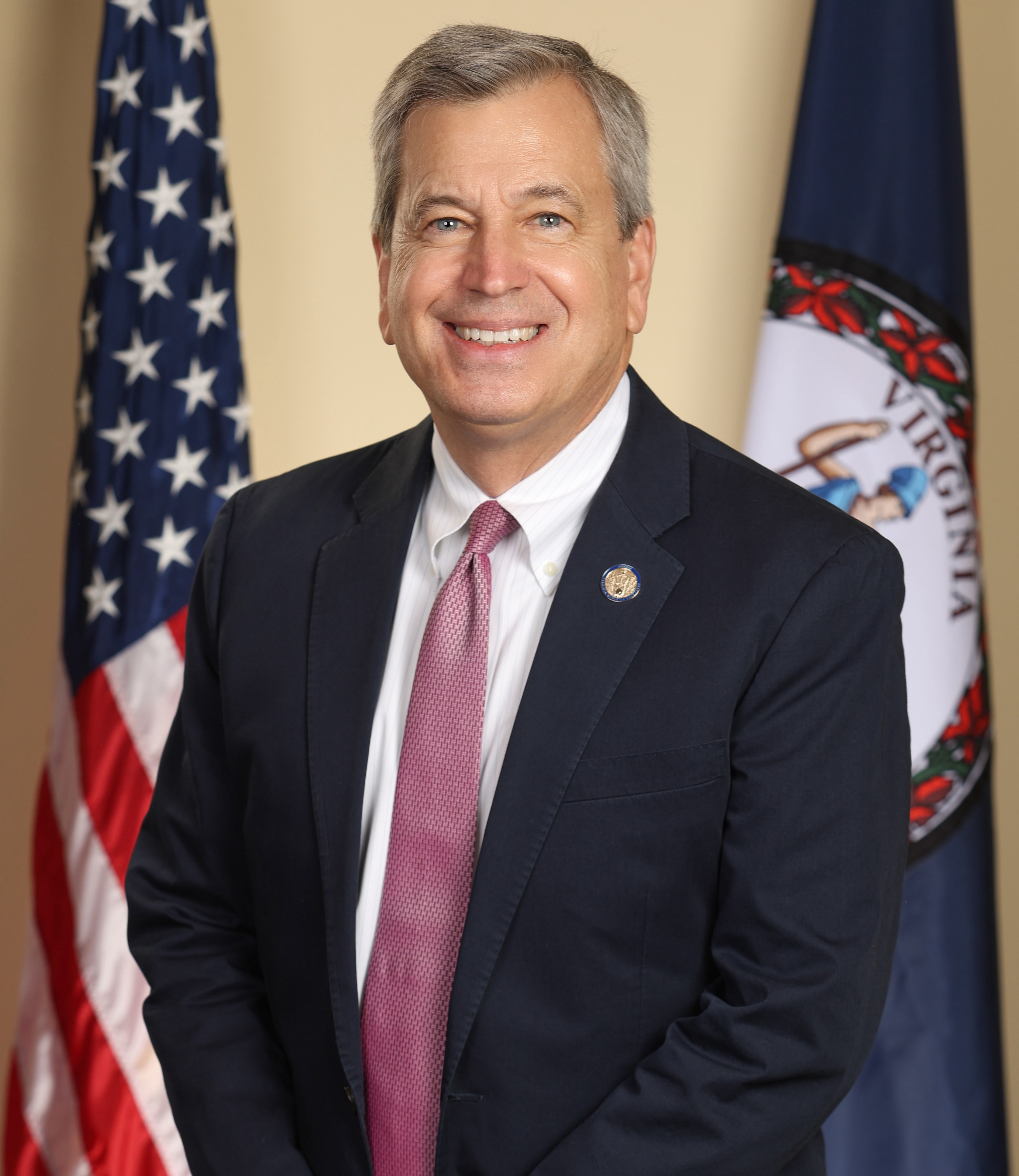
Del. Rip Sullivan
Sponsored bills
Wrongful incarceration; compensation. Provides that any person who is convicted of a felony by a county or city circuit court of the Commonwealth and is wrongfully incarcerated for such felony shall receive, in addition to the compensation for wrongful incarceration specified under current law, not less than $30,000 for each year or fraction thereof (i) of imprisonment after being sentenced to death, (ii) served on parole or postrelease supervision, or (iii) that such person was required to register with the Sex Offender and Crimes Against Minors Registry. The bill further requires that the amount paid to the person wrongfully incarcerated shall be in the form of a lump sum; under current law, only the initial 25 percent of an award is required to be paid in lump sum form.The bill further removes (a) the requirement that a wrongfully incarcerated person who is compensated is required to execute a release and waiver releasing the Commonwealth or political subdivision thereof from any present or future claims the person receiving compensation may have against such entity and arising out of the factual situation in connection with the conviction for which compensation is being sought and (b) the bar against receiving compensation if such wrongfully incarcerated person received any funds pursuant to a settlement agreement with any person or entity for compensation or damages arising out of the factual situation in connection with the conviction. The bill replaces such requirement with a provision allowing for the wrongful incarceration compensation award to be offset by any such award in a civil action or settlement.
Standards for attorneys appointed to represent parents or guardians; child dependency cases; compensation; multidisciplinary law offices or programs; report. Requires the Judicial Council of Virginia, in conjunction with the Virginia State Bar, beginning July 1, 2026, to adopt standards for the qualification and performance of attorneys appointed to represent a parent or guardian of a child when such child is the subject of a child dependency case, as defined in the bill. The bill also requires the Judicial Council of Virginia, beginning July 1, 2026, to maintain a list of attorneys admitted to practice law in Virginia who are qualified to be appointed to represent indigent parents involved in a child dependency case. Prior to July 1, 2026, counsel must be appointed from the list of attorneys qualified to serve as guardians ad litem. The bill provides that beginning January 1, 2025, court-appointed counsel for a parent, guardian, or other adult in a child dependency case will be compensated in an amount no greater than $330, or in a case for the termination of residual parental rights, $680.The bill authorizes the establishment of up to two multidisciplinary law offices or programs in localities, jurisdictions, or judicial districts that affirm they have met specified criteria for the purpose of representing parents in a child dependency court proceeding or in a child protective services assessment or investigation prior to such proceeding. During any calendar year that such an office or program is in effect for at least six months, the office or program must submit a report on program outcomes, expenses, recommendations, and other pertinent information to the Office of the Children's Ombudsman and the Chairmen of the House Committees for Courts of Justice and on Health and Human Services and Appropriations and the Senate Committees for Courts of Justice and on Education and Health and Finance and Appropriations by November 1.
Nurse practitioners; autonomous practice. Lowers from five years to three years the amount of full-time clinical experience required before an advanced practice registered nurse may practice without a practice agreement and permits qualified nurse practitioners to attest that a nurse practitioner may be qualified to practice without a practice agreement. The bill permits advanced practice registered nurses to practice without a practice agreement when a patient care team physician is no longer able to serve if such advanced practice registered nurse provides evidence that he meets the requirements to practice without a practice agreement as established by the bill. Finally, the bill requires the Department of Health Professions to collect data on the implementation of the bill and make such data publicly available on its website.
Advisory Council on Pediatric Autoimmune Neuropsychiatric Disorders Associated with Streptococcal Infections and Pediatric Acute-Onset Neuropsychiatric Syndrome; sunset. Extends from July 1, 2020, to July 1, 2028, the sunset of the Advisory Council on Pediatric Autoimmune Neuropsychiatric Disorders Associated with Streptococcal Infections and Pediatric Acute-Onset Neuropsychiatric Syndrome.
Child labor offenses; civil penalties. Increasesfrom $10,000 to $25,000 the civil penalty for each violation of childlabor laws that results in the employment of a child who is seriouslyinjured or dies in the course of employment. The bill also increasesfrom $1,000 to $2,500 the maximum civil penalty for each other violationof child labor laws and provides that such civil penalty shall notbe less than $500. The bill directs the Department of Labor and Industry to convene a stakeholder work group to develop education and outreach plans to inform young workers and employers about child labor laws.
Health insurance; ethics and fairness in carrier business practices. Makes various changes to requirements governing the business practices of health carriers in the processing and payment of claims. The bill prescribes criteria for what constitutes a "clean claim." The bill prohibits a carrier from imposing any retroactive denial of a previously paid claim or in any other way seeking recovery or refund of a previously paid claim unless the carrier specifies in writing the specific claim or claims for which the retroactive denial is to be imposed or the recovery or refund is sought and the carrier has provided a written explanation of why the claim is being retroactively adjusted. The bill provides that the time limit for a retroactive denial is 12 months; however, a provider and a carrier may agree in writing that recoupment of overpayments by withholding or offsetting against future payments may occur after such 12-month limit. The bill requires carriers, beginning no later than July 1, 2025, to make available an electronic means for providers to determine whether an enrollee is covered by a health plan that is subject to the State Corporation Commission's jurisdiction. The bill provides that the ethics and fairness requirements apply to the carrier and provider, regardless of any vendors, subcontractors, or other entities that have been contracted by the carrier or the provider to perform their duties. The bill provides that if a carrier's claim denial is overturned following completion of a dispute review, the carrier is required to consider the claims impacted by such decision as clean claims and all applicable laws related to the payment of a clean claim apply. The bill prohibits a provider from filing a complaint with the State Corporation Commission for failure to pay claims unless such provider has made a reasonable effort to confer with the carrier in order to resolve the issues related to all claims that are under dispute. Finally, the bill requires all provider contracts, amendments, and notices and certain other communications to be delivered electronically. This bill is identical to SB 425.
Hate crimes and discrimination; ethnic animosity; penalties. Provides that it is the policy of the Commonwealth to safeguard all individuals within the Commonwealth from unlawful discrimination in employment and in places of public accommodation because of such individual's ethnic origin and prohibits such discrimination. The bill also adds victims who are intentionally selected because of their ethnic origin to the categories of victims whose intentional selection for a hate crime involving assault, assault and battery, or trespass for the purpose of damaging another's property results in a higher criminal penalty for the offense. The bill also provides that no provider or user of an interactive computer service on the Internet shall be liable for any action voluntarily taken by it in good faith to restrict access to material that the provider or user considers to be intended to incite hatred on the basis of ethnic origin. This bill is identical to SB 7.
Insurance; conducting business by electronicmeans. Authorizes a plan sponsor of a health benefit plan, including a dental or vision benefit plan, to agree on behalf of a party enrolled in the sponsored health benefit plan to conduct business by electronic means, provided that the plan sponsor, prior to agreeing on behalf of the party, has confirmed that the party routinely uses electronic communications during the normal course of employment and has provided notice to the party regarding the ability to opt out of using electronic means at any time.
Board of Education; health education Standards of Learning; severe allergic reaction awareness training. Requires the Board of Education to include in the Standards of Learning for health education for grade nine and grade 10 an in-person or online severe allergic reaction awareness training that includes certain topics enumerated in the bill. The bill requires each school board to incorporate such severe allergic reaction awareness training into any health education instruction provided at grades nine and 10 beginning with the school year following the Board of Education's adoption of the revised Standards of Learning for health education for grades nine and 10 incorporating such severe allergic reaction awareness training and directs the Board to, in the intermediary time, develop and post on its website guidance documents for the purpose of making such severe allergic reaction awareness training available to school boards.