

Commending the University of Virginia men's basketball team.
Commending the University of Virginia men'sbasketball team.
Introduced Feb 24, 2020
1 co-sponsor
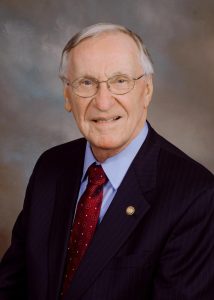
Commending the University of Virginia men'sbasketball team.
Celebrating the life of the Honorable GeraldL. Baliles.
Health insurance; mandated coverage for hearing aids for minors. Requires health insurers, health maintenance organizations, and corporations providing health care coverage subscription contracts to provide coverage for hearing aids and related services for children 18 years of age or younger when a licensed audiologist prescribes such hearing aids and related services. The coverage includes one hearing aid per hearing-impaired ear, up to a cost of $1,500, every 24 months. The measure applies to policies, contracts, and plans delivered, issued for delivery, or renewed on and after January 1, 2021.
Commending the Chesapeake Bay Commission.
Safety belt system use in motor vehicles. Requires all occupants of motor vehicles to utilize a safety belt system. Current law requires the use of safety belts only by (i) occupants under the age of 18, (ii) drivers, and (iii) passengers 18 years of age or older occupying the front seat. The bill changes a violation of safety belt system requirements by a person occupying a front seat from a secondary offense to a primary offense. This bill was incorporated into HB 1414.
Commemorating the life and legacy of Dr. RobertRussa Moton.
Virginia Diverse Educator Scholarship Fund and Program established. Establishes the Virginia Diverse Educator Scholarship Fund and Program, to be administered by the State Council of Higher Education for Virginia, for the purpose of annually providing to each Historically Black College or University in the Commonwealth (Hampton University, Norfolk State University, Virginia State University, and Virginia Union University) such sums as are necessary for each such institution to annually provide scholarships on a competitive basis to no more than two students who (i) identify as African American, Asian, Hispanic or Latino, Native American or Native Alaskan, or Native Hawaiian or Pacific Islander; (ii) are accepted to or enrolled in such institution's education preparation program; and (iii) are eligible for a federal Pell Grant to attend such institution. The bill provides that each such scholarship would consist of the following sums: (a) the cost of tuition, mandatory fees, room and board, and textbooks at such institution; (b) the recipient's teacher licensure fees; (c) $5,000 toward teacher professional development activities for the recipient, including coursework, seminars, and conferences; and (d) $10,000 toward mentorship of the recipient by an experienced teacher who is deemed by the relevant school board to be highly effective and able to provide high quality mentorship. The bill requires each student who is awarded a scholarship pursuant to the Program to agree in writing to (1) teach in a public elementary or secondary school in the Commonwealth in which at least 75 percent of the enrolled students qualify for free or reduced price lunch or are members of families whose income is below the federal poverty guidelines established by the U.S. Department of Health and Human Services upon graduation for a period that is at least as long as the period during which the recipient used scholarship funds to attend a Historically Black College or University and (2) be mentored by an experienced teacher, as described in clause (d), during such period of employment.
Fossil fuel projects moratorium; clean energy mandates; civil penalties; Green New Deal Act. Establishes a moratorium, effective January 1, 2021, on approval by any state agency or political subdivision of any approval required for (i) electric generating facilities that generate fossil fuel energy through the combustion of a fossil fuel resource; (ii) import or export terminals for fossil fuel resources; (iii) certain maintenance activities relating to an import or export terminal for a fossil fuel resource; (iv) gathering lines or pipelines for the transport of any fossil fuel resource that requires the use of eminent domain on private property; (v) certain maintenance activities relating to such gathering lines or pipelines; (vi) refineries of a fossil fuel resource; and (vii) exploration for any type of fossil fuel, unless preempted by applicable federal law. The measure also requires that at least 80 percent of the electricity sold by a retail electric supplier in calendar years 2028 through 2035 be generated from clean energy resources. In calendar year 2036 and every calendar year thereafter, 100 percent of the electricity sold by a retail electric supplier is required to be generated from clean energy resources. The clean energy mandates apply to a public utility or other person that sells not less than 1,000 megawatt hours of electric energy to retail customers or generates not less than 1,000 megawatt hours of electric energy for use by the person. The Director of the Department of Mines, Minerals and Energy is authorized to bring actions for injunctions to enforce these requirements. The measure requires the Department to adopt a Climate Action Plan that addresses all aspects of climate change, including mitigation, adaptation, resiliency, and assistance in the transition from current energy sources to clean renewable energy. The measure provides that residents of the Commonwealth and organizations shall have the legal standing to sue to ensure that its provisions and any Climate Action Plan are enforced. The measure requires (a) a 36 percent reduction in electric energy consumption in buildings by 2035, (b) the establishment of job training programs and energy worker protections, (c) transitional assistance for workers in the fossil fuel industry and affected communities, and (d) environmental justice protections. The measure provides that any retail electric supplier that fails to meet any goal or benchmark is liable for a civil penalty equal to twice the cost of the financial investment necessary to meet such goal or mandate that was not achieved, or three times the cost of the financial investment necessary to meet such goal or benchmark that was not achieved if not met in an environmental justice community, defined in the bill.
Earned paid sick time. Requires public and private employers with six or more employees to provide those employees with earned paid sick time. The measure provides for an employee to earn at least one hour of paid sick leave benefit for every 30 hours worked. An employee shall not use more than 40 hours of earned paid sick time in a year, unless the employer selects a higher limit. Employees shall not be entitled to use accrued earned paid sick time until the ninetieth calendar day following commencement of their employment, unless otherwise permitted by the employer. The bill provides that earned paid sick time may be used (i) for an employee's mental or physical illness, injury, or health condition; an employee's need for medical diagnosis, care, or treatment of a mental or physical illness, injury, or health condition; or an employee's need for preventive medical care; (ii) to provide care to a family member under similar circumstances; (iii) when there is a closure of the employee's place of business or the employee's child's school or place of care due to a public health emergency; or (iv) when an employee's or employee's family member's presence in the community may jeopardize the health of others because of their exposure to a communicable disease. The bill authorizes the Commissioner of Labor and Industry, in the case of a knowing violation, to subject an employer to a civil penalty not to exceed $150 for the first violation, $300 for the second violation, and $500 for each successive violation, if the second or successive violation occurs within two years of the previous violation. The Commissioner of Labor and Industry may institute proceedings on behalf of an employee to enforce compliance with this measure and to collect specified amounts from the employer, which shall be awarded to the employee. Alternatively, an aggrieved employee is authorized to bring a civil action against the employer in which he may recover double the amount of any unpaid earned sick time and the amount of any actual damages suffered as the result of the employer's violation. The measure has a delayed effective date of January 1, 2021. This bill incorporates HB 418 and HB 1684.
Standards of Quality; work-based learning; teacher leadersand mentors; principal mentors; certain personnel positions and initiatives. Makesseveral changes to the Standards of Quality, including requiring the establishmentof units in the Department of Education to oversee work-based learning andprincipal mentorship statewide in Standard 1 and requiring the Board ofEducation to establish and oversee the local implementation of teacher leaderand teacher mentor programs in Standard 5. The bill also makes several changesrelating to school personnel in Standard 2, including (i) establishingschoolwide ratios of students to teachers in certain schools with highconcentrations of poverty and granting flexibility to provide compensationadjustments to teachers in such schools; (ii) requiring each school board toassign licensed personnel in a manner that provides an equitable distributionof experienced, effective teachers and other personnel among all schools in thelocal school division; (iii) requiring each school board to employ teacherleaders and teacher mentors at specified student-to-position ratios; (iv)requiring state funding in addition to basic aid to support at-risk studentsand granting flexibility in the use of such funds by school boards; (v)lowering the ratio of English language learner students to teachers; (vi)requiring each school board to employ reading specialists and establishing astudent-to-position ratio for such specialists; (vii) requiring school boardsto employ one full-time principal in each elementary school; (viii) loweringthe ratio of students to assistant principals and school counselors inelementary, middle, and high schools; and (ix) requiring each school board toprovide at least four specialized student support positions, including schoolsocial workers, school psychologists, school nurses, and other licensed healthand behavioral positions, per 1,000 students.