

Public elementary and secondary schools; threat assessment team membership; law-enforcement liaison for certain school administrators. Requires, in the case of any public elementary or secondary school in which a school resource officer is employed, the threat assessment team for such school to include at least one such school resource officer. The bill requires the chief local law-enforcement officer for any local school division in which a public elementary or secondary school does not employ a school resource officer to designate a law-enforcement officer to receive, either in-person or online, the school safety training for public school personnel conducted by the Virginia Center for School and Campus Safety in accordance with relevant law and requires such officer to serve as the law-enforcement liaison for the school administrator in such a school who has also received such training as prescribed by relevant law.
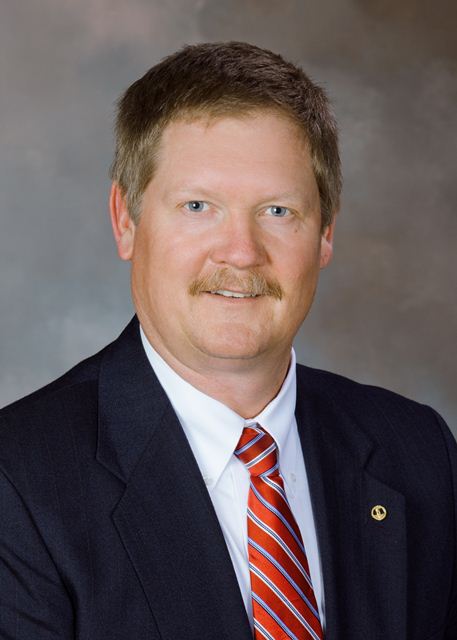
Del. Tony Wilt
Sponsored bills
Group health benefit plans; bona fide associations; formation of benefits consortium. Provides that certain trusts constitute a benefits consortium and are authorized to sell health benefit plans to members of a sponsoring association that (i) has been formed and maintained in good faith for purposes other than obtaining or providing health benefits; (ii) does not condition membership in the sponsoring association on any factor relating to the health status of an individual, including an employee of a member of the sponsoring association or a dependent of such an employee; (iii) makes any health benefit plan available to all members regardless of any factor relating to the health status of such members or individuals eligible for coverage through a member; (iv) does not make any health benefit plan available to any person who is not a member of the association; (v) makes available health plans or health benefit plans that meet requirements provided for in the bill; (vi) operates as a nonprofit entity under § 501(c)(5) or 501(c)(6) of the Internal Revenue Code; and (vii) has been in active existence for at least five years. The bill replaces references to "bona fide association," as used in provisions applicable to health care plans in the small employer market, with the term "sponsoring association."The bill requires any health benefit plan issued by a self-funded multiple employer welfare arrangement (MEWA) that covers one or more employees of one or more small employers to (a) provide essential health benefits and cost-sharing requirements; (b) offer a minimum level of coverage designed to provide benefits that are actuarially equivalent to 60 percent of the full actuarial value of the benefits provided under the plan; (c) not limit or exclude coverage for an individual by imposing a preexisting condition exclusion on that individual; (d) be prohibited from establishing discriminatory rules based on health status related to eligibility or premium or contribution requirements as imposed on health carriers; (e) meet the renewability standards set forth for health insurance issuers; (f) establish base rates formed on an actuarially sound, modified community rating methodology that considers the pooling of all participant claims; and (g) utilize each employer member's specific risk profile to determine premiums by actuarially adjusting above or below established base rates, and utilize either pooling or reinsurance of individual large claimants to reduce the adverse impact on any specific employer member's premiums.The bill prohibits a self-funded MEWA from issuing health benefit plans in the Commonwealth until it has obtained a license pursuant to regulations promulgated by the State Corporation Commission. The bill authorizes the Commission to adopt regulations applicable to self-funded MEWAs, including regulations addressing financial condition, solvency requirements, and the exclusion of self-funded MEWAs from the Virginia Life, Accident and Sickness Insurance Guaranty Association. This bill is identical to SB 195.
Academic year Governor's Schools; certain practices prohibited and permitted. Prohibits any academic year Governor's School or governing board member, director, administrator, or employee thereof from (i) discriminating against or granting preferential treatment to any individual or group on the basis of race, sex, color, ethnicity, or national origin; (ii) engaging in proxy discrimination, as defined in the bill, in student admissions; or (iii) seeking information on students' race, sex, color, ethnicity, or national origin during the application process for admission to such school unless expressly required by federal law, and to the extent it is required by federal law, the bill requires such information to be withheld to the maximum extent practicable from any individual involved in admissions decisions to the end that admissions decisions are blind as to the applicants' race, sex, color, ethnicity, and national origin. The bill permits any academic year Governor's School or governing board member, director, administrator, or employee thereof to use traditional academic success factors, as defined in the bill, in student admissions and provides that such use presumptively does not constitute proxy discrimination. The bill also contains provisions relating to evidentiary burdens of proof in certain causes of action involving such proxy discrimination or traditional academic success factors. The bill requires each local school board that jointly manages and controls a regional academic year Governor's school to collaborate to ensure that each public middle school that is eligible to send students to attend such Governor's school offers coursework, curriculum, and instruction that is comparable in content and in rigor in order to provide each student in each such middle school with the opportunity to gain admission to and excel academically at such Governor's school.
Public institutions of higher education; academiccredit; education, experience, training, and credentials in ArmedForces of the United States. Requires, no later than the beginningof the 2022-2023 academic year, (i) the governing board of each public institution of higher education to collaborate with the State Councilof Higher Education for Virginia (the Council), the federal Departmentof Defense, and nationally recognized regional accreditation bodies to map the existing opportunities to earn education, experience,training, and credentials in the Armed Forces of the United Statesto the award of academic credit in public institutions of highereducation in the Commonwealth and (ii) in accordance with such collaborativemapping, the Council to update its guidelines developed and the governingboard of each public institution of higher education to update itspolicies implemented pursuant to relevant law for the purpose ofawarding academic credit to students for such education, experience, training, and credentials.
Slaughter and meat-processing facilities. Establishes that it is the policy of the General Assembly to encourage, expand, and develop slaughter and meat-processing facilities through strategic planning and financial incentive programs. The bill directs the Department of Agriculture and Consumer Services to develop a five-year strategic plan to increase total combined throughput capacity of slaughter and meat-processing facilities. This bill is identical to SB 726.
Fertilizer; digestate. Clarifies that a regulated product, for the purposes of fertilizer law, includes digestate. Digestate is defined in the bill as a biologically stable material derived from the process of anaerobic digestion. The bill also includes digestate in fertilizer labeling requirements. This bill is identical to SB 248.
Food and drink law; permitting requirements. Requires any food manufacturer, food storage warehouse, and retail food establishment to obtain a permit from the Commissioner of Agriculture and Consumer Services prior to operating. Any such entity issued a permit is exempt from any other license, permit, or inspection required for the sale, preparation, or handling of food. The bill requires the Commissioner to notify such entities of the reason for denial of a permit and requires that any denial, suspension, or revocation of a permit be carried out in accordance with the Administrative Process Act. The provisions of the bill do not become effective until January 1, 2023, for those localities that currently have a local food inspection or permitting ordinance in place.
School counselors; staffing ratios; flexibility. Permits school boards to fulfill the staffing ratio requirements for school counselors by (i) employing, under a provisional license issued by the Department of Education for three school years with an allowance for an additional two-year extension with the approval of the division superintendent, any professional counselor licensed by the Board of Counseling, clinical social worker licensed by the Board of Social Work, psychologist licensed by the Board of Psychology, or other licensed counseling professional with appropriate experience and training, provided that any such individual makes progress toward completing the requirements for full licensure as a school counselor during such period of employment or (ii) in the event that the school board does not receive any application from a licensed school counselor, professional counselor, clinical social worker, or psychologist or another licensed counseling professional with appropriate experience and training to fill a school counselor vacancy in the school division, entering into an annual contract with another entity for the provision of school counseling services by a licensed professional counselor, clinical social worker, or psychologist or another licensed counseling professional with appropriate experience and training.
Admission into evidence of certain forensic medical examination reports by sexual assault nurse examiners and sexual assault forensic examiners; testimony by two-way video conferencing. Allows testimony offered by either party in a preliminary hearing or sentencing hearing, or offered by the accused in any hearing other than a trial, by a sexual assault nurse examiner or sexual assault forensic examiner who performed a forensic medical examination to be presented by two-way video conferencing. The bill also allows such testimony to be presented by two-way video conferencing when offered by either party in a trial or by the attorney for the Commonwealth in a hearing other than a preliminary hearing or sentencing hearing, with the consent of the court and all parties.
Secretary of Transportation; commercial driver's licenses. Directs the Secretary of Transportation, in consultation and working with various agencies of the Commonwealth, to promote and implement various initiatives related to commercial driver's licenses. The bill sunsets on July 1, 2023.