

School boards; participation in SAT School Day program required; student participation. Requires each school board to (i) participate in the SAT School Day program (the program) or any similar program offered by the College Board whereby high school students are permitted to take the SAT during regular school hours at the high school at which they are enrolled and (ii) offer each high school student in the school division the opportunity to take the SAT pursuant to the program at least once during the student's junior or senior year, in either the fall testing window or the spring testing window at the public high school at which the student is enrolled, provided that (a) no such student shall be required to participate in the program and (b) if the school board offers such opportunity during the fall testing window, the school board shall, to the extent feasible, align the days on which it offers such opportunity with the PSAT testing window and offer high school students in the school division to take either the SAT or the PSAT, as applicable, during regular school hours at the high school on the same school day.
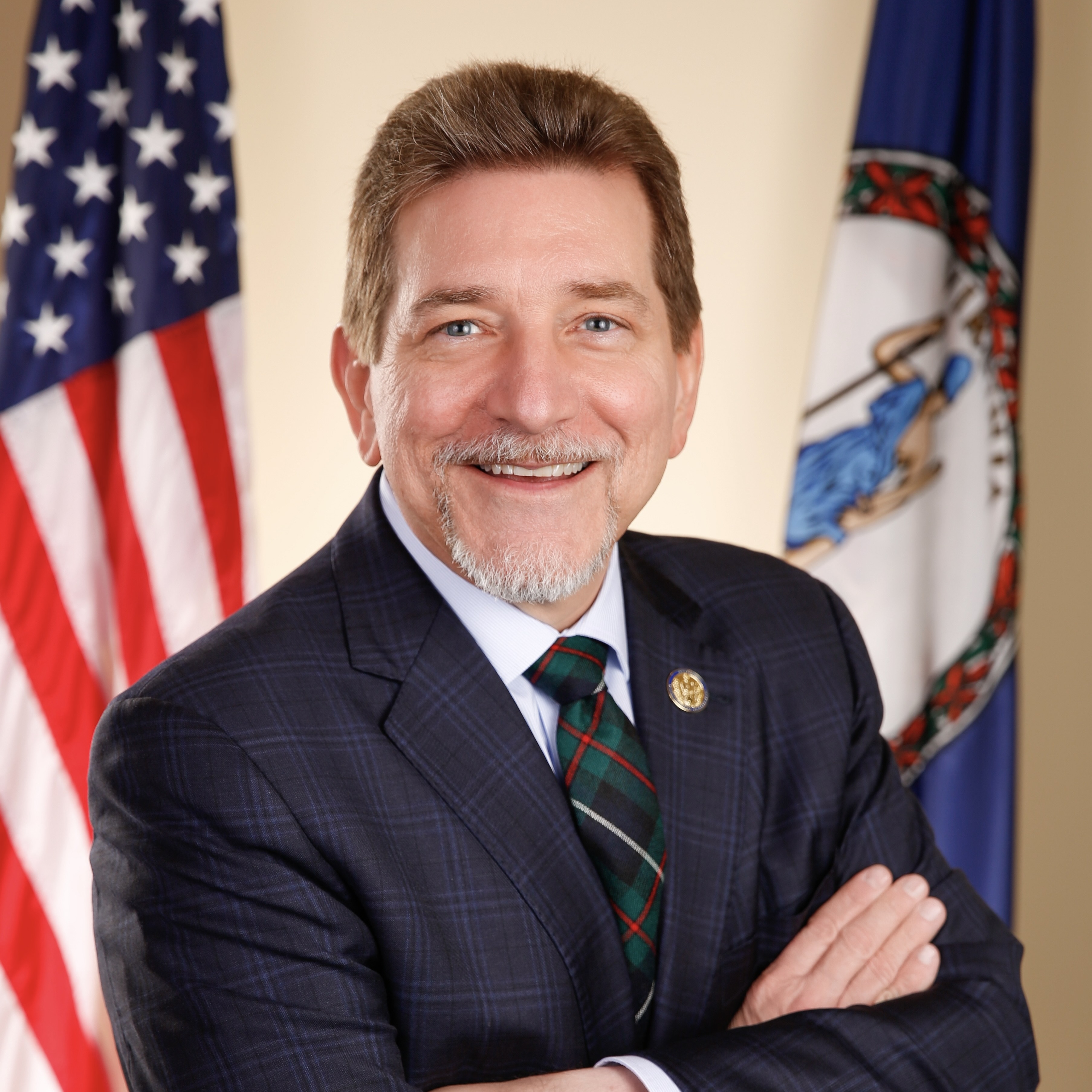
Del. David Reid
Sponsored bills
Suicide Prevention Program Coordinator; deaths by suicide of veterans or military service members; State Registrar of Vital Records; Department of Veterans Services annual report. Adds to the duties of the Suicide Prevention Coordinator within the Department of Veterans Services the duty to (i) compile and analyze data relating to the suicides of veterans and military service members pursuant to death certificates filed with the State Registrar of Vital Records, with such data to be included in the Department's annual report, and (ii) collaborate with the Department of Behavioral Health and Developmental Services to develop programs and resources related to suicide prevention for veterans and military service members. The bill provides that in any case where the death certificate of a veteran or military service member lists suicide as the manner of death, the State Registrar of Vital Records shall provide such information concerning the suicide to the Department.
Expedited approval for certain affordable housing developments. Allows a locality, by ordinance, to authorize a zoning administrator to use an administrative process to approve rezoning applications for certain affordable housing developments. The bill requires that the affordable housing development comply with the Virginia Fair Housing Law, connect to a public or community water supply or sewage system, and be located within or adjacent to an area identified by the locality that could support increased density development and provide access to services. The bill also requires the locality, prior to the adoption of such ordinance, to advertise its intention to propose such ordinance within a certain period of time in a newspaper having a general circulation in the locality. The bill allows the Department of Housing and Community Development to give a locality priority for any grants or loans administered by the Department if such locality demonstrates to the Department's satisfaction that its ordinance has met the provisions of the bill. Finally, the bill requires certain localities that adopt such ordinance to include in their annual local housing policy report to the Department a summary of the ordinance.
Minimum wage. Increases the minimum wage incrementally to $15.00 per hour by January 1, 2028. The bill codifies the adjusted state hourly minimum wage of $12.77 per hour that is effective January 1, 2026, and increases the minimum wage to $13.75 per hour effective January 1, 2027, and to $15.00 per hour effective January 1, 2028. Effective January 1, 2029, and annually thereafter, the bill requires the minimum wage to be adjusted to reflect increases in the consumer price index. This bill is identical to SB 1.
Contraception; right to contraception; applicability; enforcement. Establishes a right to obtain contraceptives and engage in contraception, as such terms are defined in the bill. The bill clarifies that none of its provisions shall be construed to permit or sanction the performance of any sterilization procedure without a patient's voluntary and informed consent. The bill creates a cause of action that may be instituted against anyone who infringes on such right. This bill is identical to SB 596.
Plastic bag tax; distribution to towns. Requires that any town located within a county that has imposed a disposable plastic bag tax receive a distribution of revenues collected by the county based on the local sales tax distribution formula for appropriations to towns. The bill restricts a town's use of such revenues to the same purposes allowable for a county or city.
Virginia Passenger Rail Authority; exemptions. Exempts the Virginia Passenger Rail Authority from certain requirements, procurement and technology procedures, fees, and charges and expands certain existing exemptions to which it is already entitled.
Commissioner of Highways; certain agreements with the U.S. Department of Transportation; National Environmental Policy Act. Authorizes the Commissioner of Highways to enter into agreements for a term of five years with the U.S. Department of Transportation, as provided for in federal law, regarding state assumption of responsibility for categorical exclusions and the Surface Transportation Project Delivery Program. The bill authorizes the Department of Transportation to assume certain responsibilities of the U.S. Secretary of Transportation pursuant to such agreement. Under the bill, the Commonwealth waives its immunity from civil suit in a federal court under certain circumstances. The bill contains an expiration date of five years after the date on which the first agreement is entered into. This bill is identical to SB 716.
Appointment of youth representative to local governing body. Allows a local governing body to appoint a youth representative to serve as a nonvoting member of the governing body.
Passing a stopped school bus; divided highways, access roads, and certain driveways. Clarifies that the exemption from the requirement for a driver of a motor vehicle to stop for a stopped school bus if such bus is stopped on the other roadway of a divided highway, on an access road, or on a driveway when the other roadway, access road, or driveway is separated from the roadway on which he is driving by a physical barrier or an unpaved area applies regardless of whether the physical barrier or unpaved area is continuous or segmented when necessary to accommodate an intersection or turning vehicles.