

Speed safety cameras; placement and operation. Changes the terms "photo speed monitoring device" to "speed safety camera" and "high-risk intersection segment" to "high-risk speed corridor" in provisions related to vehicle speed violations. The bill authorizes localities to provide by ordinance for the placement and operation of a speed safety camera by the law-enforcement agency of such locality in certain locations. The bill authorizes any locality without its own law-enforcement agency to, by ordinance, authorize officers of the law-enforcement agency with jurisdiction within such locality to issue a summons and swear to or affirm a certificate for a vehicle speed violation. For any new speed safety camera placed, the bill provides for a warning by mail instead of a summons and no civil penalty for alleged vehicle speed violations within the first 30 days of such camera's operation. The bill makes various other changes to the requirements for the use of speed safety cameras, including changes related to signs indicating the use of such cameras; the use of funds collected from civil penalties; requirements for private vendors; the periodic review of the use of such cameras; the provision of information to the public related to the use and placement of such cameras; the creation of advisory groups; and consultation with certain entities prior to placement and operation of such cameras.
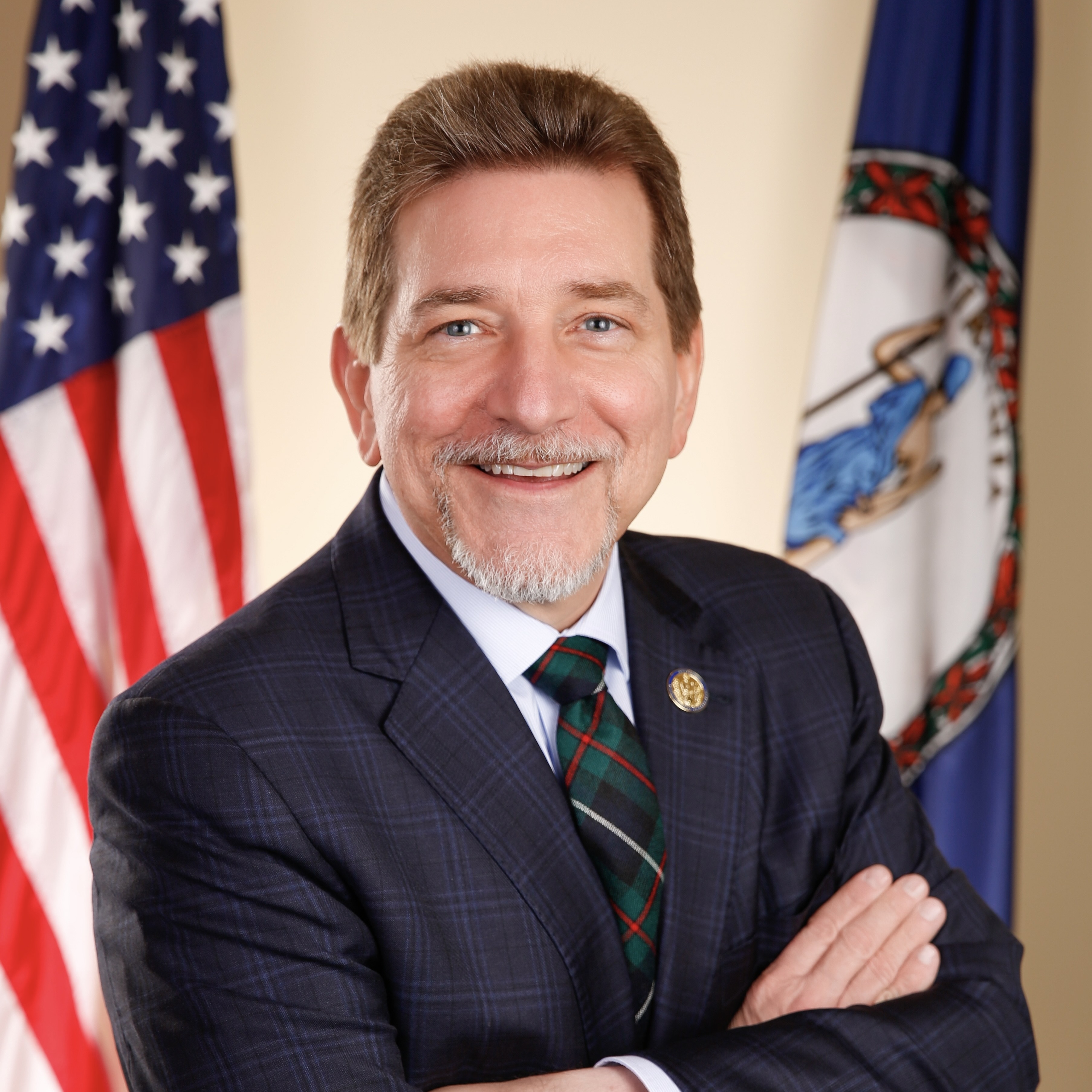
Del. David Reid
Sponsored bills
Future in Focus Program. Establishes the Future in Focus Program to provide services and support to individuals 21, 22, and 23 years of age who participated in the Fostering Futures program immediately prior to attaining 21 years of age. Such services and support shall be designed to assist participants in transitioning to adulthood, becoming self-sufficient, and creating permanent, positive relationships. The bill directs the State Board of Social Services to promulgate regulations to implement the bill's provisions.
Elections; general provisions; prohibited area. Adds the five feet beyond any area designated for voting outside the polling place to the prohibited area where campaigning and certain other activities are unlawful during elections.
Equity in public school funding and staffing; special education students; at-risk students; English language learner students; report. Requires state-funded add-ons to be provided to support special education students that are calculated by multiplying weights set forth in the general appropriation act by the relevant basic aid per-pupil amount for each such student. The bill establishes the At-Risk Program for the purpose of supporting programs and services for students who are educationally at risk, including prevention, intervention, or remediation activities required pursuant to relevant law, teacher recruitment programs and initiatives, programs for English language learners, the hiring of additional school counselors and other support staff, and other programs relating to increasing the success of disadvantaged students in completing a high school degree and providing opportunities to encourage further education and training. The bill also contains provisions relating to certain funding requirements for the At-Risk Program. The bill requires the Department of Education to develop and implement a data collection process related to English language learner expenditures and student English proficiency levels and identify other options to support English language learners and provide a status report to the Joint Subcommittee on Elementary and Secondary Education Funding on its implementation and data collection efforts by September 1, 2025. Finally, the bill requires the Department of Education, in collaboration with the Department of Behavioral Health and Developmental Services or any other relevant stakeholders with expertise in special education as the Department of Education deems appropriate, to develop a plan for revised special education staffing requirements that addresses the staffing needs of each special education program in each school division as determined by the specific educational and behavioral support needs of students who receive special education and aims to improve special education teacher recruitment and retention and to report its findings to the Joint Subcommittee on Elementary and Secondary Education Funding by November 1, 2025. The bill is a recommendation of the Joint Legislative Audit and Review Commission. This bill incorporates HB 1831.
First-time Homebuyer Grant Program. Establishes a First-time Homebuyer Grant Program for the purpose of assisting first-time homebuyers with first-time homebuyer expenses, as those terms are defined in the bill. The bill provides that the Department of Housing and Community Development shall award eligible first-time homebuyers a grant in an amount equal to five percent of such expenses incurred during a calendar year, not to exceed $10,000. Any grant awarded pursuant to the Program shall be repaid to the Commonwealth if the property for which expenses were incurred is sold within three years from the purchase date, unless the sale is made following a natural disaster or other act of God.
Pari-mutuel wagering; historical horse racing; percentage retained for distribution. Provides that with respect to all authorized historical horse racing terminals, of the amount that a horse racing licensee retains from wagering on historical horse racing pools and in addition to the current distribution required under law, 0.0125 percent each shall be distributed to the Shenandoah County Agricultural Foundation and the Great Meadow Foundation to support the promotion, education, maintenance, and safety of horse racing at such facilities. The bill also increases the distribution percentage provided from the amount that a horse racing licensee retains from wagering on historical horse racing pools to the Problem Gambling Treatment and Support Fund from 0.01 percent to 0.025 percent.
Maddy summaryThis is a ceremonial resolution honoring the late state legislator Frank Miller Ruff, Jr. It does not create new laws or affect any policies or people. The resolution formally commemorates his service and life through a symbolic tribute. As a non-binding resolution, it has no practical impact beyond recognition.
Maddy summarySJ 307 is a commemorative resolution honoring Joy Ann Durham Painter. It does not create new laws or affect any policies, as it is a ceremonial resolution expressing recognition for an individual's life. The resolution passed both the Senate (January 30, 2025) and House (February 3, 2025) without amendments. It serves solely to acknowledge and celebrate Joy Ann Durham Painter's contributions.
Maddy summarySJ 309 is a ceremonial resolution commending Carlos Del Toro, former U.S. Secretary of the Navy. It does not create any new laws or affect policy; it is a non-binding expression of appreciation. The resolution passed unanimously in both the Senate (January 30) and House (February 3) by voice vote. It was formally adopted on February 4 and now resides on the Speaker's table. This type of resolution typically honors individuals for service or contributions without altering legal obligations or funding.
Maddy summaryThis is a commemorative resolution (SJ 308) honoring Garland Nuckols, a recognized individual in the community. It does not create new laws or affect policies; it is a symbolic gesture of recognition. The resolution passed unanimously in both the Senate and House, and is now awaiting final processing as a ceremonial measure. No substantive changes or direct impacts on constituents or legislation are involved.