Health insurance; cost-sharing payments for insulin and diabetes equipment and supplies; limit. Decreases the cap on the cost-sharing payment that a covered person is required to pay for a covered prescription insulin drug from $50 to $35 for a 30-day supply of the prescription insulin drug and provides such cap is an aggregate cap that applies in situations where the covered person is prescribed more than one insulin drug. The bill also establishes such an aggregate cap of $35 for a 30-day supply of diabetes equipment and supplies.
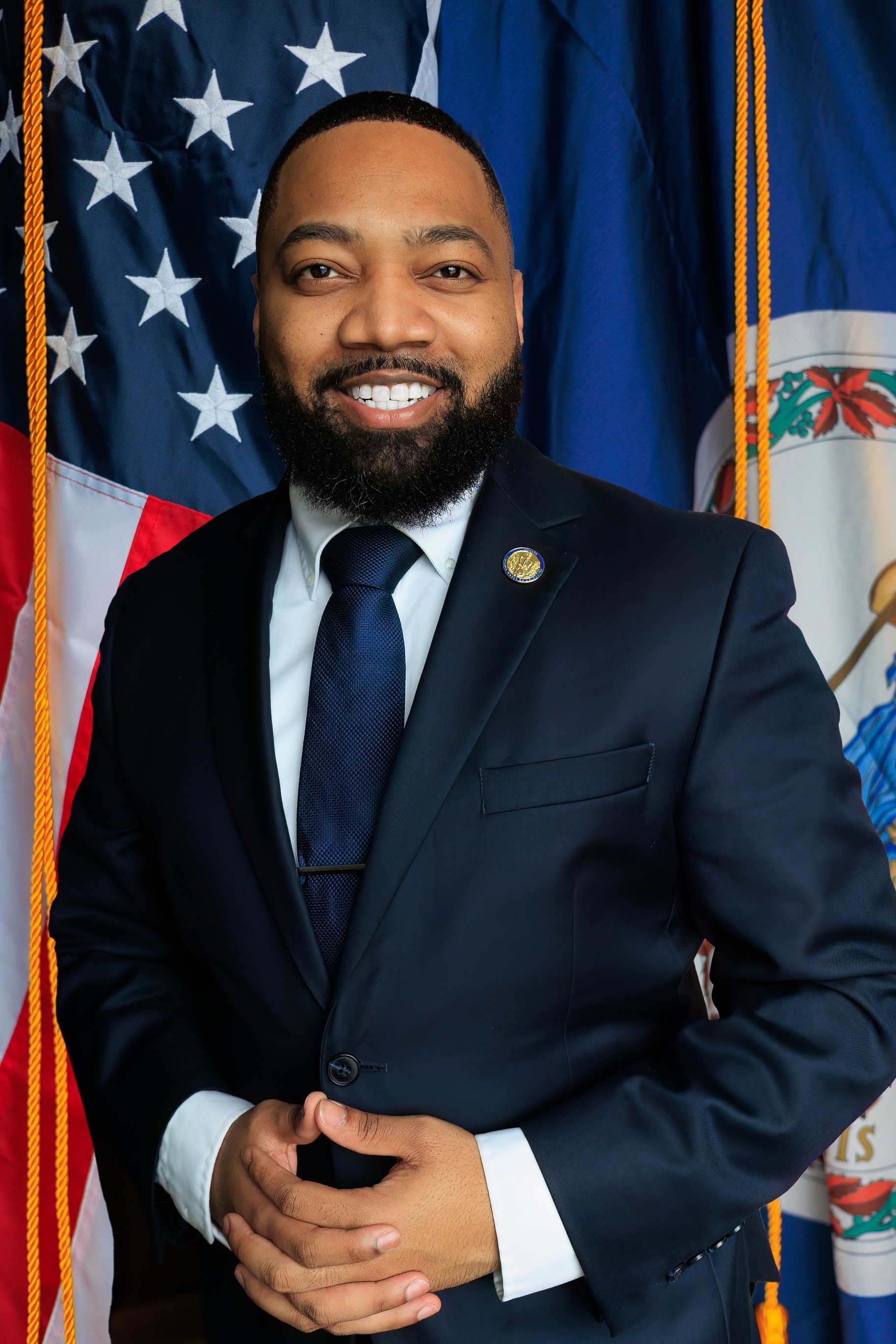
Del. J.R. Henson
Sponsored bills
Paid family and medical leave insurance program; notice requirements; civil action. Requires the Virginia Employment Commission to establish and administer a paid family and medical leave insurance program with benefits beginning April 1, 2028. Under the program, benefits are paid to covered individuals, as defined in the bill, for family and medical leave. Funding for the program is provided through premiums assessed to employers and employees beginning April 1, 2028. The bill provides that the amount of a benefit is 80 percent of the employee's average weekly net earnings, not to exceed 100 percent of the statewide average weekly net earnings, which amount is required to be adjusted annually to reflect changes in the statewide average weekly wage. The bill caps the duration of paid leave at 12 weeks in any application year and provides self-employed individuals the option of participating in the program. This bill is identical to SB 2.
Department of Education; culturally responsive and language-appropriate mental health support and services; guidance and policies. Requires, no later than October 1, 2027, the Department of Education to develop, adopt, and provide to each local school board guidance on the adoption of policies governing the provision of culturally responsive and language-appropriate mental health support and services for students in the local school division and permits any school board to develop and adopt policies in the local school division that are consistent with the guidelines adopted and provided by the Department of Education.
State correctional facilities; visitation policies; work group. Sets additional visitation standards for visitors to state correctional facilities. The bill requires the Department of Corrections (the Department) to provide extended or additional visitation access for long-distance visitors. The bill provides that each in-person visit shall last a minimum of two hours unless shortened at the request of either the visitor or the incarcerated individual, or in response to an active security event. The bill also provides that visitation privileges may be suspended only for conduct occurring during visitation that presents a direct and substantial threat to the physical safety of participants or the security of the correctional facility. The bill provides a timeline and process for appealing any suspension of visitation rights. Finally, the bill directs the Department to convene a work group to consider and develop practical policy and legislative recommendations regarding visitation. The work group is required to report its findings and specific legislative and policy recommendations to the General Assembly by October 1, 2026. This bill is identical to SB 276.
Prohibiting employer seeking wage or salary history of prospective employees; wage or salary range transparency; cause of action. Prohibits a prospective employer from (i) seeking the wage or salary history of a prospective employee; (ii) relying on the wage or salary history of a prospective employee in considering the prospective employee for employment; (iii) relying on the wage or salary history of a prospective employee in determining the wages or salary the prospective employee is to be paid upon hire; (iv) refusing to interview, hire, employ, or promote or otherwise retaliating against a prospective or current employee for not providing wage or salary history or requesting a wage or salary range; (v) failing or refusing to disclose in each public and internal posting for each job, promotion, transfer, or other employment opportunity the wage, salary, or wage or salary range; and (vi) failing to set a wage or salary range in good faith. The bill establishes a cause of action for an aggrieved prospective employee or employee and provides that an employer that violates such prohibitions is liable to the aggrieved prospective employee or employee for statutory damages between $1,000 and $10,000 or actual damages, whichever is greater, reasonable attorney fees and costs, and any other legal and equitable relief as may be appropriate. This bill incorporates HB 1164 and is identical to SB 215.

Virginia Residential Landlord and Tenant Act; Manufactured Home Lot Rental Act; retaliatory conduct prohibited. Adds numerous actions to the list of prohibited retaliatory actions by a landlord against a tenant under the Virginia Residential Landlord and Tenant Act and Manufactured Home Lot Rental Act and specifies actions by a tenant for which a landlord may not retaliate. The bill modifies and expands the list of actions a landlord may take without violating the prohibition on retaliation. The bill allows a tenant, when the landlord has unlawfully retaliated, to recover actual damages and to assert retaliation as a defense in any action brought against him for possession. The bill has a delayed effective date of January 1, 2027.
Virginia Commission to End Hunger; membership. Replaces the public school student representative with a representative of a public school nutrition program in the membership of the Virginia Commission to End Hunger. In addition, the bill adds five public school student liaisons, each representing a Virginia health planning region, to be appointed by the chair of the Commission. The bill provides that such student liaisons not be included for purposes of a quorum for meetings of the Commission.
Elections; general provisions; electoral board members to wear identification; civil penalty. Requires the Department of Elections to issue a standardized identification badge to the acting electoral board members of each locality. Electoral board members are required to wear such identification badge while conducting their official duties on the day of an election subject to a civil penalty in an amount not to exceed $1,000.
Employee Child Care Assistance Program established. Establishes the Employee Child Care Assistance Program to provide matching funds in order to incentivize employers to contribute to the child care costs of their employees. The Program shall be administered by the Virginia Early Childhood Foundation. To participate in the Program, an employer shall agree to make child care contributions to the eligible mixed delivery provider on behalf of the employee or to a third-party administrator, as defined by the bill, and shall provide any other information deemed necessary by the Foundation. The bill specifies that, to the extent funds are available, the Foundation shall issue a state match to a third-party administrator. Program funds shall be awarded on a first-come, first-served basis; however, the bill clarifies that the Foundation is encouraged to prioritize awards to proposals involving contributions from small businesses. The bill requires the Foundation to provide an interim report to the General Assembly by September 1, 2028, and a summative report to the General Assembly by September 1, 2030, on the effectiveness and impact of the Program.
Department of Military Affairs; feasibility of Sexual Offense Prevention and Response Officer; report. Directs the Department of Military Affairs to assess the feasibility of and develop recommendations related to establishing a Sexual Offense Prevention and Response Officer position within the Sexual Offense Prevention and Response Program to perform victim advocacy services. The bill requires the Adjutant General to report to the Governor, the Lieutenant Governor, the Speaker of the House of Delegates, and the Chairs of the House and Senate Committees for Courts of Justice no later than November 1, 2026.