

Virginia Center for Firearm Violence Intervention and Prevention; creation. Creates the Virginia Center for Firearm Violence Intervention and Prevention within the Department of Criminal Justice Services. The bill states that the Center will serve as the primary resource for research, best practices, and strategies for the implementation of firearm violence intervention, community-based intervention, and group violence intervention programs designed to reduce violence in communities. The bill also requires that the Center evaluate state and community based violence intervention programs and policies that receive funding through the Center, apply for and accept federal grants, and provide technical assistance. The bill has a delayed effective date of July 1, 2026.
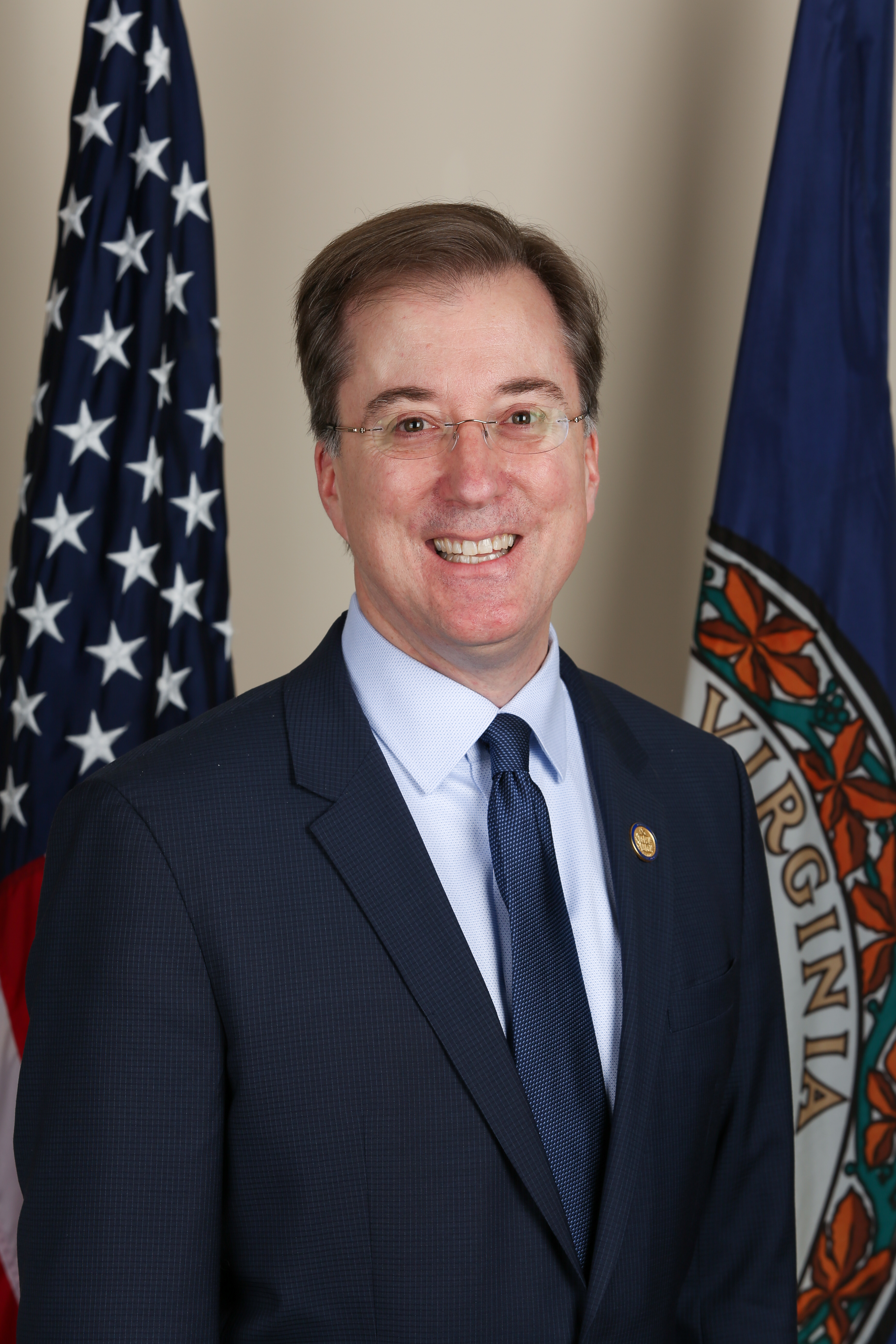
Del. Paul Krizek
Sponsored bills
Paid family and medical leave insurance program; notice requirements; civil action. Requires the Virginia Employment Commission to establish and administer a paid family and medical leave insurance program with benefits beginning January 1, 2028. Under the program, benefits are paid to covered individuals, as defined in the bill, for family and medical leave. Funding for the program is provided through premiums assessed to employers and employees beginning January 1, 2027. The bill provides that the amount of a benefit is 80 percent of the employee's average weekly wage, not to exceed 120 percent of the state weekly wage, which amount is required to be adjusted annually to reflect changes in the statewide average weekly wage. The bill caps the duration of paid leave at 12 weeks in any application year and provides self-employed individuals the option of participating in the program.
Virginia Public Procurement Act; solar photovoltaic equipment and facilities. Prohibits state and local agencies from including a provision in any request for proposal, procurement agreement, contract, ordinance, policy, permit, or accompanying document that directs the exclusion from use of any materials contained in or products associated with solar photovoltaic equipment and facilities that are manufactured in the United States. This bill is identical to SB 1165.
Minimum wage. Increases the minimum wage incrementally to $15.00 per hour by January 1, 2027. The bill codifies the adjusted state hourly minimum wage of $12.41 per hour that is effective January 1, 2025, and increases the minimum wage to $13.50 per hour effective January 1, 2026, and to $15.00 per hour effective January 1, 2027. The bill requires the Commissioner of Labor and Industry to establish an adjusted state hourly minimum wage by October 1, 2027.
Conservation and replacement of trees during development process. Expands certain existing local government authority to conserve or replace trees during the development process by expanding such authority statewide. The bill allows localities to establish higher tree canopy replacement percentages based on density per acre. The bill also alters the current process for granting exceptions to a local ordinance by altering a provision that requires the granting of an exception when strict application of the ordinance would result in unnecessary or unreasonable hardship to the developer and requiring that the locality concur with such alteration. The bill permits localities to monitor and assess the condition and coverage of tree canopies at development sites during the time period up to 20 years' maturity of the planted trees. The bill contains technical amendments.
Elections; political campaign advertisements; synthetic media; penalty. Prohibits electioneering communications containing synthetic media, as those terms are defined in the bill, from being published or broadcast without containing the following conspicuously displayed statement: "This message contains synthetic media that has been altered from its original source or artificially generated and may present conduct or speech that did not occur." The bill creates a civil penalty not to exceed $25,000 for a violation of such prohibition and, for a willful violation, a Class 1 misdemeanor. The bill permits any registered voter who receives an electioneering communication in violation of this requirement to institute an action for preventative relief to prohibit the publication or dissemination of such electioneering communication, including an application for a permanent or temporary injunction. This bill is identical to SB 775.
Land development; solar canopies in parking areas. Provides that any locality may include in its land development ordinances a provision that requires that an applicant must install a solar canopy over designated surface parking areas. Such provisions shall apply only to nonresidential parking areas with 100 parking spaces or more and may require coverage of up to 50 percent of the surface parking area. The bill provides that localities shall allow for deviations, in whole or in part, from the requirements of the ordinance when its strict application would prevent the development of uses and densities otherwise allowed by the locality's zoning or development ordinance. The bill has a delayed effective date of July 1, 2026.
Importation, sale, manufacture, etc., of assault firearms and certain ammunition feeding devices prohibited; penalties. Creates a Class 1 misdemeanor for any person who imports, sells, manufactures, purchases, or transfers an assault firearm, as that term is defined in the bill with some exceptions, and prohibits a person who has been convicted of such violation from purchasing, possessing, or transporting a firearm for a period of three years from the date of conviction. The bill provides that an assault firearm does not include any firearm that is an antique firearm, has been rendered permanently inoperable, is manually operated by bolt, pump, lever, or slide action, or was manufactured before July 1, 2025. The bill also prohibits the sale of a large capacity ammunition feeding device, as that term is defined in the bill. The bill provides that any person who willfully and intentionally (i) sells an assault firearm to another person or (ii) purchases an assault firearm from another person is guilty of a Class 1 misdemeanor and that any person who imports, sells, barters, or transfers a large capacity ammunition feeding device is guilty of a Class 1 misdemeanor. The bill also makes it a Class 1 misdemeanor for any person younger than 21 years of age to import, sell, manufacture, purchase, possess, transport, or transfer an assault firearm regardless of the date of manufacture of such assault firearm with some exceptions. This bill is identical to SB 1181.
Collective bargaining by public employees; exclusive bargaining representatives. Repeals the existing prohibition on collective bargaining by public employees. The bill creates the Public Employee Relations Board, which shall determine appropriate bargaining units and provide for certification and decertification elections for exclusive bargaining representatives of state employees and local government employees. The bill requires public employers and employee organizations that are exclusive bargaining representatives to meet at reasonable times to negotiate in good faith with respect to wages, hours, and other terms and conditions of employment. The bill repeals a provision that declares that, in any procedure providing for the designation, selection, or authorization of a labor organization to represent employees, the right of an individual employee to vote by secret ballot is a fundamental right that shall be guaranteed from infringement. The bill has a delayed effective date of July 1, 2026. This bill is identical to SB 917.
Gaming; fantasy contests; age restrictions. Increases from 18 years of age to 21 years of age the minimum age an individual must be to participate in fantasy contests.