

Conduct of law-enforcement officers; establishmentof an Early Identification System. Requires the Department ofCriminal Justice Services (the Department) to establish a best practicesmodel for the implementation, training, and management of an EarlyIdentification System (EIS). The bill defines an EIS as a systemthrough which a law-enforcement agency collects and manages datato identify and assess patterns of behavior, including misconductand high-risk behavior, or performance of law-enforcement officersand law-enforcement agency employees. The bill directs each sheriffor chief of police to implement an EIS by July 1, 2024, and requiresthat law-enforcement officers receive training prior to implementationof the EIS and annually thereafter. The bill also directs the Departmentto establish and administer written policies and procedures for law-enforcementagencies to report to the Office of the Attorney General all judgmentsor settlements in cases relating to negligence or misconduct of a law-enforcement officer.
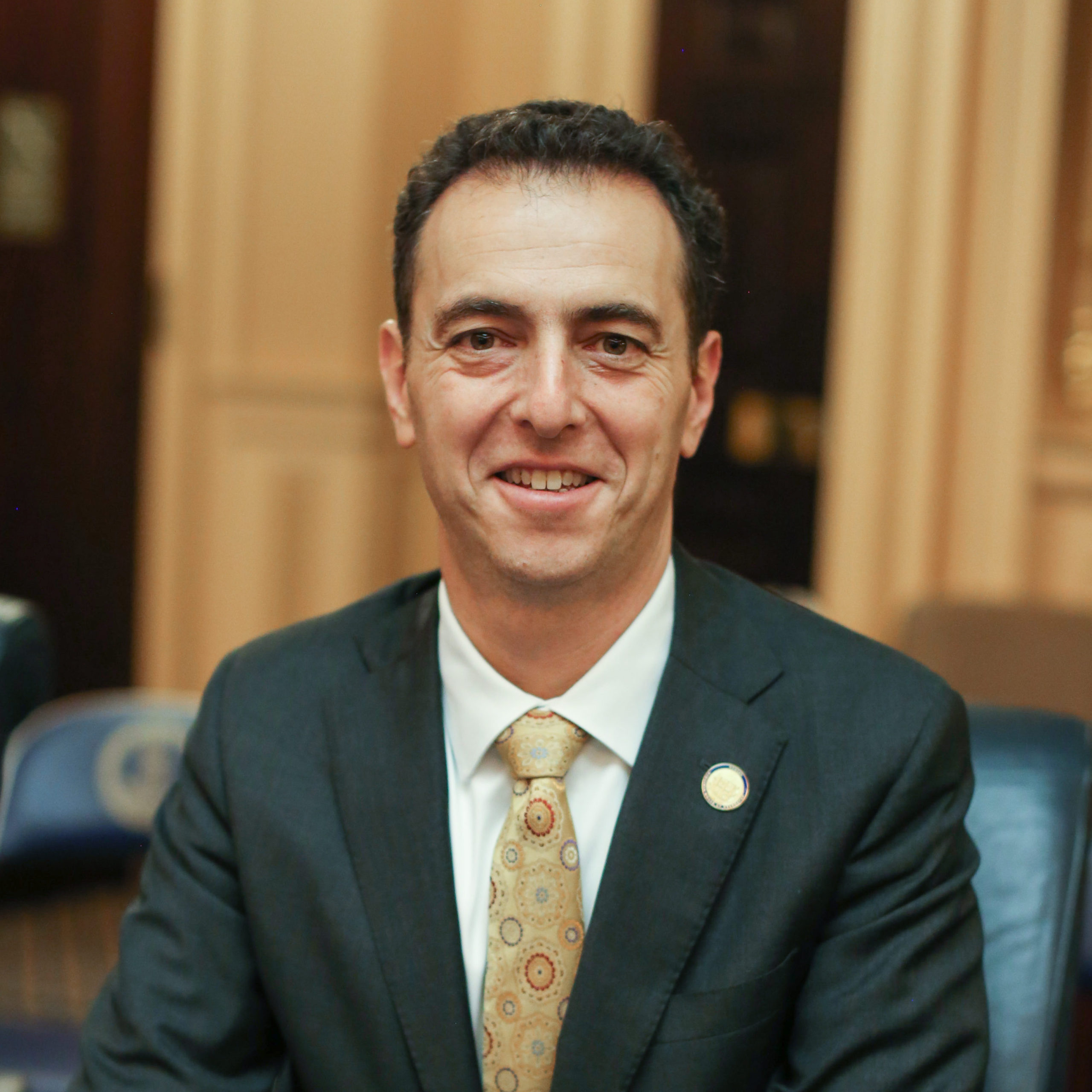
Del. Marcus Simon
Sponsored bills
Local tax; solar facility exemption.
Commending the Richmond Free Press.
Alcoholic beverage control; definitions; designerand vintage spirit bottles. Defines, for the purposes of theAlcoholic Beverage Control Act, "designer spirit bottle" and "vintagespirit bottle."
Board of Medicine; implicit bias and culturalcompetency. Requires all practitioners licensed by the Boardof Medicine to complete two hours of continuing education in eachbiennium on topics related to implicit bias and cultural competency.
Sudden Unexpected Death in Epilepsy. Requiresthe Office of the Chief Medical Examiner to take certain actionsupon the finding that an individual died from Sudden Unexpected Deathin Epilepsy (SUDEP). The bill directs the Office of the Chief MedicalExaminer to publish information on SUDEP and a SUDEP death investigationform on its website. Additionally, the bill requires the Chief MedicalExaminer and local medical examiners to complete training providedby The Epilepsy Foundation of Virginia. The bill has a delayed effectivedate of January 1, 2023.
Special Assistant to the Governor for DisabilityRights Advocacy; position created; report. Creates the positionof Special Assistant to the Governor for Disability Rights Advocacy (the Special Assistant) for the purpose of representing Virginianswith disabilities in a comprehensive and authoritative manner byensuring that all state agencies provide adequate services, resources,and accommodations to such persons. The bill directs the SpecialAssistant to submit an annual report to the Governor on or beforeDecember 1, through the Secretary of Health and Human Resources,that (i) outlines the key issues and problems discovered within stateagencies that impact people with disabilities; (ii) identifies thedetails of any plan of action implemented by the Special Assistantto address and remediate such issues and problems; (iii) provideslegislative recommendations that would improve processes and proceduresacross all state agencies with regard to the provision of services, resources, and accommodations to people with disabilities; and (iv)details such other matters as required by the Governor.
Consultation with federally recognized TribalNations; permits and reviews with potential impacts on environmental,cultural, and historic resources. Requires the Department of Conservation and Recreation, the Department of Environmental Quality,the Department of Historic Resources, and the Virginia Marine ResourcesCommission to establish policies and procedures for consulting withfederally recognized Tribal Nations in the Commonwealth when evaluating certain permits and reviews with potential impacts on environmental,cultural, or historic resources or that would have tribal implications,as defined in the bill. The bill directs the Secretary of the Commonwealthto designate an Ombudsman for Tribal Consultation to facilitate communicationand consultation with Tribal Nations. The bill codifies ExecutiveOrder 82 (2021).
Overtime; compensable hours worked; compensatory time. Defines compensable hours worked, for the purposes of the Virginia Overtime Wage Act, as the amount of time an employee is on duty or at a prescribed place of work and any time an employee is suffered or permitted to work. The bill states that such time shall include work performed at home, travel time, waiting time, and training and probationary periods. Under the bill, an employee may elect, during any probationary period of employment, to receive compensatory time in lieu of overtime pay. As used in the bill, compensatory time is the time an employee works beyond his regular schedule that is authorized by the employee's employer to be used as paid time off.
Celebrating the life of the Honorable LinwoodA. Holton, Jr.