

Paid sick leave. Requires employers to provide certain employees paid sick leave. An employee is eligible for paid sick leave under the bill if the employee is an essential worker and works on average at least 20 hours per week or 90 hours per month. The bill provides for an employee to earn at least one hour of paid sick leave benefit for every 30 hours worked. An employee shall not use more than 40 hours of earned paid sick leave in a year, unless the employer selects a higher limit. The bill provides that earned paid sick leave may be used for (i) an employee's mental or physical illness, injury, or health condition; an employee's need for medical diagnosis, care, or treatment of a mental or physical illness, injury, or health condition; or an employee's need for preventive medical care or (ii) care of a family member with a mental or physical illness, injury, or health condition; care of a family member who needs medical diagnosis, care, or treatment of a mental or physical illness, injury, or health condition; or care of a family member who needs preventive medical care. The bill prohibits employers from taking certain retaliatory actions against employees related to leave. The bill provides for a hardship waiver for employers that demonstrate that providing paid sick leave threatens the financial viability of the employer, jeopardizes the ability of the employer to sustain operations, significantly degrades the quality of the employer's business operations, or creates a significant negative financial impact on the employer. The bill requires the Commissioner of Labor and Industry to promulgate regulations that (a) identify workers as essential based on the categories listed in the bill; (b) include reasonable requirements for recordkeeping, confidentiality, and notifying employees of their rights under provisions of the bill; (c) establish complaint, investigation, and enforcement procedures that include fines, not to exceed $500, for violations of provisions of the bill; (d) establish requirements for compensation and accrual of paid sick leave for employees employed and compensated on a fee-for-service basis; and (e) include procedures and requirements for an employer to qualify for a hardship waiver. The provisions of the bill do not apply to a retail business with fewer than 25 employees.
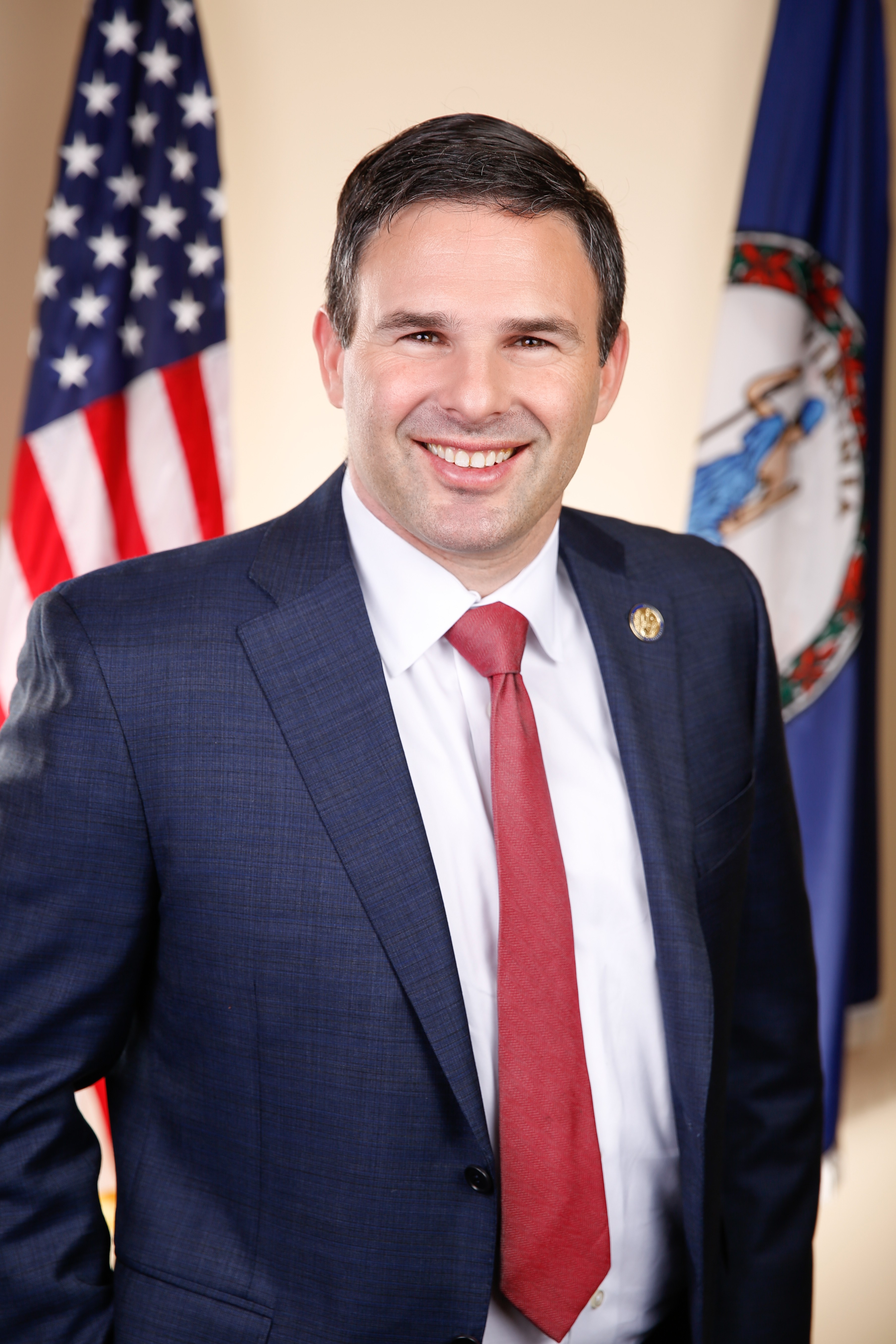
Del. Dan Helmer
Sponsored bills
Virginia Overtime Wage Act; penalties. Requiresan employer to compensate its employees who are entitled to overtimecompensation under the federal Fair Labor Standards Act at a ratenot less than one and one-half times the employee's regular rateof pay, defined in the bill, for any hours worked in excess of 40hours in any one workweek. The bill includes provisions for calculatingovertime premiums due to fire protection and law-enforcement employeesby certain public sector employers. The penalties provided by thebill for an employer's failure to pay such overtime wages, includingcivil and criminal penalties, are the same as currently providedfor failing to pay wages generally. The statute of limitations forbringing a claim for a violation of the bill is three years.
Get Skilled, Get a Job, Give Back (G3) Fundand Program established. Establishes the Get Skilled,Get a Job, Give Back (G3) Fund and requires the Virginia Community College System to establish the G3 Program for the purpose of providing financial assistance from the Fund to certain low-income and middle-income Virginia students who are enrolled in an educational program at an associate-degree-granting public institution of higher educationthat leads to an occupation in a certain high-demand field. The billcontains provisions for student eligibility, financial assistanceaward amounts, and data reporting.
Employee protections; medicinal use of cannabis oil. Prohibits an employer from discharging, disciplining, or discriminating against an employee for such employee's lawful use of cannabis oil pursuant to a valid written certification issued by a practitioner for the treatment or to eliminate the symptoms of the employee's diagnosed condition or disease. The bill provides that such prohibition does not (i) restrict an employer's ability to take any adverse employment action for any work impairment caused by the use of cannabis oil or to prohibit possession during work hours or (ii) require an employer to commit any act that would cause the employer to be in violation of federal law or that would result in the loss of a federal contract or federal funding.
Provision of broadband capacity by Phase I or Phase II electric utilities. Makes permanent the pilot program under which a Phase I or Phase II electric utility is permitted to petition the State Corporation Commission to provide broadband capacity to unserved areas of the Commonwealth. The bill expands the program to allow for the participation of municipalities and government-owned broadband authorities. The bill provides that investor-owned electric utilities may recover costs of and revenue generated from providing broadband capacity that serves as an electric grid transformation project in areas unserved by broadband, as defined in the bill. The bill also consolidates the State Corporation Commission petition approval process into one hearing.
Chesapeake Bay; wastewater treatment; Enhanced Nutrient Removal Certainty Program. Requires the State Water Control Board to adopt by June 30, 2022, regulations establishing a Phase III Watershed Implementation Plan Enhanced Nutrient Removal Certainty Program (ENRC Program), consisting of a number of total nitrogen and total phosphorous waste load allocation reductions assigned to particular water treatment facilities with schedules for compliance. The bill provides that the ENRC Program shall operate in lieu of certain Chesapeake Bay waste load regulations. The bill directs the Board to modify affected discharge permits to incorporate the provisions of the ENRC Program and requires certain compliance plans due from treatment works by February 1, 2023, to address the requirements of the ENRC Program. The bill provides that the funding of certain design and installation costs for implementing nutrient upgrades pursuant to the ENRC Program shall be eligible for grants from the Water Quality Improvement Fund. The ENRC Program is required to proceed regardless of whether such grants will exceed the available funds in the Fund for a given fiscal year. The bill lists the projects and the total nitrogen or total phosphorus waste load allocation reductions that specified facilities are to complete. The bill provides that when grants to finance nutrient removal technology reach a sum sufficient to fund the completion of the ENRC Program at all publicly owned treatment works, certain General Assembly committees shall review funding needs and mechanisms. Finally, the bill directs the State Water Control Board to convene a stakeholder group during the adoption of regulations required to carry out the provisions of the bill and provides that such adoption by the Board shall be exempt from certain procedures of the Administrative Process Act. The bill provides that the priority projects and waste load allocation reductions that it sets forth shall be deemed to implement goals of the Chesapeake Bay Phase III Watershed Implementation Plan.
Alcoholic beverage control; local outdoor refreshment areas. Renames the "local special events" license as the "outdoor refreshment area" license. The bill allows the Board of Directors of the Virginia Alcoholic Beverage Control Authority to increase the frequency and duration of events held under such license after adoption of an ordinance by a locality requesting such increase in frequency and duration. Under current law, localities are limited to holding 16 events per year under such license, with each event lasting no more than three consecutive days, except during the effective dates of any rule, regulation, or order that is issued by the Governor or State Health Commissioner to meet a public health emergency and that effectively reduces allowable restaurant seating capacity. The bill also increases the state and local license fees for outdoor refreshment area licenses issued pursuant to a local ordinance. This bill incorporates HB 2051.
Virginia Highway Corporation Act; alteration of certificate of authority; powers and duties of the State Corporation Commission. Requires any application for a transfer, extension, or amendment of a certificate of authority issued under the Virginia Highway Corporation Act to include information demonstrating the financial fitness of the entity applying to operate the roadway. The bill requires an applicant for a toll increase to provide a forward-looking analysis return that will be reviewed by the Department of Transportation that demonstrates that the proposed rates will be reasonable to the user in relation to the benefit obtained, not likely to materially discourage use of the roadway, and provide the operator no more than a reasonable return. The bill also prohibits the State Corporation Commission from authorizing a toll increase if these criteria are not met or if the proposed increase is for more than one year. The bill requires an operator to receive approval from the Commission prior to refinancing any existing debt.
Vehicle registration; special communicationneeds indicator. Expands eligibility for a special communicationneeds indicator on a vehicle registration to vehicle owners whosevehicle is regularly occupied by an individual who has a disabilitythat can impair communication. Current law authorizes those vehicleowners who have a disability that can impair communication to applyfor such an indicator. The bill authorizes the removal of such indicatorby request in writing to the Department of Motor Vehicles.
Abolition of the death penalty. Abolishes the death penalty, including for those persons currently under a death sentence. The bill incorporates HB 1779.