

School meal debt; donations. Permits anyschool board to solicit and receive any donation or other funds forthe purpose of eliminating or offsetting any school meal debt atany time during the school year and requires each school board touse any such funds solely for such purpose, provided, however, thatno such funds are obtained in an illegal or illicit manner. The billprovides that if a school board receives a donation that does notentirely eliminate or offset the total school meal debt at any timeduring the school year, the school board shall distribute the donation proportionately among each school meal debt.
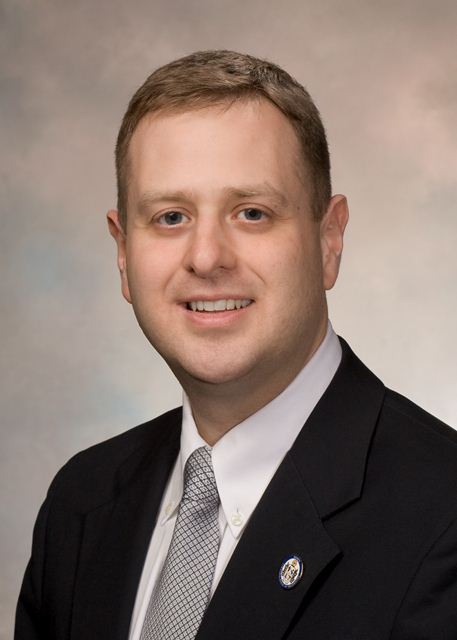
Del. Patrick Hope
Sponsored bills
Correctional facilities; use of isolated confinement.Prohibits the use of isolated confinement in state correctionalfacilities and juvenile correctional centers, defined in the billas confinement of a prisoner or juvenile to a cell, alone or withanother prisoner or juvenile, for 20 hours or more a day for an adultor for 17 hours or more a day for a juvenile, other than for thepurpose of providing medical or mental health treatment. The bill provides for exceptions for when isolated confinement may be permittedin state correctional facilities and juvenile correctional centers.The bill also requires the Board of Corrections to promulgate andestablish standards placing limits on the use of isolated confinementin local correctional facilities that are consistent with the standardsapplicable to state correctional facilities.
School boards; distribution of excess food. Allows public school boards to distribute excess food to students eligible for the School Breakfast Program or National School Lunch Program administered by the U.S. Department of Agriculture or to students who the school board determines are otherwise eligible to receive excess food. A school board is also allowed to develop a policy for distributing excess food, saving it for later, or donating it.
Department of Human Resource Management; requiredonline training for LGBTQ cultural competency. Requires theDepartment of Human Resource Management to develop an online trainingmodule addressing lesbian, gay, bisexual, transgender, and queer(LGBTQ) cultural competency. The bill requires all state employeescommencing or recommencing employment with the Commonwealth on orafter January 1, 2021, to complete such training within 90 days ofcommencing or recommencing such employment and all persons employedwith the Commonwealth on January 1, 2021, to complete such trainingno later than April 1, 2021.
Prisoners; obtaining certain identification documentation upon release. Requires the Department of Corrections and the sheriff, jail superintendent, or other jail administrator of a local correctional facility to provide the assistance necessary for any prisoner who does not already possess a government-issued identification card to apply for and obtain such identification. The requirement would apply for any prisoner who has been confined for a period of 90 days or more. If a prisoner is unable to obtain a government-issued identification, the Department would provide a Department of Corrections Offender Identification form. The bill further requires all costs and fees associated with obtaining such identification documentation to be paid by the prisoner unless the prisoner is determined to be indigent. Current law authorizes local correctional institutions to issue special identification cards prior to the release of any prisoner and requires the prisoner to pay all costs and fees associated with obtaining such card. This bill is identical to HB 1467.
Recounts; special election to be held in the case of a tie vote. Provides that if, after a recount of an election, the recount court finds that each party to the recount has received an equal number of votes, there shall be a special election to determine which candidate is elected to the office. This provision would not apply in cases of tie votes occurring after a recount of an election for Governor, Lieutenant Governor, or Attorney General, which the Constitution of Virginia provides for, or for electors of President and Vice President of the United States, which will continue to be determined by lot. This bill incorporates HB 178 and HB 692.
Workers' compensation; presumption of compensability for certain diseases. Adds cancers of the colon, brain, or testes to the list of cancers that are presumed to be an occupational disease covered by the Virginia Workers' Compensation Act when firefighters or certain employees develop the cancer. The presumption shall not apply for any individual who was diagnosed with one of the conditions before July 1, 2020. The measure removes the compensability requirement that the employee who develops cancer had contact with a toxic substance encountered in the line of duty. The bill also reduces the number of years of service needed to qualify for the presumption from 12 to five for various types of cancer. For hypertension or heart disease, the bill adds a requirement that an individual complete five years of service in their position in order to qualify. This bill is identical to SB 9.
School meal policies. Requires each localschool board to adopt policies that prohibit school board employeesfrom requiring a student who cannot pay for a meal at school or whoowes a school meal debt to throw away or discard a meal after ithas been served to him.
Department of Health; sickle cell anemia; adult and pediatric comprehensive sickle cell clinic network. Specifies that children be included in the voluntary program established by the Commissioner of Health, in cooperation with local health directors, for the screening of individuals for the disease of sickle cell anemia or the sickle cell trait and for other genetically related diseases and genetic traits and inborn errors of metabolism. The bill directs the Board of Health to adopt regulations to implement an adult and pediatric comprehensive sickle cell clinic network.
Child abuse and neglect reporting; public sports programs. Adds to the list of mandatory reporters of suspected child abuse and neglect athletic coaches, directors, and other persons 18 years of age or older that are employed by or volunteering with a public sports organization or team. Current law applies only to such individuals involved with private sports organizations or teams.