Issue · Labor & Employment

Labor & Employment

Every labor & employment bill, vote, and legislator stance in Virginia, automatically classified by Maddy, our AI policy reader.

Total bills
150
2026 Regular Session
Top supporter
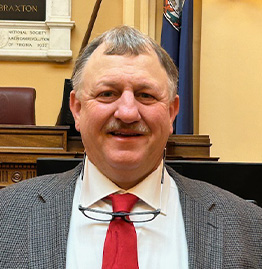
Kirk McPike
100% support rate
Top opponent
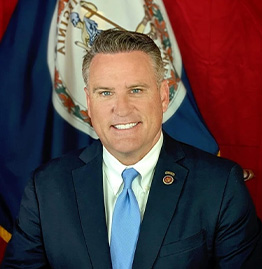
Emily Jordan
0% support rate
Ranked legislators
10
5 support · 5 oppose
Key legislators

Who's moving labor & employment in Virginia

Legislators moving labor & employment in Virginia
Legislator Party Stance Support rate Votes
Kirk McPike
Kirk McPike House · District 5
D
Strong +
100% 137
Kannan Srinivasan
Kannan Srinivasan Senate · District 32
D
Strong +
100% 231
Angelia Graves
Angelia Graves Senate · District 21
D
Strong +
100% 235
Stella Pekarsky
Stella Pekarsky Senate · District 36
D
Strong +
100% 226
Danica Roem
Danica Roem Senate · District 30
D
Strong +
100% 236
Emily Jordan
Emily Jordan Senate · District 17
R
Strong −
0% 210
Luther Cifers
Luther Cifers Senate · District 10
R
Strong −
0% 223
Timmy French
Timmy French Senate · District 1
R
Strong −
0% 216
Tara Durant
Tara Durant Senate · District 27
R
Strong −
1% 218
Bryce Reeves
Bryce Reeves Senate · District 28
R
Strong −
2% 312
Showing 111–120 of 150 bills

All labor & employment bills

vetoed · Virginia · Senate Apr 13, 2026

SB 199: Employment; paid sick leave, civil penalties.

Employment; paid sick leave; civil penalties; civil actions. Requires one hour of paid sick leave for every 30 hours worked for all employees of private employers and state and local governments, with certain exceptions. The bill requires that employees who are employed and compensated on a fee-for-service basis accrue paid sick leave in accordance with regulations adopted by the Commissioner of Labor and Industry. The bill provides that employees transferred to a separate division or location remain entitled to previously accrued paid sick leave and that employees retain their accrued paid sick leave under any successor employer. The bill allows employers to provide a more generous paid sick leave policy than prescribed by its provisions and specifies that employees, in addition to using paid sick leave for their physical or mental illness or to care for a family member, may use paid sick leave to seek or obtain certain services or to relocate or secure an existing home due to domestic abuse, sexual assault, or stalking. The bill requires the Commissioner to promulgate regulations for the implementation and enforcement of the bill's provisions by July 1, 2027. The bill authorizes the Commissioner, in the case of a knowing violation, to subject an employer to a civil penalty not to exceed $150 for the first violation, $300 for the second violation, and $500 for each successive violation. The Commissioner or Attorney General may commence administrative proceedings or bring a civil action to enforce the bill's provisions. Additionally, the bill authorizes an aggrieved employee to bring a civil action against the employer in which he may recover double the amount of any unpaid sick leave and the amount of any actual damages suffered as the result of the employer's violation. Certain provisions of the bill have a delayed effective date of July 1, 2027. This bill incorporates SB 372 and is identical to HB 5.
in committee · Virginia · House of Delegates Feb 3, 2026

HB 715: Labor and employment; collective bargaining by certain constitutional officers.

Labor and employment; collective bargaining by certain constitutional officers. Permits the employees of any sheriff within certain localities to organize, form, join, or assist a labor union or employee organization and collectively bargain and enter into a collective bargaining agreement with their locality with respect to matters relating to the supplementation of salary and benefit compensation.
in committee · Virginia · House of Delegates Feb 3, 2026

HB 949: Covenants not to compete; exceptions, civil penalty.

Covenants not to compete; exceptions; civil penalty. Prohibits an employer from entering into, enforcing, or threatening to enforce a covenant not to compete with employees who perform key duties of the employer's enterprise or customarily and regularly solicit customers or make sales or contracts for the employer. Under the bill, certain employees are permitted to enter agreements to refrain from soliciting business from the employer for a stated period of time following termination. The penalty provisions in current law for covenants not to compete for low-wage employees shall apply to a violation of the provisions of the bill. The provisions of the bill apply to contracts entered into, amended, or renewed on or after July 1, 2026.
in committee · Virginia · House of Delegates Feb 18, 2026

HB 1514: Employment decisions; automated decision systems, civil penalty.

Employment decisions; automated decision systems; civil penalty. Provides that the Director of the Department of Human Resource Management shall require any state agency that uses an automated decision system as a substantial factor in any employment decision, as those terms are defined in the bill, to (i) ensure that such system and the use of such system complies with federal and state law, (ii) make certain disclosures, (iii) provide an opt-out mechanism, (iv) annually test such system, (v) ensure data security, and (vi) train agency staff on such system. The bill requires the Department and local government employers to establish and publicize a process for applicants for employment and employees to file concerns and complaints regarding the use of automated decision systems in such employment decisions and a process for the investigation and resolution of any such concerns and complaints. The bill also provides that no final employment decision shall be made by an employer without the involvement of a human decision maker, and no employer shall solely use any recommendation or prediction from an automated decision system to make a final employment decision. The bill subjects violating employers to civil penalties.
vetoed · Virginia · House of Delegates Apr 20, 2026

HB 238: Minimum wage and overtime wages; payment, definitions, misclassification of workers, civil actions.

Labor and employment; payment of wages; minimum wage and overtime wages; misclassification of workers; prevailing wage rate; civil actions. Provides that an employer that violates provisions relating to minimum wage, overtime wages provisions, the misclassification of workers, or the prevailing wage rate is subject to civil actions for the applicable remedies, damages, or other relief available in an action brought pursuant to the civil action provisions currently available for the nonpayment of wages. Such provisions currently available provide that an employee may bring an action in a court of competent jurisdiction to recover payment of the wages, and the court is required to award the wages owed, an additional equal amount as liquidated damages, plus prejudgment interest thereon, and reasonable attorney fees and costs. Under current law, if the court finds that the employer knowingly failed to pay wages to an employee, the court is required to award the employee an amount equal to triple the amount of wages due and reasonable attorney fees and costs. The bill also prohibits an employer from taking certain retaliatory actions against an employee because the employee reports any information or allegation in good faith that, if true, amounts to a violation of any federal or state law or regulation to a supervisor, manager, or officer, or to any governmental body or law-enforcement official, including a report made in the ordinary course of the employee's employment, regardless of whether such report refers to a particular law or regulation.
signed · Virginia · Senate Apr 8, 2026

SB 121: Minimum wage; farm laborers or farm employees, temporary foreign workers.

Minimum wage; farm laborers or farm employees. Eliminates the exemption from Virginia's minimum wage requirements for persons employed as farm laborers or farm employees. The bill has a delayed effective date of January 1, 2027, and is identical to HB 20.
signed · Virginia · House of Delegates Apr 6, 2026

HB 849: Public school employees; suspension, notice and opportunity for a hearing.

Public school employees; suspension; notice and opportunity for a hearing. Provides that no school board employee shall be suspended without notice and, if applicable, an opportunity to be heard and amends current law to require any individual who has been so suspended, regardless of the length of the suspension, to continue to receive his then applicable salary unless and until the school board, after a hearing, determines otherwise. Under current law, such requirement only applies to any individual who has been suspended for a period in excess of five days.
in committee · Virginia · House of Delegates Feb 10, 2026

HB 1164: Prospective employer; prohibited from seeking wage or salary history of prospective employees.

Prohibiting employer seeking wage or salary history of prospective employees; wage or salary range transparency; cause of action. Prohibits a prospective employer from (i) seeking the wage or salary history of a prospective employee; (ii) relying on the wage or salary history of a prospective employee in considering the prospective employee for employment; (iii) relying on the wage or salary history of a prospective employee in determining the wages or salary the prospective employee is to be paid upon hire; (iv) refusing to interview, hire, employ, or promote or otherwise retaliating against a prospective or current employee for not providing wage or salary history or requesting a wage or salary range; (v) failing or refusing to disclose in each public and internal posting for each job, promotion, transfer, or other employment opportunity the wage, salary, or wage or salary range; and (vi) failing to set a wage or salary range in good faith. The bill establishes a cause of action for an aggrieved prospective employee or employee and provides that an employer that violates such prohibitions is liable to the aggrieved prospective employee or employee for statutory damages between $1,000 and $10,000 or actual damages, whichever is greater, reasonable attorney fees and costs, and any other legal and equitable relief as may be appropriate.
vetoed · Virginia · House of Delegates Apr 13, 2026

HB 1263: Public employees; repeals existing prohibition on collective bargaining, etc.

Collective bargaining by public employees; individual home care providers; Virginia Home Care Council established; Public Employee Relations Board established; exclusive bargaining representatives. Repeals the existing prohibition on collective bargaining by public employees. The bill creates the Public Employee Relations Board, which shall determine appropriate bargaining units and provide for certification and decertification elections for exclusive bargaining representatives of state employees and local government employees. The bill requires public employers and employee organizations that are exclusive bargaining representatives to meet at reasonable times to negotiate in good faith with respect to wages, hours, and other terms and conditions of employment. The bill establishes the Virginia Home Care Council within the Department of Medical Assistance Services to promote the stability of the individual provider workforce in the Commonwealth and tasks the Council with serving as the public employer of individual providers, as defined in the bill, for purposes of collective bargaining pursuant to the bill's provisions. The bill repeals a provision that declares that in any procedure providing for the designation, selection, or authorization of a labor organization to represent employees the right of an individual employee to vote by secret ballot is a fundamental right that shall be guaranteed from infringement. The bill directs the Department of Labor and Industry to promulgate any regulations necessary to effectuate the bill's provisions by July 1, 2028, and provides that upon the establishment of the Public Employee Relations Board, such regulations shall be transferred to the Board. The bill provides that until such regulations are adopted, no petitions or elections shall take place pursuant to the bill's provisions except pursuant to an ordinance or resolution adopted under current law. This bill is identical to SB 378.
vetoed · Virginia · House of Delegates Apr 11, 2026

HB 925: Virginia Human Rights Act; unlawful discriminatory practices, civil actions, statute of limitations.

Virginia Human Rights Act; unlawful discriminatory practices; civil actions; statute of limitations. Provides that a complaint alleging discrimination in employment in violation of the Virginia Human Rights Act shall be filed no later than two years from the day upon which the alleged discriminatory practice occurred. Under current law, the filing requirement is no later than 300 days. The bill further provides that if 180 days have passed since a complaint was filed in a local human rights commission, an aggrieved person may commence a timely civil action in an appropriate general district or circuit court. Under current law, such allowance is limited to filings in the Office of Civil Rights of the Department of Law.
Showing 111 to 120 of 150 bills
Previous 1 11 12 13 15 Next