

Maddy summaryH.297 creates the Free Degree Promise Grant Program to provide free associate’s degrees at Vermont’s Community College of Vermont (CCV) for eligible students. It directly affects Vermont students who completed CCV’s Early College program (earning 20+ credits), require full-time enrollment (12+ credits), and meet income thresholds. The program covers remaining tuition/fees after other aid and provides $500-$1,000 per semester for books/supplies based on household income, with support for up to five semesters or degree completion. This aims to address equity gaps in college access, particularly for low-income, first-generation, and historically underserved students.
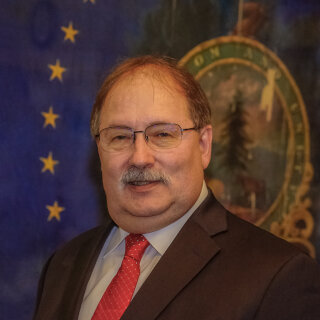
Rep. Michael Marcotte
Sponsored bills
Maddy summaryHCR 21 is a symbolic resolution expressing the Vermont General Assembly's appreciation for school board members' role in public education. It formally designates February as "School Board Recognition Month" in Vermont to highlight their contributions. The resolution has no legal effect or policy changes - it is purely ceremonial, acknowledging school board members' civic service. The resolution was adopted by both chambers on February 7, 2025, and directs the Secretary of State to share it with the Vermont School Boards Association.
Maddy summaryThis bill expands the scope of practice for optometrists in Vermont by creating an "advanced therapeutic procedures specialty." Qualified optometrists with this specialty may now perform specific procedures, including removing small superficial eye lesions (like chalazia), certain laser treatments (such as for cataracts), and targeted injections for conditions like chalazia or vision testing. The bill also explicitly prohibits optometrists from performing retinal surgeries, corneal transplants, or injections into the back of the eye. Optometrists seeking this specialty must complete additional continuing education hours focused on advanced procedures. The changes aim to clarify and modernize what optometrists can legally provide while maintaining patient safety through defined boundaries.
Maddy summaryThis House Concurrent Resolution (HCR 29) is a ceremonial gesture congratulating Montgomery runner Elinor Purrier St. Pierre on her eighth-place finish in the women's 1500m at the 2024 Paris Olympics. It recognizes her athletic achievements, including American records and prior Olympic participation, as detailed in the resolution's "whereas" clauses. The resolution directs Vermont's Secretary of State to send a copy of the resolution to Ms. Purrier St. Pierre. As a symbolic tribute with no policy changes or direct effects, it does not alter laws or affect any constituents beyond expressing legislative recognition.
Maddy summaryThis ceremonial resolution honors the Vermont Old Cemetery Association (VOCA) for its 65+ years of preserving Vermont's historic cemeteries. VOCA provides restoration grants, veteran burial support, and educational resources (like its newsletter and book *Burial Grounds of Vermont*) to local cemetery groups and municipalities. The resolution formally recognizes VOCA's work without creating new laws, funding, or policy changes. It serves as a symbolic gesture of appreciation for the organization's contributions to cemetery preservation and public education.
Maddy summaryJRH 2 is a Vermont legislative resolution urging President Trump to avoid imposing tariffs on goods and services imported from Canada. It directly affects Vermonters by highlighting the state's deep economic ties with Canada, including $2.6 billion in annual imports, 17,000 jobs supported by Canadian investments, and critical energy imports (100% of Vermont Gas Systems' supply). The resolution formally requests the President refrain from tariffs, citing risks to Vermont's economy and longstanding cross-border trade relationships, and directs the Secretary of State to send it to the President, Governor Scott, and Canadian officials.
Maddy summaryThis bill requires online businesses likely to be accessed by children to avoid using design features that are harmful or overly invasive of children's privacy. It defines "covered businesses" as those with online services reasonably likely to be used by minors and mandates that these businesses set privacy settings to the most protective default for children. Key provisions prohibit design features causing compulsive use (like endless scrolling) and require businesses to handle children's personal data with heightened safeguards. The law applies to Vermont-based businesses offering online products or services to minors, aiming to protect children's privacy through proactive design standards.
Maddy summaryH.208 creates Vermont's first comprehensive data privacy law, giving residents specific rights over their personal data. It requires businesses to obtain clear, affirmative consent for data collection (prohibiting "dark patterns" like deceptive pop-ups), bans the sale of biometric data and sensitive health information (including gender-affirming and reproductive health data), and restricts online tracking. The law directly affects Vermont residents and any business collecting their data, including data brokers and companies using contextual advertising. Key provisions include mandatory opt-in consent for data processing, requirements for transparent privacy notices, and new protections against automated decisions affecting housing, employment, or healthcare access.
Maddy summaryThis bill requires medical device manufacturers to provide hospitals and independent repair shops with manuals, parts, and diagnostic tools needed to maintain or repair FDA-approved medical equipment on fair terms. Manufacturers must supply repair manuals at no cost (only charging for physical copies' shipping costs), offer replacement parts at the same price they give their own authorized repair partners, and not restrict access to tools or software. It applies to all medical devices used in patient care, including diagnostic and treatment equipment, but excludes religious facilities relying solely on spiritual healing. The law aims to expand repair options for healthcare facilities without forcing them to depend exclusively on the original device manufacturer.
Maddy summaryH.161, the Vermont Fair Repair Act, requires manufacturers of agricultural, electronic, and forestry equipment to provide independent repair shops and equipment owners with the same parts, tools, and documentation they offer to their own authorized dealers. This includes making security features accessible for repairs, such as unlocking equipment. The law applies to equipment like tractors, computers, and forestry machinery but excludes motor vehicles and medical devices. It ensures Vermont residents and independent repair providers can access necessary repair resources without manufacturer restrictions.